
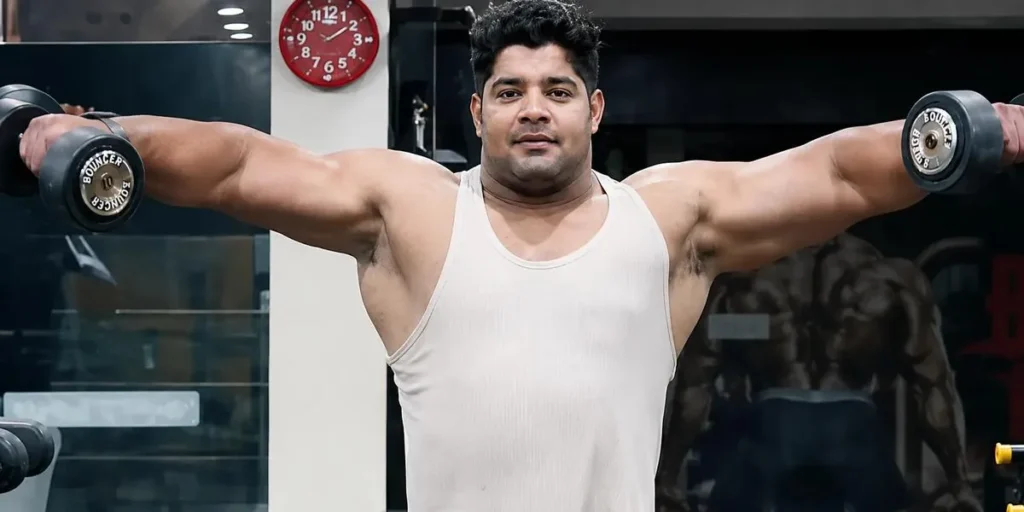
Neeraj Pepsu height is a popular search among people interested in Punjabi fitness personalities, bodybuilding content, and online physical-measurement profiles. The difficulty is that several websites and social posts repeat different figures without identifying a reliable original source. That makes a simple question—“How tall is Neeraj Pepsu?”—harder to answer responsibly than it first appears.
This article separates confirmed information from estimates, explains how height conversions work, and puts related searches about Neeraj Pepsu weight, age, biceps size, fitness, career, and personal life into proper context. The most important point is straightforward: unless a height has been stated by Neeraj Pepsu himself or published through a dependable interview or profile, an exact number should be treated as unverified rather than presented as fact.
Neeraj Pepsu height: what can be stated with confidence?
No reliably verified public measurement should be treated as the definitive Neeraj Pepsu height. Online profile pages may publish a figure in feet, inches, or centimetres, but repeated numbers are not automatically proof. Many biography and celebrity-measurement pages copy one another, and the original source is often unclear.
That distinction matters because height is a factual measurement, not an opinion. A person may look taller or shorter because of camera angle, footwear, posture, body proportions, or the height of people standing nearby. A photograph can help create a rough impression, but it cannot establish an accurate measurement in the way a properly recorded height check can.
Searchers commonly encounter phrases such as Neeraj Pepsu height in feet, Neeraj Pepsu height in cm, and Neeraj Pepsu height in inches. Those variations reflect different presentation formats, not necessarily separate pieces of evidence. If the underlying figure is unverified, converting it from feet to centimetres only makes the same uncertain claim appear more precise.
A careful profile should therefore use transparent wording. It can report that an estimate circulates online, while clearly labelling that estimate as unconfirmed.
It should not turn a rumour into an established biographical fact. Readers deserve that distinction, particularly when a profile also discusses weight, body measurements, age, or claims about what happened to the person.
Why online height figures often conflict
Conflicting height claims usually come from copied profiles, inconsistent measuring methods, or visual assumptions. A page may list a barefoot height, while another uses a figure associated with shoes or an approximate conversion. Some pages also confuse a rounded metric measurement with an exact one.
There is another common problem: the number can be copied without its original context. One social-media post might say that a person is “around” a certain height.
A later profile may remove the word “around” and publish the figure as a precise measurement. After enough repetition, readers may assume the claim has been independently confirmed even though every page traces back to the same unsupported statement.
Photography creates further confusion. Wide-angle phone lenses can distort the edges of an image. A person closer to the camera may appear larger, while a person standing farther away can look noticeably shorter.
Raised footwear, hair volume, bent knees, and a tilted camera also affect comparisons. Even a level floor does not guarantee a reliable visual estimate.
For those reasons, a trustworthy Neeraj Pepsu profile should distinguish among three categories:
- Verified measurement: a figure supported by a direct statement, official record, or credible interview.
- Published estimate: a number appearing in public profiles but lacking a clear primary source.
- Visual guess: an informal comparison based on photographs or video footage.
Only the first category deserves to be described as confirmed. The second may be mentioned with a qualification. The third is not a suitable basis for an exact physical measurement.
Neeraj Pepsu height in feet, inches and centimetres
Feet, inches, and centimetres are different ways of expressing the same length. They don’t make an uncertain height more accurate. If a dependable source eventually publishes a measurement, readers can convert it using standard formulas.
One foot contains 12 inches, and one inch equals 2.54 centimetres. To convert a height written as feet and inches into centimetres, multiply the number of feet by 30.48, multiply the remaining inches by 2.54, and add the results.
To convert centimetres into inches, divide by 2.54. A metric measurement can then be expressed in feet and inches by dividing the total inches into groups of 12.
| Measurement format | How it is used | Important caution |
|---|---|---|
| Feet and inches | Common in celebrity and fitness profiles | Check whether the figure is rounded or estimated |
| Centimetres | Metric format used in many official and health contexts | Extra decimal places do not prove better evidence |
| Total inches | Useful for direct imperial comparisons | It can be confused with feet-and-inches notation |
For example, a hypothetical height of 5 feet 10 inches equals 70 inches and approximately 177.8 centimetres. That example explains the conversion only; it is not a claim about Neeraj Pepsu. A responsible article must keep examples separate from personal facts.
The same rule applies if a searcher finds a figure labelled Neeraj Pepsu height in cm. Before converting it into Neeraj Pepsu height in feet, ask where the original centimetre figure came from. Precision in formatting is useful only after the measurement itself has been verified.
Neeraj Pepsu height and weight: why the two are often paired
Height and weight are commonly listed together because readers use them to understand an athlete’s or fitness creator’s physique. However, a height figure does not establish a person’s weight, and a weight figure does not validate height. Both measurements need their own reliable sources.
Searches for Neeraj Pepsu height and weight often lead to profile pages that provide a neat pair of numbers. That presentation looks authoritative, but it may simply reflect the same unverified data being repeated.
Weight also changes over time. Training phases, diet, water retention, health, clothing, and the timing of a measurement can all affect it.
It is therefore safer to treat Neeraj Pepsu weight in kg as time-specific information. If a source does not give a date, readers cannot tell whether the figure describes a current body weight, a competition period, or an old estimate. A person who trains for bodybuilding may deliberately gain or lose weight during different phases, so one number cannot represent every stage of a career.
Height and weight also say little about health in isolation. Body composition matters.
Two people of the same height and weight can have very different amounts of muscle, fat, bone mass, and water. Body mass index has limited usefulness for heavily muscular people and should not be used as a complete assessment of an individual’s condition.
When reading a physical profile, look for a source date, measurement method, and clear wording. “Reported weight” is more honest than “current weight” if the information has not been recently confirmed. The same standard should apply to every other number in the profile.
Neeraj Pepsu biceps size and body measurements
Neeraj Pepsu biceps size and wider body measurements should not be presented as confirmed without a direct, reliable measurement. Arm size can vary according to whether the muscle is flexed, whether it was measured after training, and where the tape was placed.
Fitness profiles sometimes list chest, waist, shoulder, forearm, and biceps measurements as if they were permanent characteristics. They are not. A flexed biceps measurement can be substantially different from a relaxed measurement.
A “pump” after resistance exercise can temporarily increase the visible fullness of a muscle. The tape position and degree of tension also affect the result.
Images are especially poor evidence for exact measurements. A close-up portrait may make the arms look larger than they do in a full-body photograph.
Lighting and muscle definition can exaggerate shape, while a loose shirt can hide it. The camera’s focal length can change apparent proportions too.
A useful Neeraj Pepsu physical measurements section should explain these limitations instead of filling missing data with invented precision. If a measurement is published by an official channel or stated in a recorded interview, it can be quoted with its date and method. Otherwise, the correct description is that the figure is unverified.
Readers interested in bodybuilding should also remember that visible muscularity is not determined by arm circumference alone. Training history, muscle insertion points, body-fat level, posing, shoulder width, and lighting all influence appearance. A single number cannot capture the complete physique.
Fitness, workout and bodybuilding context
Neeraj Pepsu fitness and workout searches reflect interest in how a public figure builds and maintains a physique. Yet a search for height should not be confused with evidence about a training programme. A body measurement, a photograph, or a social-media caption cannot establish a complete workout plan.
Resistance training generally develops through progressive overload: the trainee gradually increases a challenge through load, repetitions, sets, range of motion, training frequency, or improved technique. Recovery, adequate food, sleep, and consistency also influence results. The exact balance depends on experience, goals, age, injury history, and access to equipment.
If Neeraj Pepsu shares workouts publicly, those posts may show selected exercises rather than a full weekly programme. A short video can omit warm-up sets, rest intervals, substitutions, and recovery days.
Viewers should avoid assuming that copying a public figure’s routine will reproduce the same appearance. Genetics and years of accumulated training make a major difference.
Bodybuilding content also requires sensible safety boundaries. Beginners should learn movement technique, increase resistance gradually, and stop when pain suggests injury rather than ordinary exertion.
Nutrition advice should be evaluated carefully, especially where supplements, rapid weight changes, or restrictive diets are involved. A qualified professional can adapt advice to an individual’s circumstances.
The most useful lesson from a fitness personality is often consistency, not a particular number of sets. Readers can study exercise selection and training principles without treating an unverified height or biceps claim as a performance benchmark.
Neeraj Pepsu age, date of birth and biography

Neeraj Pepsu age and Neeraj Pepsu date of birth should be reported only when supported by a dependable public source. Age changes with time, while date of birth is a fixed biographical fact, but both are frequently copied incorrectly across informal profile pages.
A biography can be useful even when some personal details remain unavailable. It may discuss a person’s public work, fitness interests, Punjabi-language identity or audience, media appearances, and online content without pretending to know private information. This approach produces a stronger profile than a list of unsupported numbers.
The word “Punjabi” can describe language, cultural identity, location, audience, or content style. It should not be used as a substitute for a verified biography. Likewise, a person’s public image does not give readers automatic access to private details about Neeraj Pepsu family or Neeraj Pepsu personal life.
When assessing an age claim, compare the publication date with the wording. “He is 25” becomes outdated, whereas “born in [year]” remains useful if the year is accurate. If only an approximate age appears online, it should remain approximate. A profile should never infer a date of birth from a graduation year, old photograph, or guessed timeline.
Readers looking for a responsible biography can consult primary public channels first. A creator’s verified interview, official account, or direct statement carries more weight than an anonymous biography page. For general principles on evaluating online information, the BBC’s guidance on checking information online offers a useful reference.
Social media, career and public identity
Neeraj Pepsu social media accounts are likely to be the most relevant place to look for current public updates, but an account should be authenticated before its claims are accepted. Searchers often look for Neeraj Pepsu Instagram or Neeraj Pepsu YouTube because those platforms may contain videos, photographs, interviews, and announcements unavailable in static biography pages.
Official social content can help answer questions about a public career. It may show the kind of fitness material a creator publishes, the language used in videos, collaborations, event appearances, or changes in public activity. It can also provide dates, which are valuable when evaluating whether a weight, training detail, or personal announcement is current.
Still, social media has limits. A profile may be impersonated. Old clips can circulate as if they were new.
A caption can be promotional rather than biographical, and a physique photograph may be posed or edited. Even an authentic account does not make every third-party claim about the person accurate.
A sensible checking process is simple:
- Confirm that the account is consistently associated with the same name, face, language, and public work.
- Check whether the post is original or merely reposted from another page.
- Look for dates, interviews, and direct wording rather than relying on comments.
- Separate statements made by Neeraj Pepsu from guesses made by followers.
This approach helps readers research Neeraj Pepsu career without confusing visibility with verification. A large audience may show reach, but it does not independently prove a height, age, weight, or family detail.
What happened to Neeraj Pepsu? Addressing rumours carefully
There is no responsible basis for declaring what happened to Neeraj Pepsu, or for confirming Neeraj Pepsu death rumours, without a credible and current source. Search suggestions can appear because people are curious, because a post has gone viral, or because an old account has become inactive. None of those signals proves an emergency or death.
Rumours about public figures often grow through repetition. One unverified message can be copied into short videos, thumbnails, and social captions.
Each repetition may look like a separate report even though all versions originate from one unsupported claim. Dramatic wording can attract clicks, which gives false information an additional boost.
Account inactivity is also ambiguous. A creator may take a break, change platforms, lose access to an account, focus on private work, or publish less frequently.
A lack of new uploads cannot establish a person’s condition. Similarly, an old photograph or recycled video cannot serve as current confirmation.
Readers should look for a direct statement from the individual’s verified channel, a family representative, or a reputable news organisation that identifies its sources. Avoid forwarding claims based only on comments, anonymous screenshots, or videos that provide no date and no evidence. Sensitive personal news deserves a higher standard than ordinary entertainment speculation.
This is also why an article about height should not casually add claims about someone’s health or status. Physical measurements and rumours are separate topics. Keeping them separate protects accuracy and avoids causing unnecessary distress to the person, relatives, and readers.
How to evaluate a Neeraj Pepsu profile

The best profile gives readers a clear confidence level for every important fact. It does not hide uncertainty behind a polished layout or a table of numbers. Before accepting a claim, consider who published it, when it was published, and whether the information can be traced to a primary source.
A strong evaluation looks at several signals. Does the page identify an interview or official statement? Does it provide a publication date?
Does it explain whether a figure is measured, estimated, or self-reported? Are different pages using identical wording, suggesting copying? Does the article correct old information when newer evidence appears?
The following distinctions are useful when reading a profile:
- Primary evidence: a direct interview, official biography, verified social post, or recorded statement.
- Secondary reporting: a reputable publication that clearly attributes the information.
- Unattributed aggregation: a page listing numbers without sources or explanation.
- Speculation: guesses based on images, comparisons, comments, or search trends.
Readers can also compare the internal consistency of a page. If a source claims an exact date of birth but provides no biography, career history, or citation, confidence should remain low. If it lists height to several decimal places while describing weight as “approximate,” that mismatch may indicate copied or manufactured precision.
For publishing purposes, transparent wording is the safest choice: “No independently verified public measurement was located,” or “Some online profiles publish an estimate, but its source is unclear.” That answer may feel less satisfying than a bold number, but it is more useful and more trustworthy.
Celebrity height comparison: what photographs can and cannot show
Celebrity height comparison can suggest a rough range, but it cannot prove Neeraj Pepsu height. A comparison becomes more meaningful when two people stand barefoot on the same level surface, maintain similar posture, and are photographed with a reasonably neutral lens. Even then, the result is approximate.
Footwear is one of the largest sources of error. Trainers, boots, and raised soles can add visible height.
Hair and headwear can change the apparent top of the head. Posture matters too: someone standing naturally may look shorter than someone deliberately stretching upward for a photograph.
Camera position changes the result. A low camera can make a subject look taller, while a high camera can compress the body.
People standing at different distances from the lens are not being represented at the same scale. A cropped image may also conceal whether one person is standing on a step.
Body proportions can mislead the eye. Long legs, broad shoulders, a narrow waist, or a large hairstyle may influence a viewer’s perception of height even when the actual measurement is ordinary. Muscularity can make a person look more imposing without changing their height.
These factors don’t make photographs useless. They simply define what photographs can reasonably support: a broad visual impression, not an exact claim such as a measurement in centimetres. A comparison should be described as approximate unless it is backed by a documented measurement for both people.
What readers should take away about the available data
The most reliable answer is that an exact, independently verified Neeraj Pepsu height is not clearly established by the information commonly circulating online. That conclusion is more accurate than selecting one repeated number and presenting it as fact.
The same caution applies to related searches. Neeraj Pepsu weight, biceps size, body measurements, age, date of birth, and latest news all require separate verification. One confirmed detail would not automatically validate the others. A profile can be incomplete and still be honest.
For readers trying to find Neeraj Pepsu latest news, the publication date is essential. Current information should come from a recent official post or reputable report, not from an undated page that happens to rank highly in search.
For personal details, privacy also matters. Public interest does not turn unconfirmed family or health claims into acceptable facts.
The practical rule is easy to remember: source first, convert second, compare third. Find the original measurement if one exists. Convert it carefully between feet, inches, and centimetres.
Only then consider visual comparisons or related fitness statistics. If the original source cannot be found, label the number as an estimate or leave it unconfirmed.
That method serves both casual readers and serious fitness audiences. It reduces misinformation while still answering the real question: what is known, what is uncertain, and how should the information be interpreted?
Frequently asked questions about Neeraj Pepsu height
What is Neeraj Pepsu height in feet?
An exact height in feet cannot be confirmed confidently from a clearly documented public source. Numbers repeated by profile pages may be estimates. Readers should check for a direct statement or reliable interview before treating any feet-and-inches figure as factual.
Is Neeraj Pepsu height in cm officially confirmed?
There is no clearly established official centimetre measurement that should automatically be accepted as definitive. A centimetre figure may simply be a conversion of an online estimate. The reliability of the original source matters more than the format used to display the height.
Are Neeraj Pepsu weight and biceps size verified?
Publicly repeated figures for Neeraj Pepsu weight or biceps size should be treated cautiously unless they come from a dated, direct source. Weight changes over time, and biceps measurements vary depending on whether the arm is flexed, relaxed, or measured after training.
What happened to Neeraj Pepsu?
Search interest or social-media inactivity does not confirm that anything serious has happened. Claims about health, disappearance, or death should be accepted only when supported by a verified statement, family representative, or reputable news report with identifiable sourcing.
Conclusion: the responsible answer about Neeraj Pepsu height
Neeraj Pepsu height is widely searched, but an exact figure should not be presented as confirmed without dependable primary evidence. Feet, inches, and centimetres are simply conversion formats; they cannot improve the credibility of an unsupported number. The same standard applies to weight, biceps size, age, date of birth, body measurements, and claims about current events.
Use official channels and dated, attributable reporting wherever possible. Treat copied profile figures as estimates, avoid drawing exact conclusions from photographs, and approach death rumours or private-life claims with particular care. A transparent answer may contain fewer numbers, but it gives readers something more valuable: information they can trust.

James Wilson is the founder and lead editor of HubQuora.com, where he covers the latest celebrity news, entertainment trends, viral gossip, and net worth stories. With a passion for pop culture and digital media, James delivers engaging, accurate, and up-to-date content that keeps readers informed about the world of celebrities, influencers, and entertainment industry buzz.