
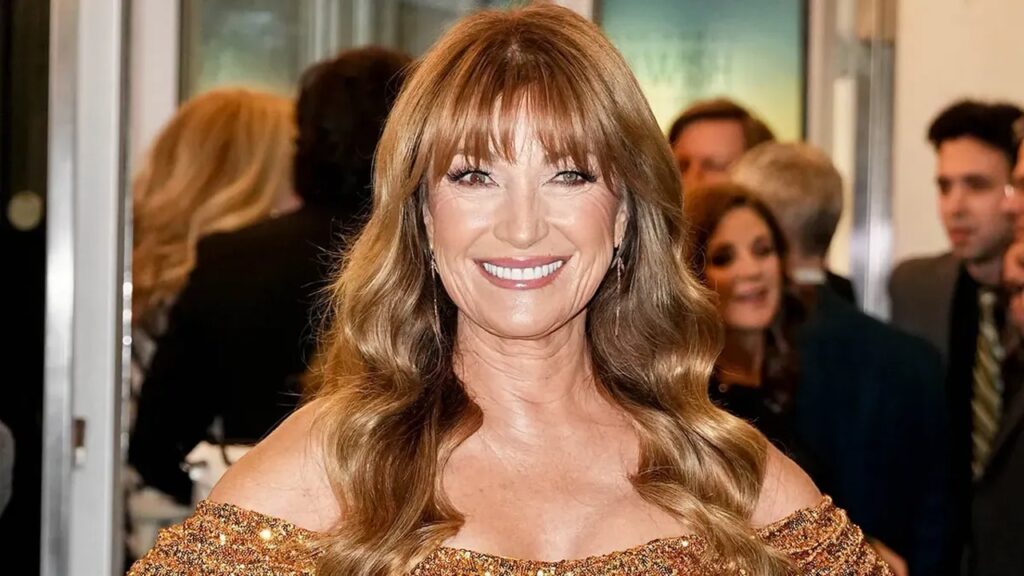
Jane Seymour was born on 15 February 1951, a date that makes the popular question about her age more precise than a number without context. For people asking how old Jane Seymour is, the answer is tied to her February birthday, while her long career explains why interest in her life has lasted for decades.
The question of Jane Seymour’s age, birthday, and career highlights also leads beyond a simple date of birth. From her breakthrough in a James Bond film to her defining television role in Dr. Quinn, Medicine Woman, Seymour has built a career across film, television, theatre, art, writing, and charitable work.
Jane Seymour’s Age and February Birthday
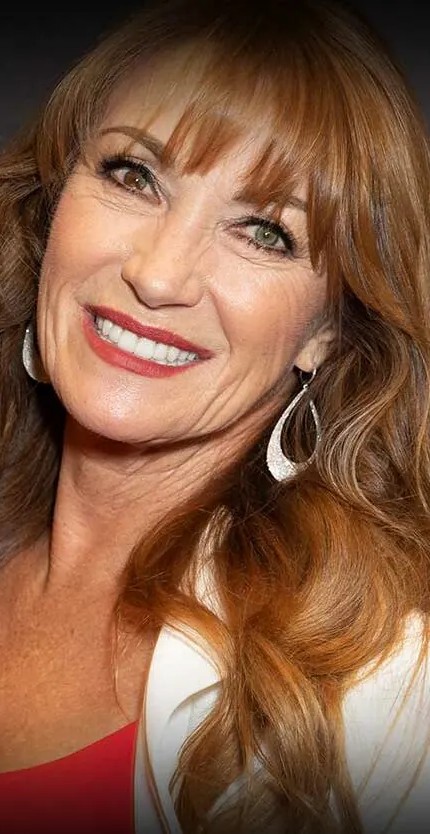
Jane Seymour was born on 15 February 1951. She was 74 from 15 February 2025 through 14 February 2026, and she turned 75 on 15 February 2026.
Age-related celebrity searches can become outdated quickly because many pages keep the same wording for years. The dependable fact is Seymour’s birth date: 15 February 1951. To calculate her age in any year, subtract 1951 from the year in question, then subtract one if that year’s 15 February birthday has not yet occurred.
Her birthday is sometimes written as February 15 in American-style date formatting and 15 February in British usage. Both refer to the same day. Since she was born in England and later established much of her career in the United States, readers may encounter either form in biographies, interviews, and entertainment coverage.
The timeline below makes the age calculation clear without relying on a permanently fixed “current age” label. That is especially useful for readers returning to this information after another birthday has passed.
| Date range | Jane Seymour’s age | Birthday milestone |
|---|---|---|
| Until 14 February 2025 | 73 | Before her 74th birthday |
| 15 February 2025 to 14 February 2026 | 74 | Her 74th year |
| From 15 February 2026 | 75 | Her 75th birthday and beyond |
Her longevity in the public eye is not the result of one nostalgic role. Seymour’s career has unfolded in distinct eras, beginning with British productions, expanding through major Hollywood films, and finding a large television audience with a role that became closely associated with her name.
Her Birth Name, Family Background, and Roots in England
Jane Seymour was born Joyce Penelope Wilhelmina Frankenberg in Hayes, Middlesex, England. Her professional name came later, after she began pursuing acting and performing arts.
Her parents were John Benjamin Frankenberg and Mieke van Tricht. Seymour’s English upbringing, Dutch maternal heritage, and early interest in performance all shaped the international character of her later career. Although audiences most often identify her with American television, England is central to her early life, training, and screen beginnings.
As a child, she trained in ballet and attended the Arts Educational School in London. Ballet gave her physical discipline and an awareness of movement that translated well to screen acting, particularly in period dramas where posture, gesture, and restraint often carry as much meaning as dialogue.
The name Frankenberg remains important because it distinguishes the actress from the Tudor queen whose name she later adopted professionally. It also helps explain why formal biographies identify her as Joyce Penelope Wilhelmina Frankenberg, even though generations of viewers know her simply as Jane Seymour.
For a concise overview of her early life and acting career, readers can consult Britannica’s biography of Jane Seymour. The basic record is straightforward: she was born in England in 1951, trained as a performer when young, and moved into film and television before becoming an internationally recognized actor.
Why She Uses the Name Jane Seymour
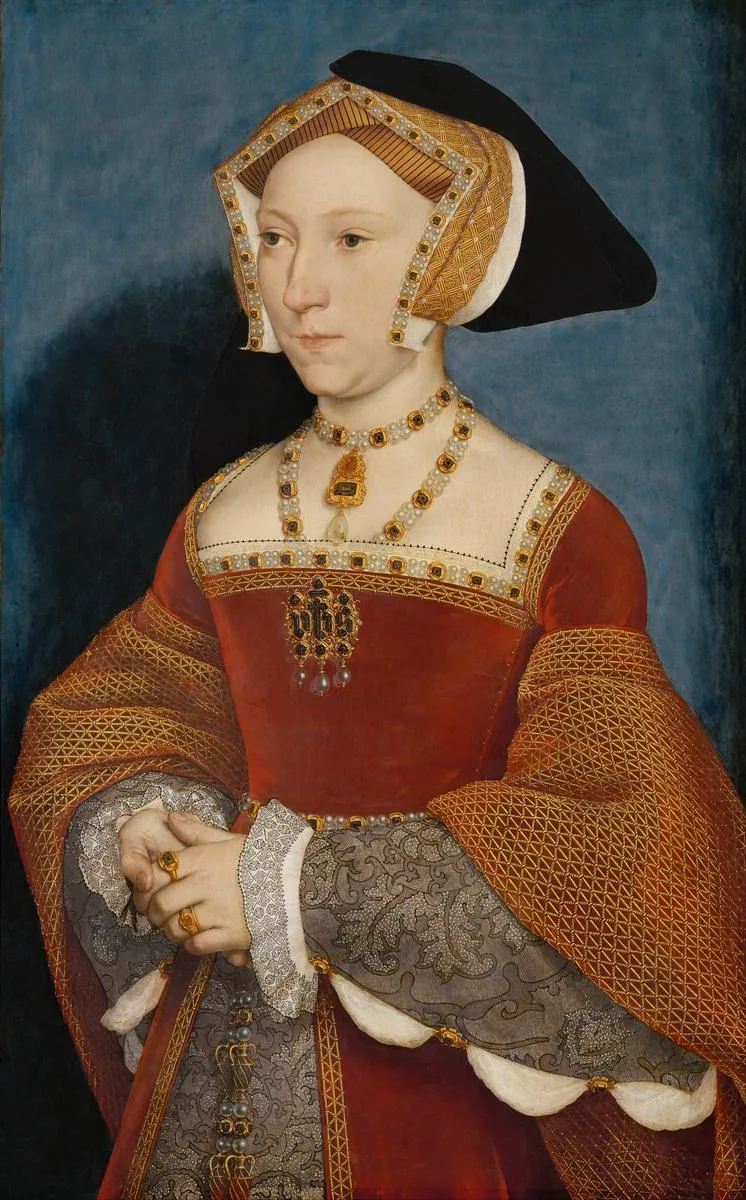
Jane Seymour chose a stage name associated with the Tudor queen Jane Seymour, the third wife of King Henry VIII. The actress is not related to the historical queen, despite the persistent confusion created by their shared name.
The historical Jane Seymour became Queen of England after marrying Henry VIII in 1536. She was the king’s third wife and the mother of the future Edward VI. She died in 1537, shortly after giving birth, making her story a major part of Tudor history rather than modern entertainment history.
The actress adopted the name while beginning her career because it was easier to remember and pronounce than Frankenberg. It proved memorable, although it also created a lasting search problem: queries such as “Jane Seymour Queen,” “Jane Seymour young,” and “Jane Seymour husband” can refer to either the sixteenth-century royal figure or the modern actor.
A quick context check clears up most mistakes. References to Henry VIII, King Henry, Tudor succession, Edward VI, or a queen usually concern the historical Jane Seymour.
References to acting, a television series, a James Bond film, Dr. Quinn, Medicine Woman, or the Open Hearts Foundation concern the actress born in 1951.
That distinction matters because the two women lived nearly four centuries apart. The actress’s use of the name is a professional choice, not evidence of a family connection, a historical role, or a claim to royal ancestry.
Early Acting Work and the James Bond Breakthrough
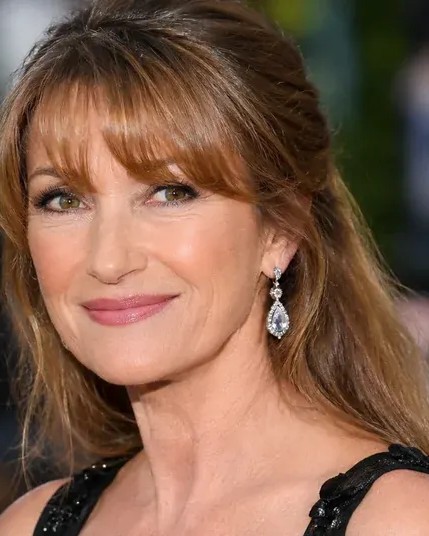
Jane Seymour’s first major international breakthrough came in 1973, when she played Solitaire in the James Bond film Live and Let Die. She was 22 years old when the film reached audiences.
Before that moment, Seymour had appeared in British film and television, including early work connected with productions such as Oh! What a Lovely War and the television series The Onedin Line. These roles gave her practical experience, but they did not provide the worldwide visibility that came with a Bond film.
In Live and Let Die, Roger Moore made his first appearance as James Bond, while Seymour played Solitaire, a mysterious character whose ability to read tarot cards is central to the plot. The role called for a mix of glamour, vulnerability, and stillness. It immediately placed Seymour before a vast international audience.
Being associated with James Bond can become a limiting label for some performers, especially women who enter the franchise early in their careers. Seymour avoided being defined only by that film. She continued choosing literary adaptations, romantic dramas, historical stories, and television projects that required more sustained character development.
That early decision shaped her reputation. Rather than treating the Bond role as the end point of a career, she used it as a launchpad. Her later work showed that she could carry a miniseries, play morally complex characters, and anchor a network drama over multiple seasons.
Career Highlights Beyond the Bond Film
Jane Seymour’s most respected work extends well beyond Live and Let Die, particularly through romantic dramas, literary adaptations, and historical productions. Her ability to portray elegant, emotionally guarded, or conflicted women became a consistent strength.
One of her best-known film roles came in the 1980 romance Somewhere in Time, where she played Elise McKenna opposite Christopher Reeve. The film developed a devoted following over time, and Seymour’s performance helped make Elise an enduring figure in romantic fantasy cinema.
On television, she played Cathy Ames in the 1981 miniseries adaptation of John Steinbeck’s East of Eden. Cathy is a demanding role: charming on the surface, destructive beneath it, and far removed from the gentle characters Seymour would later play. The performance demonstrated that her screen persona could accommodate darkness as well as warmth.
Her historical work was equally varied. In The Woman He Loved, she portrayed Wallis Simpson, the American divorcée whose relationship with King Edward VIII led to his abdication. Her portrayal of Wallis Simpson required attention to a real person whose image had already been shaped by decades of public debate, biography, and political history.
Seymour also appeared in major television events such as Onassis: The Richest Man in the World and War and Remembrance. These projects matter because they show the breadth of her acting life: she was not simply a film woman or a television star, but a performer comfortable moving between formats and periods.
Dr. Quinn, Medicine Woman and Her Signature Television Role
Dr. Quinn, Medicine Woman became Jane Seymour’s defining television series.
She played Dr. Michaela “Mike” Quinn, a Boston physician who relocates to frontier Colorado Springs after her father’s death.
The series aired on CBS from 1993 to 1998 and followed Dr. Quinn as she built a medical practice in a community that was skeptical of both a woman doctor and unfamiliar medical ideas. The character’s professional determination, emotional openness, and evolving relationship with Byron Sully, played by Joe Lando, made the series widely accessible.
Seymour was in her early forties when the television series began, a notable point in a business that has often treated major roles for women as age-limited. Dr. Quinn gave her an opportunity to lead a long-running primetime drama rather than appear only as a supporting character or romantic interest.
The show’s title is sometimes shortened incorrectly, but its full name is Dr. Quinn, Medicine Woman.
It later continued through two television movies, allowing viewers to revisit the characters after the regular series ended. For many people, the role remains more immediately recognizable than her earlier work as Solitaire.
The program is a period drama, not a documentary account of nineteenth-century medicine or the American West. Still, it used the idea of a woman physician to explore subjects such as medical access, grief, family, prejudice, and community responsibility. That combination of romance and social storytelling helped it build a loyal audience.
Golden Globes, Emmy Recognition, and British Honours
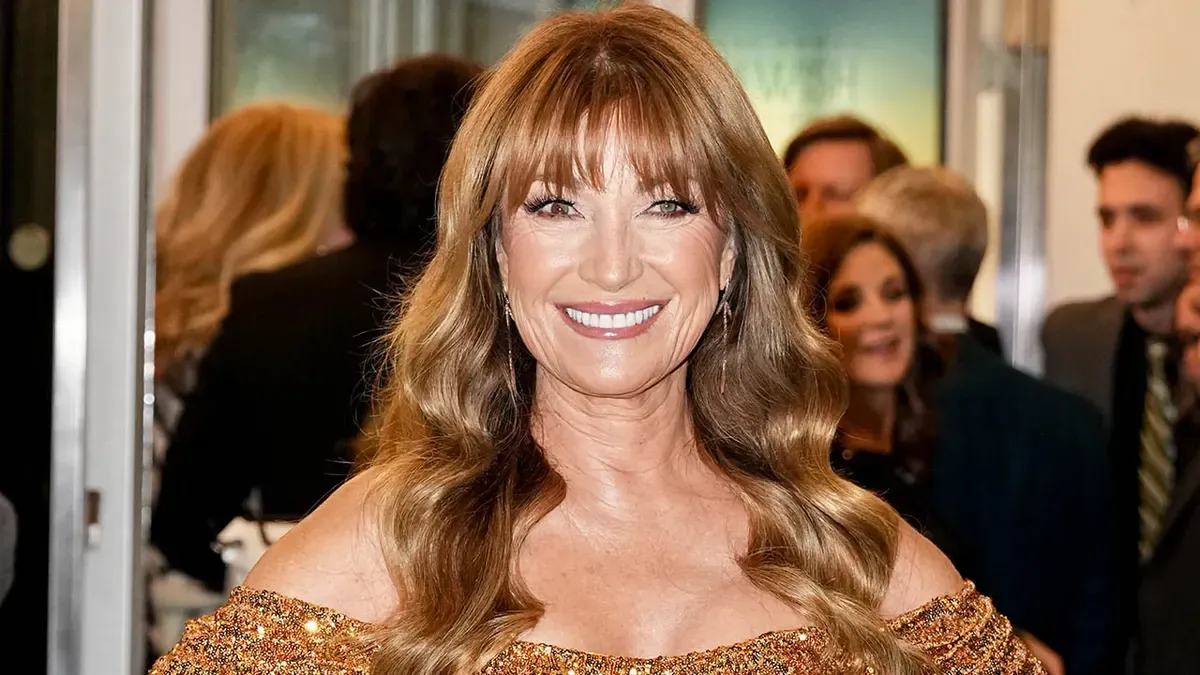
Jane Seymour’s career includes two Golden Globe awards, a Primetime Emmy Award, and an OBE, reflecting recognition from both American television and the British honours system. These awards correspond to specific performances and public service, not merely her general celebrity.
Her major honours help place her work in context:
- 1982 Golden Globe Award: Best Actress in a Miniseries or Motion Picture Made for Television for East of Eden.
- 1988 Primetime Emmy Award: Outstanding Supporting Actress in a Miniseries or Special for her work in Onassis: The Richest Man in the World.
- 1996 Golden Globe Award: Best Actress in a Television Series, Drama, for Dr. Quinn, Medicine Woman.
- 2000 OBE: Appointment as an Officer of the Order of the British Empire for services connected with drama and charity.
The Golden Globe award for Dr. Quinn, Medicine Woman is especially significant because it recognized Seymour as the lead of a continuing network drama. The series depended heavily on her ability to make Michaela Quinn credible as a doctor, a mother, a partner, and a moral center for the community.
She also received a star on the Hollywood Walk of Fame in 1999. Taken together, these milestones show a career that earned both popular recognition and formal industry acknowledgement over several decades.
Awards do not tell the full story of an actor’s work, but they can correct the impression that Seymour is remembered only for one character. Her record includes acclaimed miniseries acting, mainstream film visibility, long-running television success, and recognition from two national entertainment cultures.
Marriages, Husbands, and Jane Seymour’s Four Children
Jane Seymour has been married four times and has four children. Her family history is often simplified online, so it helps to separate the marriages from the question of which children were born during each relationship.
Her marriages were to Michael Attenborough, Geoffrey Planer, David Flynn, and James Keach. Attenborough was her first husband, followed by Planer. Her marriage to Flynn lasted from 1981 to 1992, and her marriage to actor and director James Keach began in 1993 and ended in divorce in 2015.
- With David Flynn, Seymour had two children: daughter Katherine and son Sean.
- With James Keach, she had twin sons, John and Kristopher, in 1995.
This is why references to “two children” can be incomplete. Seymour has two children from her marriage to Flynn and two younger children, the twins, from her marriage to Keach. In total, she is the mother of four children.
She was 44 when she gave birth to her twin sons in November 1995. That fact is frequently searched because it intersects with public interest in later motherhood, but it should be treated as one part of her personal life rather than the defining feature of it.
Her long marriage to James Keach also overlapped with the height of the Dr. Quinn era.
The pair worked together professionally as well as personally, which sometimes leads entertainment coverage to focus on their relationship. Her acting career, however, began long before that marriage and has continued independently after it.
Christopher Reeve, Gae Exton, and a Frequently Misstated Question
Jane Seymour and Christopher Reeve had a relationship around the time of their work in Somewhere in Time, but the question of who Reeve “left” Seymour for is often framed too bluntly. Public accounts identify Gae Exton as Reeve’s later long-term partner.
Seymour and Reeve co-starred in the 1980 film and were briefly engaged, according to Seymour’s own accounts of that period. Reeve subsequently formed a relationship with Exton, a British modelling agent, with whom he had two children. That basic timeline is more reliable than dramatic wording that reduces a complex private relationship to a single sensational claim.
The distinction matters because celebrity relationship questions often become distorted as they are repeated. A careful answer should identify the relevant people and sequence of events without suggesting knowledge of motives, fault, or private conversations that were never fully public.
Their connection also tends to be discussed because Somewhere in Time has become so beloved. The film’s romantic atmosphere can blur the line between the characters’ love story and the actors’ real lives. Those are separate things, even when biographies and fan discussions place them side by side.
When checking any celebrity relationship claim, look for dated interviews, established biographies, and direct statements rather than viral summaries. That approach is useful not only for Seymour’s history, but for any public figure whose life has been repeatedly retold through short entertainment articles.
Height, Weight, and Questions About Jane Seymour’s Public Image
Jane Seymour is commonly listed as approximately 5 feet 3 inches, or about 1.60 metres, tall. Her weight should not be treated as a fixed or reliably verified biographical fact.
Searches for a celebrity’s height and weight are common, yet those two facts are not equally dependable. Height is generally stable and widely reported in professional biographies. Weight changes over time, is often copied from unsourced databases, and does not reveal much about an actor’s career, health, or character.
Questions about whether Seymour is “a nice person” require the same degree of care. Personality is not a measurable public statistic. Interviews, colleagues’ memories, charitable work, and public appearances may offer impressions, but no biography can establish a universal answer to a subjective question.
Seymour has remained visible through acting, public speaking, art, writing, and philanthropy, which may explain continued interest in her appearance and lifestyle. Still, it is more useful to focus on verifiable information: her birthday, roles, awards, family facts she has discussed publicly, and professional projects.
A sensible rule is simple. If a claim about appearance does not have a direct, recent, and credible source, it should not be repeated as confirmed fact. That protects readers from false precision and gives the person involved the same basic fairness anyone deserves.
Open Hearts, Art, Writing, and Work Beyond Acting
Jane Seymour’s public life extends beyond film and television through visual art, books, design work, and the Open Hearts Foundation. These projects show why her career cannot be reduced to her age or one famous role.
The Open Hearts concept is closely associated with Seymour’s personal philosophy of responding to hardship with compassion and connection. Through the Open Hearts Foundation, she has supported and recognized charitable efforts that help people turn adversity into practical service for others.
She has also developed a serious interest in painting, particularly watercolor work, and has exhibited art publicly. Her artistic output is not simply a celebrity side project; it reflects a longstanding interest in visual expression that began alongside her early dance and performance training.
As an author, Seymour has written books that touch on relationships, home, personal reflection, and creative living. The subjects differ from a scripted screen role because they present her own voice and interests rather than the words of a character. That shift helps explain why audiences who discovered her on television may follow her work in other formats.
For people who know her primarily as Dr. Quinn, these activities add important context. The actor behind the frontier doctor has maintained a multifaceted working life, balancing entertainment with artistic and charitable projects over many years.
A Career Timeline That Puts Her Age in Context
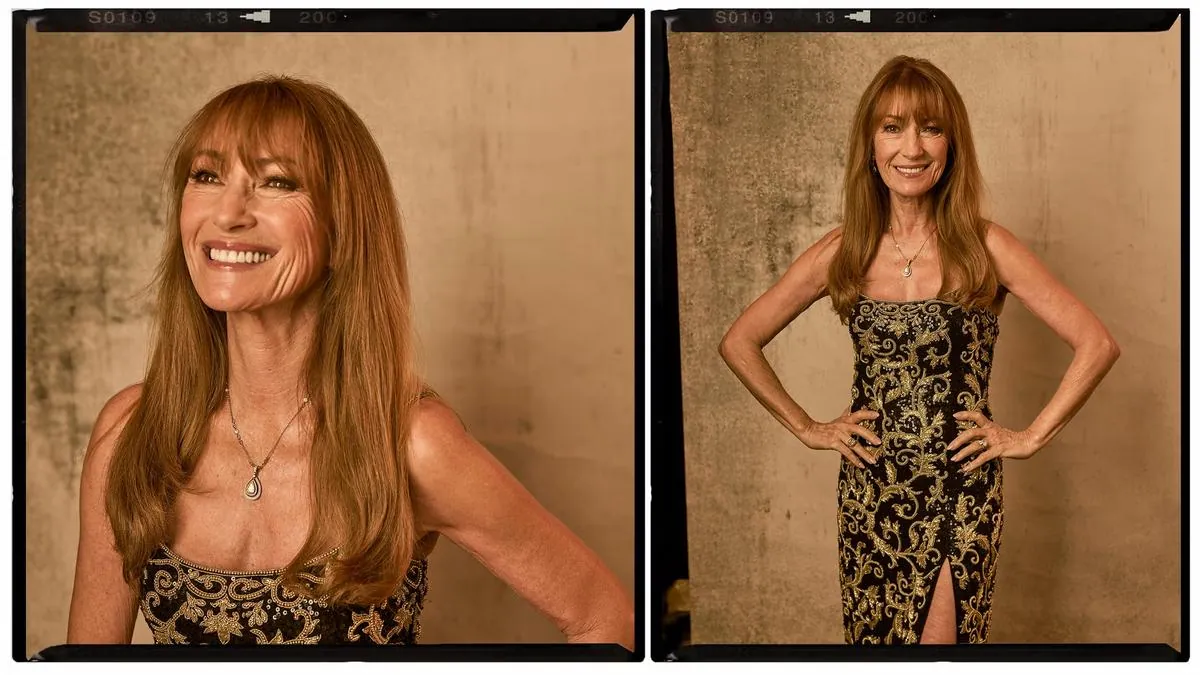
Jane Seymour’s career timeline shows how early she began working and how long she has remained active. Her major milestones span from late-1960s screen appearances to award-winning television and later creative projects.
- 1951: Born Joyce Penelope Wilhelmina Frankenberg in Hayes, Middlesex, England.
- 1969: Appeared in the film Oh! What a Lovely War while still a teenager.
- 1973: Reached global audiences as Solitaire in the James Bond film Live and Let Die.
- 1980–1982: Built a stronger dramatic reputation through Somewhere in Time, East of Eden, and other high-profile projects.
- 1993–1998: Starred as Dr. Michaela Quinn in Dr. Quinn, Medicine Woman.
- 2000 and after: Continued acting while expanding her work in art, publishing, and philanthropy.
Looking at the dates also corrects a common misconception: Seymour did not become prominent only in middle age because of Dr. Quinn. She had already been working professionally for more than two decades when the series began and had earned major recognition before taking the role.
At the same time, Dr. Quinn, Medicine Woman gave her a career-defining second peak. It introduced her to a generation of television viewers who may not have seen her early Bond work or her acclaimed miniseries performances.
The timeline is also a reminder that a performer’s public image can change over time. Some people first recognize Seymour as Solitaire, others as Elise McKenna, Michaela Quinn, Wallis Simpson, or an Emmy-winning dramatic actor. Each role belongs to a different stage of the same unusually durable career.
Frequently Asked Questions
These common questions address the most searched facts about Jane Seymour while separating confirmed biographical details from assumptions and outdated celebrity trivia.
Jane Seymour was born on 15 February 1951. She was 74 from 15 February 2025 through 14 February 2026 and turned 75 on 15 February 2026. For any later year, subtract 1951 from the year and adjust if her February birthday has not occurred.
How many times has Jane Seymour been married, and how many children does she have?
She has been married four times: to Michael Attenborough, Geoffrey Planer, David Flynn, and James Keach. Seymour has four children. Her daughter Katherine and son Sean are from her marriage to Flynn, while twin sons John and Kristopher were born during her marriage to Keach.
How old was Jane Seymour when she had her twins?
Jane Seymour was 44 when she gave birth to her twin sons, John and Kristopher Keach, in November 1995. Because her birthday falls in February, she had already turned 44 earlier that year. The twins are her younger two children, not siblings of the actress.
How tall is Jane Seymour, and what does she weigh?
Jane Seymour is commonly listed as 5 feet 3 inches, or about 1.60 metres, tall. A dependable, officially confirmed current weight is not public information and would change over time. Treat specific numbers published without a direct, dated source as unverified rather than as biographical fact.
Jane Seymour’s Age and Career Remain Part of the Same Story
Jane Seymour’s age is easy to confirm once it is attached to her 15 February 1951 birthday, but that number tells only a small part of her story. Her work has moved from England to Hollywood, from a James Bond film to Dr. Quinn, Medicine Woman, and from screen acting to art and charitable work.
For readers interested in Jane Seymour’s age, birthday, and career highlights, the practical takeaway is to check dates carefully and view each famous role in the wider context of a career that has lasted for more than five decades. Her changing age marks time; her body of work explains the enduring interest.

James Wilson is the founder and lead editor of HubQuora.com, where he covers the latest celebrity news, entertainment trends, viral gossip, and net worth stories. With a passion for pop culture and digital media, James delivers engaging, accurate, and up-to-date content that keeps readers informed about the world of celebrities, influencers, and entertainment industry buzz.