

Roz Varon will be 68 through November 25, 2026, and turns 69 on November 26, based on the commonly published birth date of November 26, 1957. The answer to how old Roz Varon is in 2026 seems simple, yet it is often distorted by undated celebrity pages and search snippets.
Her life story reaches beyond a birthday. The longtime Chicago broadcaster helped establish local television traffic reporting, became a familiar ABC 7 presence, earned industry recognition, and spoke publicly as a breast-cancer survivor. Accurate context matters here: professional milestones are well documented, while details about family life and health deserve more care than gossip pages provide.
Roz Varon’s Exact Age and Birthday in 2026
Roz Varon is 68 for most of 2026 and turns 69 on November 26, 2026. That calculation uses the widely reported date of birth, November 26, 1957, rather than treating the start of a calendar year as an automatic birthday.
| Date in 2026 | Roz Varon’s Age | Reason |
|---|---|---|
| January 1 to November 25 | 68 | Her 2026 birthday has not yet occurred. |
| November 26 | 69 | She reaches her 69th birthday. |
| November 27 to December 31 | 69 | Her birthday has passed for the year. |
Her birthday, not January 1, determines her age

Age questions need an “as of” date. Someone born late in the year does not gain a year of age on New Year’s Day, even though many search pages refresh their headlines for the new year. That is why a result calling Varon 68 in early 2026 can be correct, while the same number would be outdated after November 26.
The math is straightforward: 2026 minus 1957 equals 69, but the birthday has to arrive before that number applies. This small distinction is useful for readers checking an event appearance, a retrospective story, or a current profile. A biography published in April 2026 should describe her as 68; one dated in December should say 69.
It also helps to separate a publicly reported date from an official vital record. Broadcasters often keep personal documentation private, and a station biography may focus on work rather than birth information. Still, November 26, 1957 is the date most often used in established biographical references, making the 68-to-69 timeline the clearest practical answer for 2026.
Why Roz Varon’s Age Can Look Different Online
Conflicting ages usually come from stale pages, copied summaries, or articles that lack a publication date. The best way to assess a claim is to compare the stated age with the date the page was written and then apply her November 26 birthday.
Search engines frequently surface short profile cards without showing when the underlying information was last reviewed. A page written when Varon was 64 may remain online unchanged for years, even after its headline or metadata is refreshed. That can make an old fact appear current.
Start with sources closest to the subject’s work
A station biography is particularly useful for confirming a broadcaster’s role, employer, and career timeline, even if it does not function as a birth record. Readers can consult the ABC 7 Chicago biography for Roz Varon for context about her established connection to the station and her journalism career.
- Check the date an article was published or updated.
- Confirm whether an age is tied to a specific year.
- Prefer direct interviews and reputable newsroom profiles.
- Be cautious with pages that repeat uncited celebrity claims.
Birthday information deserves the same care. A site may list only a birth year, while another may provide a full date without explaining where it came from. In Varon’s case, the commonly cited November 26 date makes it possible to give a precise 2026 answer, but readers should avoid treating every copied biography as equally reliable.
This approach also prevents a common mistake: confusing a projected age with a present age. Saying that she “will be 69 in 2026” is true, but it is incomplete before late November. Saying she is “69 in 2026” is accurate only from November 26 onward.
College, Early Life, and the Public Record
Roz Varon’s public life story is most clearly documented through her education and broadcast work, not through extensive accounts of her childhood or private family background. Biographical profiles commonly identify Columbia College Chicago as an important part of her educational path.
That college connection fits naturally with the career she built. Columbia College Chicago has long been associated with media, communications, journalism, and creative disciplines, making it a logical setting for a future television professional interested in broadcast storytelling. Varon’s later success depends on skills that a communications-focused education can develop: concise writing, visual awareness, timing, research, and an understanding of a local audience.
Education offers useful context without filling in unknown details

College is an important part of a career biography, but it should not be used to invent a fuller childhood narrative than public evidence supports. A responsible account can recognize her Chicago media roots and professional preparation without guessing about personal experiences, early schools, relatives, or formative events that she has not chosen to make central to her public identity.
Small personal details can become distorted as they are passed between entertainment sites. A reference to a school activity, a Girl Scouts connection, a favorite travel destination, or a childhood anecdote may sound harmless, but it still needs direct attribution before it belongs in a factual biography. Personal color is not a substitute for verified reporting.
What is clear is that Varon developed a career in one of the country’s most demanding local media markets. Chicago television rewards speed, accuracy, personality, and deep familiarity with the region. Her educational background and local professional focus provided a foundation for a role that would become far more influential than a brief commute update.
From Local Broadcasting to a Traffic Reporting Career
Roz Varon’s career emerged during an era when local radio and television were essential sources of real-time commuter information. Before smartphones and constantly updated navigation apps, a well-timed traffic report could change a listener’s or viewer’s entire morning.
Traffic reporting may sound narrow to people who only see a brief segment on a morning newscast. In reality, it requires strong news judgment. The reporter must decide which incidents are confirmed, which closures truly affect travel, how long a disruption may matter, and how to explain an alternative route without overpromising that it will be faster.
Varon’s professional profile became associated with both traffic and transportation coverage. That distinction matters.
Traffic reporting addresses the immediate question of what is happening on the roads right now. Transportation reporting can also address larger issues: construction plans, transit changes, public safety, infrastructure, airport access, and how civic decisions affect everyday travel.
Traffic was a specialized newsroom beat, not just a map
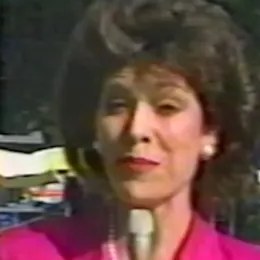
By building expertise in this area, Varon helped give a practical, public-service function greater visibility on Chicago television. A traffic anchor needs credibility because viewers act on the information.
If an incident is exaggerated, commuters may make unnecessary detours. If a major closure is missed, they may lose valuable time.
Her career also reflects the changing technology of local news. Early television traffic reporting relied heavily on newsroom coordination, road observations, public agency information, and aerial or field reports.
Later systems added digital maps, cameras, automated speed data, and wider access to agency alerts. The delivery changed, but the essential responsibility did not: make complicated, fast-changing information useful in a few clear sentences.
Joining ABC 7 Chicago in April 1989
Varon joined ABC 7 Chicago in April 1989, a date that anchors much of her public professional biography. ABC 7 Chicago, the local WLS-TV station, gave her a platform in a major market where morning traffic updates were a daily need rather than a minor feature.
Her arrival was significant because she is widely associated with pioneering television traffic reporting in Chicago. The role placed her in front of viewers at the exact time they were deciding when to leave, which route to take, whether to use public transit, or whether weather conditions required extra time.
Being a first traffic reporter changed expectations

The phrase “first traffic reporter” has real meaning in the history of local television. It describes more than a person reading road conditions. It signals a shift in how stations treated transportation information: as a recurring public-service beat with a recognizable reporter, a regular format, and direct relevance to ordinary life.
Chicago is especially suited to that kind of reporting. Its commuting patterns involve expressways, surface streets, rail lines, downtown congestion, major sporting events, weather emergencies, and airport travel.
A delay on one corridor can affect neighborhoods and suburbs far beyond the original incident. Viewers need information that is geographically clear and timely.
The calendar span from April 1989 to April 2026 is 37 years. That calculation shows why Varon’s name is closely tied to the station and to Chicago traffic coverage. It does not, by itself, guarantee a particular 2026 broadcast schedule, but it does demonstrate the unusual longevity of her public association with ABC Chicago.
For many viewers, her presence helped make traffic reporting feel less like an interruption and more like a dependable part of the morning news routine. That familiarity is built slowly, one accurate update at a time.
What a Traffic and Transportation Reporter Actually Does
A traffic reporter’s job is to turn scattered road and transit information into decisions people can use quickly. On a busy morning, that means identifying the delay, locating it accurately, explaining its effect, and placing it in context before the next news segment begins.
Morning traffic coverage is demanding because the information has a short shelf life. A crash may be cleared within minutes, while the backup it created can last much longer. A construction closure may be scheduled, yet its real-world effect can vary with weather, commuter volume, or a separate incident elsewhere.
A strong traffic and transportation report usually considers several connected factors:
- Collisions, stalled vehicles, lane closures, and emergency response activity.
- Construction projects and planned roadway restrictions.
- Weather conditions that reduce visibility or road safety.
- Rail, bus, airport, and downtown event disruptions.
- Travel times and the likely spread of congestion.
That is why the title traffic anchor can underestimate the editorial work involved. The on-air update might last less than a minute, but it depends on rapid verification and sensible prioritization.
Not every slowdown belongs in a broadcast. The important ones are those that materially change a commuter’s choices.
Transportation coverage also broadens the role beyond a particular morning. A reporter may explain why a bridge project will affect a neighborhood for months, how a major transit change alters commuting patterns, or why a seasonal travel surge requires extra planning. This public-service perspective helps explain the value of Varon’s long career in traffic reporting.
Why Her Long ABC Chicago Association Matters in 2026
Roz Varon’s enduring association with ABC Chicago matters because local television careers are measured in trust as much as years. A familiar reporter becomes part of a viewer’s routine only by repeatedly delivering information that is useful, understandable, and dependable.
By April 2026, the period since Varon joined ABC 7 in April 1989 spans 37 calendar years. That is a remarkable length of time for a broadcaster to remain connected in the public mind with a particular station and role. It also explains why viewers continue to search for updates about her age, career, and personal life.
Historic affiliation is not the same as a current on-air schedule
There is an important practical distinction here. A longstanding station biography, an archive clip, or a past morning news segment confirms historical work; it does not automatically prove that a person appears on every broadcast in a future year. Television schedules shift, programs change, and roles can evolve. Varon in fact retired from ABC 7 on April 5, 2024, after 35 years at the station.
That distinction is especially helpful when readers see references to special programming, a Weekender feature, an anniversary segment, or an older promotion. The date attached to the material matters. A clip may celebrate a milestone from years earlier, while a current viewer may simply want to know whether the broadcaster is still appearing in a regular role.
The most reliable way to assess present-day professional status is to look for dated station material, recent on-air bylines, or a direct announcement. Avoid treating social-media reposts as conclusive proof. A public career can be well established while current work arrangements remain subject to normal newsroom changes.
That measured approach respects both the audience’s interest and the reality of broadcast careers. It gives Varon credit for the career she built without making assumptions about a particular day’s programming.
Emmy Awards, Peter Lisagor Recognition, and the Silver Circle
Roz Varon’s age is only one reason people remember her; professional recognition is another. Her career has been associated with multiple Emmy Awards, Peter Lisagor Awards, and Silver Circle recognition, honors that reflect the wider journalism community’s view of sustained local broadcast work.
Emmy Awards in local television typically recognize excellence in areas such as reporting, writing, producing, photography, and programming. A traffic reporter can contribute to work that is both immediately useful and journalistically strong, especially when a daily transportation story develops into a broader public-interest issue.
Different awards measure different kinds of achievement

The Peter Lisagor Awards are significant in Chicago journalism because they recognize quality reporting across local media. A Lisagor honor carries particular weight because it connects a journalist’s work to standards of public service, reporting skill, and community relevance rather than mere on-air visibility.
Silver Circle recognition is also meaningful in television. The honor traditionally acknowledges people whose contributions to the industry extend over many years, which makes it a fitting marker for a veteran broadcaster with a lengthy Chicago career. It recognizes professional endurance, but also the influence built through that endurance.
Awards lists can be confusing because some biographies count wins, nominations, team honors, and organizational recognition differently. For that reason, it is wiser to describe Varon as a recipient of multiple Emmy and Lisagor-related honors than to repeat an exact total unless the award organization or a dated newsroom profile clearly provides one.
The broader point is solid: her role was not viewed solely as a routine traffic assignment. Her recognition places her within Chicago’s larger journalism community and helps explain why her name continues to carry authority with longtime viewers.
Roz Varon’s Breast Cancer Experience and Survivor Advocacy
Breast cancer is the illness most closely connected with Roz Varon’s public personal story. She has spoken openly about being diagnosed with breast cancer in 2006 and is widely recognized as a breast cancer survivor.
Her openness gave viewers a more personal understanding of someone they had known through traffic and transportation reporting. Local news personalities often feel familiar to audiences, but illness can still be intensely private. By discussing survivorship, Varon helped bring attention to an experience shared by many patients, families, and caregivers.
A past diagnosis does not define a person’s present health

It is important to use careful language. Saying that Varon is a breast-cancer survivor reflects her own public story.
It does not justify speculation about her current health, treatment, prognosis, or any later medical issue. Those details are private unless she chooses to address them through a direct and current statement.
Public discussion of breast cancer can encourage people to pay attention to screening conversations, changing symptoms, family medical history, and questions for qualified healthcare professionals. Yet a celebrity or broadcaster’s personal medical story should never be treated as individual medical advice. Each person’s risk, diagnosis, and care plan are different.
Varon’s survivor identity also adds a meaningful dimension to her life story. It shows a public figure using a difficult personal experience to connect with a community beyond her daily work. For viewers who faced cancer themselves, that kind of candor can make a familiar face feel more human without requiring the audience to know every private detail.
When searching “What illness does Roz Varon have?” the responsible answer is therefore specific and limited: she has publicly discussed breast cancer and survivorship. It is not accurate to turn that history into an unsupported claim about her health status on any particular day.
Marriage, Husband Searches, and Respecting Private Family Details
Questions about Roz Varon’s marriages, husband, former husbands, or family are common search queries, but they require more caution than her public career history. A successful television career does not make every relationship detail public property or turn copied claims into verified facts.
Some online pages state that Varon has been married four times. That figure is widely repeated, but a sound biography should not treat it as settled unless it can be traced to a direct interview, an attributable report, or another reliable primary source. Official newsroom profiles generally emphasize her work, awards, and public advocacy rather than a complete marital record.
Private life deserves a higher standard of proof

It is reasonable for readers to wonder whether Roz Varon is still married, who her spouse is, or whether she has children. It is not reasonable to infer answers from old photos, social posts, entertainment summaries, or vague references to an ex-husband. Relationships can change, and people may choose not to issue public updates.
The same care applies to searches involving a daughter’s illness. Unless a family member has publicly and clearly shared information through a reliable source, health details about relatives should remain private. Repeating an unverified health claim can cause real harm, especially when it concerns someone who is not a public figure.
A useful rule is simple: report what Varon has made part of her public narrative, such as her broadcast career and breast-cancer survivorship, while leaving unsupported family claims alone. This is not evasive. It is the difference between an accurate profile and internet gossip.
For readers seeking a respectful life story, the most meaningful facts remain her years in Chicago broadcasting, her pioneering traffic role, her professional awards, and her public resilience after cancer. Those accomplishments do not need sensational personal claims to be important.
How to Read Roz Varon Biographical Claims Responsibly
The most useful way to understand Roz Varon’s life story is to separate confirmed public milestones from claims that are merely repeated online. This matters especially with longtime broadcasters, whose careers generate decades of archived segments, old profiles, fan pages, and search snippets.
Start with the fact that can be calculated: using the commonly reported November 26, 1957 birthday, she is 68 until November 25, 2026, and 69 afterward. Then move to the career facts that are consistently documented, including her April 1989 arrival at ABC 7 Chicago, her traffic and transportation work, and her recognized role in Chicago journalism.
Next, treat personal claims differently. A marriage count, current husband, family member’s medical condition, rumored retirement, or dramatic headline should be checked for a date and a credible attribution. The more personal or consequential the claim, the more direct the evidence should be.
Context turns a list of facts into a real life story
A reliable biography is not just a birth date followed by a list of jobs. It explains why a person’s role mattered at the time. In Varon’s case, that means understanding how traffic reporting evolved before digital navigation became universal, why Chicago’s transportation network needed specialized local coverage, and how a morning news presence can build public trust over years.
It also means recognizing the limits of public information. Not every chapter of a person’s life needs to be known to appreciate the part they have chosen to share. Varon’s professional history and survivor advocacy are substantial on their own, and they offer a clearer picture than unverified details ever could.
That balance is the best response to curiosity about age, birthday, career, and family. It keeps the focus on facts while still acknowledging the human experience behind a long, visible career.
Frequently Asked Questions
These quick answers address the age, career, health, and personal-life questions most often associated with Roz Varon while keeping a clear boundary between public facts and private information.
Roz Varon is 68 from January 1 through November 25, 2026. She turns 69 on November 26, 2026, based on the commonly reported birth date of November 26, 1957. Any age listed without an “as of” date may be outdated or prematurely calculated.
When is Roz Varon’s birthday?
Roz Varon’s commonly published birthday is November 26, 1957. That late-November date explains why she remains 68 for most of 2026 before turning 69 near the end of the year. Her age should always be calculated against the specific date being discussed.
When did Roz Varon join ABC 7 Chicago?
Roz Varon joined ABC 7 Chicago in April 1989. Her association with the station made her a familiar figure in local traffic and transportation reporting. She retired from ABC 7 on April 5, 2024, after 35 years at the station. The span from April 1989 to April 2026 covers 37 calendar years since she joined, though schedules and roles can change over time.
What illness has Roz Varon publicly discussed?
Varon has publicly discussed breast cancer and is known as a breast-cancer survivor. Her diagnosis is commonly dated to 2006. That public history should not be treated as a current medical update, and it does not support speculation about her present health or treatment.
How many times has Roz Varon been married?
Some webpages say Varon has been married four times, but that figure should not be repeated as settled fact without a direct, attributable interview or reliable report. ABC 7 career biographies do not provide a full marital record, so her current marital status should be treated as private.
What Roz Varon’s 2026 Age Says About Her Life Story
Roz Varon’s age in 2026 is easy to state with precision: she is 68 until November 26, when she turns 69. Her birthday is only the starting point, though. The fuller story is a long Chicago broadcasting career shaped by pioneering traffic coverage, public-service journalism, industry recognition, and breast-cancer survivorship.
For the most dependable updates, rely on dated station reporting and direct public statements rather than recycled profile pages. That approach keeps attention where it belongs: on the real accomplishments and resilience that have made Varon a recognizable name in Chicago television.

James Wilson is the founder and lead editor of HubQuora.com, where he covers the latest celebrity news, entertainment trends, viral gossip, and net worth stories. With a passion for pop culture and digital media, James delivers engaging, accurate, and up-to-date content that keeps readers informed about the world of celebrities, influencers, and entertainment industry buzz.