
Understanding the gnarly meaning in contemporary conversation requires a journey through time, as this versatile word has evolved significantly from its literal roots. While you might encounter it describing a knotty piece of wood, it is far more likely to surface today as a piece of slang used to express anything from extreme danger to intense excitement.
By exploring how this adjective functions across different subcultures, you will gain a clearer sense of why it remains such a staple in casual English. This look at the term provides the context you need to use it with confidence.
The Etymological Roots of Gnarled
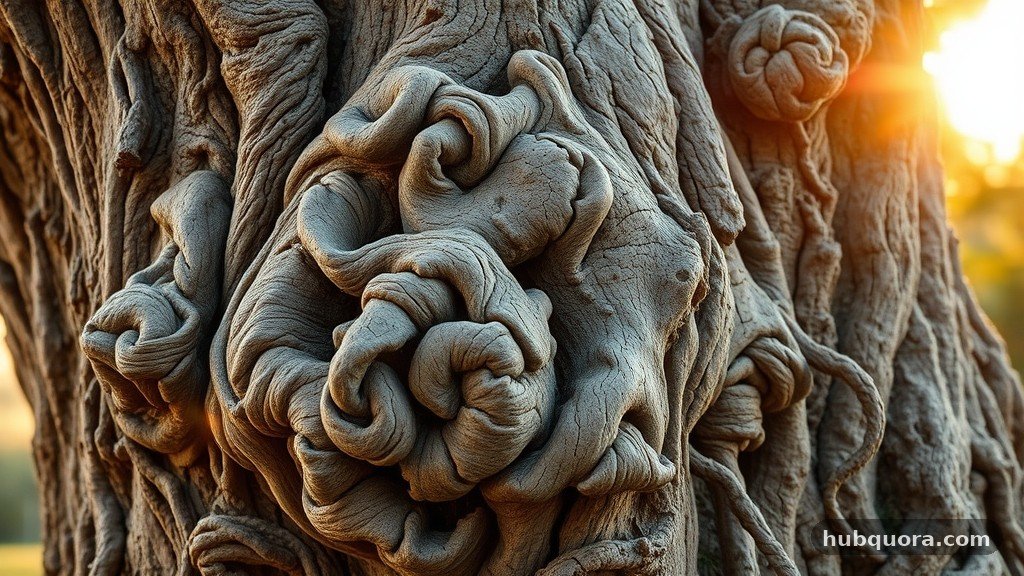
Before it became a staple of surf culture, the term was strictly descriptive. It derives from the Middle English word “gnarre,” which refers to a knot or a hard protrusion. If you look at an ancient oak tree, you see branches that are twisted, knotted, and weathered; this is the literal sense of being gnarled.
When someone describes an object as gnarled, they are emphasizing its rough, irregular, or distorted appearance. This physical quality—the idea of something being difficult to navigate or aesthetically rugged—laid the groundwork for the metaphorical transition that would happen centuries later. Understanding this base meaning is essential because the modern slang retains a core sense of “difficulty” or “intensity” that traces directly back to those twisted, hard-to-handle knots in wood.
The Evolution into Surfer Slang
During the 1960s and 70s, the California surf scene adopted the term to describe the ocean conditions they faced. When a wave was particularly large, powerful, or dangerous, surfers would call it gnarly. This wasn’t a compliment in the traditional sense; it meant the wave was a tough ride that could easily result in a wipeout.
Over time, this usage shifted. Surfers began using it to describe the thrill of successfully navigating those dangerous waves. If a wave was intimidating but you managed to ride it, it was a “gnarly” experience in the best way possible.
This duality—representing both the threat of danger and the satisfaction of overcoming it—is what makes the word so unique in our modern vocabulary. It captures the tension between fear and adrenaline in a single syllable.
Gnarly Meaning as a Positive Descriptor
In many contexts today, the gnarly meaning is synonymous with “cool,” “intense,” or “impressive.” If you show someone a complex guitar solo or a challenging piece of art, they might call it gnarly to signal their genuine respect for the skill involved. It implies that the work was difficult to produce and the result is striking.
This usage often appears in extreme sports, music, and gaming communities. It serves as a shorthand for “extraordinary” or “hardcore.”
When you use it this way, you are acknowledging that the subject matter isn’t simple or mainstream; it has an edge to it. It’s a way of saying that something has substance and requires a certain level of grit to appreciate or perform.
Describing Difficult or Unpleasant Situations
Conversely, the term still holds its original, less flattering connotation. If you are stuck in a difficult situation, such as a traffic jam or a complicated legal mess, you might describe the problem as gnarly. In this sense, it acts as a synonym for “messy,” “unpleasant,” or “complicated.”
This usage is common when describing physical injuries as well. A severe scrape or a broken bone is often referred to as a gnarly injury. It evokes the image of something that is twisted or broken in a way that is hard to look at.
In this context, the slang emphasizes the severity of the situation. It lets the listener know that the problem is not a minor inconvenience but a significant hurdle that requires attention.
Synonyms and Linguistic Nuances
Finding the right synonyms for this term depends entirely on the context of your sentence. Because it is so flexible, there is no single replacement that works in every scenario. To get a better grasp of the variations, it helps to categorize the intended sentiment.
- When meaning cool: awesome, sick, intense, radical, impressive.
- When meaning difficult: hairy, treacherous, knotty, complicated, messy.
- When meaning ugly: grotesque, distorted, twisted, rough, weathered.
As you can see, the list of potential replacements changes based on whether you are talking about a person’s character, a physical object, or a life circumstance. When you want to ensure your meaning is clear, consider whether the term is being used to praise or to complain. If you are uncertain, you can always check an authoritative dictionary entry to see how the linguistic experts define the nuance.
The Role of Tone and Delivery
The gnarly meaning is heavily dependent on the speaker’s tone. Because it can mean anything from “disgusting” to “amazing,” the listener relies on non-verbal cues to interpret the message.
If you say it with a grimace, you are likely describing something negative. If you say it with a grin, you are clearly excited.
This emotional variability is what makes it a favorite among younger generations. It allows for a level of ambiguity that can be playful or dramatic. However, it also means that, in a professional setting, you should tread carefully.
While it is a widely recognized term, its informal roots can make it feel out of place in a formal boardroom or an academic paper. Always gauge your audience before choosing to use it in a high-stakes conversation.
Regional Differences and Usage Patterns
While the term is globally understood thanks to pop culture, its frequency of use varies by region. In coastal areas or regions with strong ties to extreme sports, it appears in daily conversation far more often than in landlocked or more conservative regions. This is a classic example of how subcultural slang migrates into the mainstream.
You might also find that older generations use the term primarily to describe things that are literally gnarled, while younger generations are more likely to use it as a catch-all for intensity. This generational divide is common for words that have undergone a “semantic shift.” It is interesting to observe how the word continues to evolve, shedding its old skin while maintaining its core identity as a descriptor of something that is definitely not “fine” or “simple.”
Topical Gaps in Understanding Slang
Why do people assume it always means bad?
Many people associate the word with the literal definition of gnarled, which implies decay or deformity. Because the negative connotation is rooted in the physical world, it is often the first thing people think of before they encounter the positive, slang-based usage.
Is it strictly a Gen Z term?
Absolutely not. The term has been in circulation for decades. While younger generations have adopted it and kept it alive in social media, it has roots that go back to the 1960s and 70s. It is a multi-generational term that has survived several linguistic cycles.
Can you use it to describe a person?
You can, but you must be careful. Describing a person as gnarly could mean they are “tough” or “experienced” in a cool way, but it could also be interpreted as calling them “ugly” or “rough around the edges.” Context is everything when applying it to a human subject.
Comparing Intensity Levels
To better understand how the term functions, compare it to other common adjectives in the following table. This helps isolate the specific “flavor” of the word compared to its alternatives.
| Word | Primary Context | Intensity Level |
|---|---|---|
| Gnarly | Extreme situations, surf, grit | High |
| Cool | General approval | Low to Moderate |
| Difficult | Neutral, objective tasks | Moderate |
| Gross | Purely negative/disgusting | High |
The Longevity of the Term
Will this word eventually fade away? It seems unlikely.
Words that capture a specific mix of danger, excitement, and complexity are rare and highly useful. Because it serves as a bridge between the physical and the abstract, it has staying power that other trendy slang terms lack.
It has moved from the forest to the beach and then into the digital space, proving that it can adapt to new environments. As long as people continue to face challenging situations or experience moments of genuine intensity, they will look for a word that captures that feeling. It is a linguistic tool that is likely to remain in our active vocabulary for a long time to come.
FAQ
Does gnarly mean good or bad?
It depends entirely on context. It is a flexible term that can describe something as excellent and impressive, or it can describe something as difficult, disgusting, or severely unpleasant. You have to look at the speaker’s tone and the surrounding situation to determine the meaning.
Is it considered offensive?
Generally, no. It is informal and casual, but it is not typically viewed as a slur or offensive language. However, using it to describe a person’s appearance could be seen as rude or insulting, as it implies they are rough, weathered, or unkempt.
What is a good synonym if I want to be more formal?
If you are in a professional setting and want to avoid slang, use more precise words. If you mean something is difficult, use “challenging” or “complex.” If you mean something is exciting, use “extraordinary” or “intense.” If you mean something is ugly, use “grotesque” or “distorted.”
Why do surfers use it so much?
Surfers use the term because it perfectly captures the nature of the ocean. A wave can be dangerous and threatening, yet it provides a thrilling, high-stakes experience. The word encapsulates both the fear of the power of the water and the rush of the ride.
Conclusion
Navigating the gnarly meaning is ultimately about understanding the relationship between intensity and experience. Whether you are using it to describe a challenging day, a complex problem, or an incredibly impressive feat of skill, the word remains a vibrant part of our language. It carries a history that spans from the twisted roots of ancient trees to the crests of massive waves, making it one of the more versatile tools in your linguistic kit.
As you move forward, try listening for how others use it in your daily life; you will likely find that it appears in more diverse situations than you originally thought. Feel free to incorporate it into your own speech when the moment calls for a little extra grit or excitement.

James Wilson is the founder and lead editor of HubQuora.com, where he covers the latest celebrity news, entertainment trends, viral gossip, and net worth stories. With a passion for pop culture and digital media, James delivers engaging, accurate, and up-to-date content that keeps readers informed about the world of celebrities, influencers, and entertainment industry buzz.