

If you have ever found yourself wondering about the foley meaning, you have likely encountered the term in two vastly different contexts: the immersive world of cinema sound design and the clinical environment of medical care. While these two applications share the same name, they are fundamentally distinct in purpose, origin, and execution.
Understanding why this term is used in such disparate fields requires looking at the history of sound production as well as the evolution of medical technology. Whether you are a film student curious about the mechanics of audio post-production or someone seeking clarity on a medical procedure, grasping the nuances of this term will provide you with a much clearer perspective on both professional domains.
The Cinematic Origins of Foley Sound
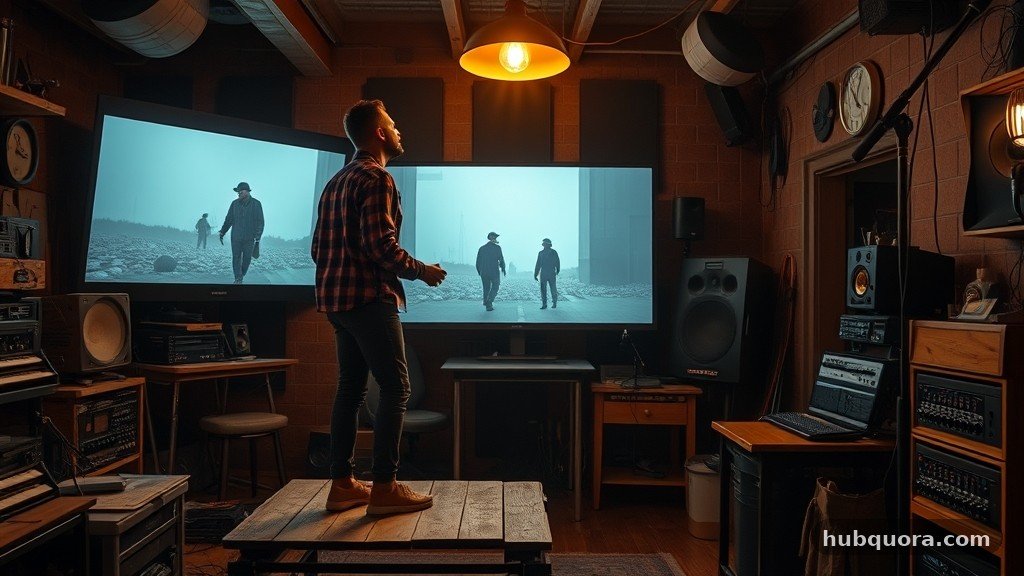
The term foley refers to the reproduction of everyday sound effects that are added to film, television, and video games in post-production to enhance audio quality. These sounds—often called foley effects—are essential for making a scene feel realistic and grounded. When a character walks across a hardwood floor, the microphone on set might not pick up the crispness of their footsteps.
A foley artist steps in to recreate that exact sound in a studio, syncing their movements with the visual action on screen. This process transforms a flat, quiet recording into a rich, three-dimensional auditory experience that pulls the audience deeper into the narrative.
Many people assume that everything they hear in a movie was captured during the initial filming, but that is rarely the case. Dialogue is often prioritized during production, meaning ambient noises like the rustle of fabric, the clink of silverware, or the creak of a door are often lost.
By recording these sounds separately, the sound editor can balance the audio mix to ensure the viewer remains focused on the story. Without these carefully crafted additions, even the most expensive blockbuster would feel hollow, sterile, and strangely disconnected from reality.
Jack Foley and the History of the Craft
The name itself is a tribute to Jack Foley, a sound technician who worked at Universal Studios during the early days of talking pictures. In the late 1920s, the transition from silent films to “talkies” created a massive technical challenge for studios that were not equipped to record complex soundscapes.
Jack Foley pioneered the technique of performing sound effects live while watching a projected film, effectively inventing a new craft that remains a staple of the industry today. His contributions were so significant that the practice was eventually named in his honor, cementing his legacy in the annals of media history.
Today, the work performed by professional foley artists is highly specialized. They use a variety of props—from gravel pits and water tanks to collections of discarded metal and fabric—to mimic specific textures. If you watch a film closely, you might notice that the sound of a character’s footsteps changes based on the surface they are walking on, even if the set was actually built on a soundstage.
This attention to detail is what defines the craft. It is not just about making noise; it is about conveying character, mood, and environment through subtle sonic cues that the human brain subconsciously expects to hear.
The Medical Context of a Foley Catheter
When you shift from the recording studio to the hospital, the foley meaning undergoes a complete transformation. In medicine, a Foley catheter is a thin, sterile tube inserted into the bladder to drain urine. It is named after Dr.
Frederic Foley, a urologist who developed the design in the 1930s. Unlike the cinematic version of the name, this medical device is a functional tool used to manage patients who cannot empty their bladders naturally. It features a small balloon at the tip that is inflated with sterile water to keep the catheter securely in place within the bladder.
This device is a common sight in clinical settings, particularly for patients undergoing surgery, those with urinary retention, or individuals suffering from conditions that require precise monitoring of fluid output. Because it is an invasive medical procedure, it requires strict sterile technique to prevent infection.
Healthcare providers are trained to insert and maintain these devices with extreme care, as improper usage can lead to complications. While the name sounds identical to the sound design practice, the two are completely unrelated in their etymology and application.
Comparing Sound Design and Medical Terminology
It is common for individuals to confuse these terms because they appear in dictionaries like Merriam-Webster or the American Heritage dictionary without always distinguishing the context clearly enough for a layperson. When you search for the definition of the word, you will often find multiple entries that can cause confusion. To help clear up the distinction, consider the following table which highlights the key differences between the two primary uses of the term.
| Feature | Foley in Film | Foley in Medicine |
|---|---|---|
| Primary Purpose | Enhancing audio realism | Draining the bladder |
| Originator | Jack Foley | Dr. Frederic Foley |
| Environment | Post-production studio | Clinical hospital setting |
| Key Tool | Props/Microphones | Sterile silicone tubing |
As shown in the table, the context is the most important factor in determining the meaning. Whether you are discussing the nuances of a sound effect or the function of a medical device, the environment in which you are using the word typically makes it obvious which definition is intended.
If you are reading a technical manual for a hospital, you are clearly looking at the medical device. If you are reading a critique of a recent film, you are undoubtedly seeing the term used in reference to audio engineering.
The Anatomy of a Sound Effect
To truly appreciate the cinematic definition, it helps to break down how a sound effect is constructed. A foley artist doesn’t just grab a random object; they select items based on the specific auditory profile required for a scene.
For example, if a character is wearing a heavy leather coat, the artist might rub two pieces of leather together in time with the actor’s movements. If the character is walking through mud, they might use a mix of cornstarch and water to mimic the thick, squelching sound of boots sinking into wet earth.
These sounds are recorded in a specialized studio space known as a foley stage. This room is designed with different types of flooring—wood, tile, concrete, and gravel—to provide a variety of surfaces for the artist to work on. The microphone is placed strategically to capture the exact frequency and texture of the sound, which is then sent to the sound editor.
The editor then layers these sounds into the film’s master audio track. This layered approach is why modern movies sound so rich; you aren’t just hearing one sound, but a composite of several audio elements that create a convincing whole.
Why Foley is Essential for Modern Media
You might wonder why modern technology hasn’t replaced the need for human-performed sound effects. While digital sound libraries exist, they often lack the nuance of a live performance.
A computer can trigger a pre-recorded footstep, but it cannot adjust the pressure, timing, or intensity of that footstep to match a specific actor’s emotional state or physical gait. The human element is what makes foley sound so effective; it captures the imperfections that make a sound feel real.
Furthermore, directors often want a specific “feel” for a scene that a stock sound effect cannot provide. If a scene is supposed to be tense and quiet, the foley artist might choose to make the footsteps sound slightly heavier or more deliberate. This level of artistic control is invaluable.
It allows the filmmakers to guide the audience’s perception of the scene without the viewer even realizing they are being influenced by the audio. It is a subtle form of storytelling that relies on the viewer’s subconscious connection to the world on screen.
Topical Gaps: Addressing Common Misconceptions
Many articles online fail to explain why the same name is used for two completely different things. The reality is that this is a classic case of linguistic coincidence. The surname “Foley” is a relatively common Irish name, and both Jack Foley and Dr.
Frederic Foley happened to be pioneers in their respective fields during the early 20th century. There is no shared root or historical connection between the two men or their work. When people search for the meaning of the word, they often expect a single, unified definition, but the truth is that the word acts as a homonym in this instance.
Another gap often found in general explanations is the failure to distinguish between “foley” and “special effects.” While both are used in film, they are distinct disciplines. Special effects (often called SFX) usually refer to explosions, fire, or digital animation.
Foley is specifically about the intimate, human-scale sounds of daily life. By focusing on the difference between these categories, you can better understand how sound engineers build a soundscape from the ground up, moving from the broad strokes of special effects to the fine-tuned details of foley work.
The Role of the Sound Editor in the Process
The sound editor is the individual responsible for taking the raw recordings from the artist and integrating them into the final product. Their job involves more than just syncing the audio; they must also clean up the tracks to ensure there is no background noise or interference.
They often use software to adjust the pitch, volume, and reverb of the sounds to match the acoustic environment of the scene. For instance, a footstep recorded in a quiet studio needs to sound different if the scene is set in a large, echoing cathedral.
This post-production phase is where the “magic” happens. The sound editor works closely with the director to ensure that the audio supports the overall vision of the film. If a scene feels “too quiet” or “missing something,” the editor will often identify the need for more foley.
This constant back-and-forth between the visual editing and the sound mixing is what gives a film its polish. You can learn more about the technical aspects of this process through resources like the Academy of Motion Picture Arts and Sciences, which provides detailed insights into the craft of sound editing and mixing.
Practical Applications in Sound Design
If you are interested in trying this out yourself, you don’t necessarily need a professional studio. Many amateur filmmakers start by using a basic digital recorder and everyday household objects. The key to successful recording is experimentation.
You will find that some materials sound much better than they look. For example, a bundle of celery can often be used to simulate the sound of breaking bones in an action movie, while a pair of gloves can mimic the sound of flapping bird wings.
* Start with a high-quality microphone to capture subtle textures.
* Record in a space with minimal background noise, like a closet or a basement.
* Sync your movements to the video frame-by-frame for the best results.
* Layer multiple sounds together to create a complex, dense auditory environment.
* Don’t be afraid to experiment with unconventional objects; the best sound is often the most surprising one.
By following these simple steps, you can begin to see how much work goes into creating the reality you hear in your favorite media. It changes the way you watch films, making you listen for the specific textures that have been carefully added to every scene.
The Future of Audio Production
As technology continues to evolve, the tools used for sound production are becoming more sophisticated. Artificial intelligence is now being used to help match sounds to visuals, but the human touch remains irreplaceable.
The intuition of an artist who knows exactly what a character’s walk should sound like based on their mood is something that algorithms have yet to replicate perfectly. While the technology changes, the core foley meaning—the art of using sound to tell a story—remains constant.
We are likely to see more integration between virtual reality (VR) and sound design. In a VR environment, sound needs to be spatial, meaning it must change as the user moves their head.
This requires a much more complex approach to recording and mixing, but the fundamentals of capturing realistic, organic sounds will always be the bedrock of the experience. Whether it is in a traditional film or a fully immersive VR world, the need for high-quality sound effects will continue to grow as audiences demand more realism in their entertainment.
Frequently Asked Questions
Is foley always used in movies?
Almost every professional film production uses some form of foley. Even in movies that seem “natural,” the audio team almost always adds subtle sounds like clothing rustle or footsteps to ensure the film sounds polished and consistent throughout the entire runtime.
How do I become a foley artist?
Becoming a foley artist typically requires a background in sound engineering or audio production. Many professionals start by interning at sound studios, learning how to manipulate props and manage recording equipment. It is a highly specialized craft that relies heavily on experience and practice.
Does the term foley mean the same thing in every language?
The term is specific to English-language film production. While the practice of adding sound effects exists globally, other languages may use different terminology to describe the process. However, because Hollywood sets the global standard for film production, the term is widely recognized in the international industry.
Is a foley catheter painful?
The insertion of a foley catheter can be uncomfortable, but it is generally not painful if performed by a trained professional using appropriate lubrication and technique. It is a standard medical procedure, and patients are usually kept as comfortable as possible throughout the process.
Conclusion
Understanding the foley meaning requires recognizing the context in which the word is applied. Whether you are dealing with the creative, immersive world of cinematic sound design or the necessary, clinical reality of medical care, the term represents a specific, professionalized discipline. By exploring both the history of the craft and the technical applications of these fields, you gain a better appreciation for the hidden work that supports our entertainment and our healthcare systems.
If you are interested in sound design, consider picking up a recorder and experimenting with the sounds in your own home to see how they translate to film. If you have questions about medical devices, always consult with a healthcare provider who can give you specific information based on your personal health needs. Engaging with these topics further will only deepen your understanding of how specialized terms shape our world.

James Wilson is the founder and lead editor of HubQuora.com, where he covers the latest celebrity news, entertainment trends, viral gossip, and net worth stories. With a passion for pop culture and digital media, James delivers engaging, accurate, and up-to-date content that keeps readers informed about the world of celebrities, influencers, and entertainment industry buzz.