
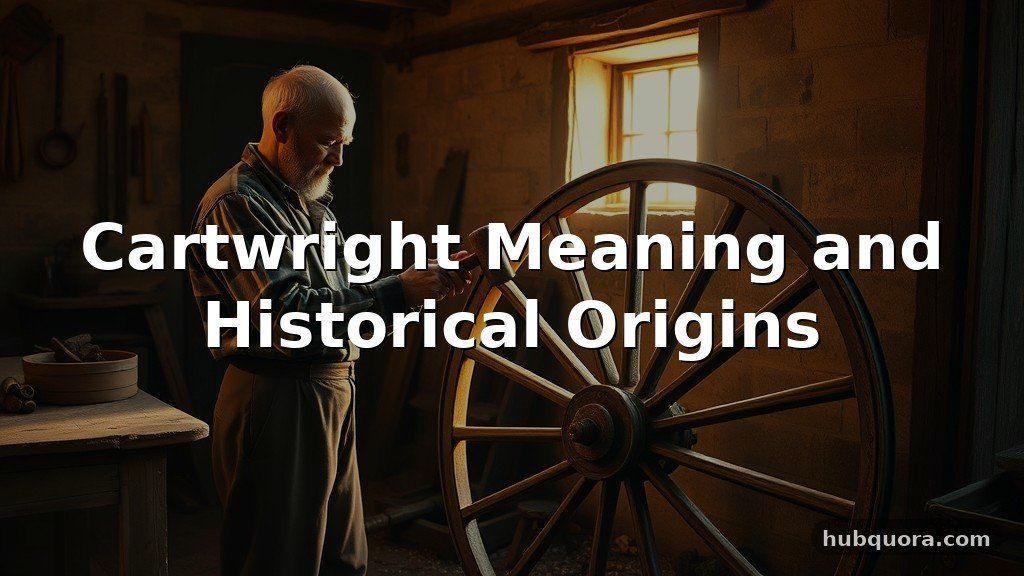
Exploring the cartwright meaning reveals a deep connection to the functional trades that sustained pre-industrial society. By examining the roots of this occupational surname, you will gain a clearer perspective on how medieval labor practices shaped modern family identities.
Understanding this term requires looking beyond simple dictionary definitions to appreciate the craftsmanship and technical skill involved in the wheelwright and cart-making industry. This article breaks down the historical context, linguistic evolution, and cultural significance of the name to provide a comprehensive view of its legacy.
The Etymological Roots of the Name
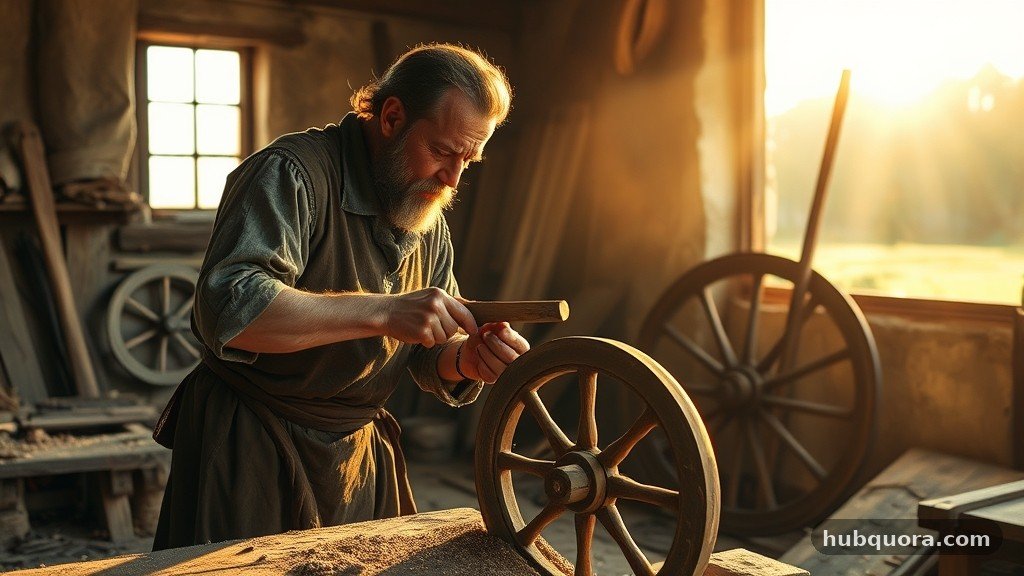
The term is a classic example of an occupational surname, a category of names derived from the specific trade an individual practiced. At its core, the word is a compound of two distinct Middle English components: cart and wright.
The first part, cart, refers to the heavy vehicles used for transporting goods and agricultural produce. The second element, wright, comes from the Old English word “wryhta,” which denotes a maker or a builder.
When combined, the cartwright meaning centers on the skilled artisan responsible for constructing, repairing, and maintaining carts and wagons. Unlike a general woodworker, a person in this trade needed specialized knowledge of physics and structural integrity.
They had to balance the weight of the frame with the durability of the wheels, ensuring the vehicle could navigate rough terrain without collapsing. This technical expertise elevated the position of a cartwright within a village, making them an essential pillar of the local economy.
Historical Context of Cart Making
During the medieval period, the ability to move goods efficiently was the backbone of trade and agriculture. Before the widespread use of paved roads, carts had to be sturdy enough to handle mud, ruts, and steep inclines.
The cartwright was tasked with sourcing the right timber, such as oak for the frame and ash for the wheels, to ensure longevity. This required an intimate knowledge of materials, as improper wood choice could lead to warping or splintering under heavy loads.
The workshop of a typical cartwright was a hub of activity. It contained specialized tools like drawknives, augers, and spokeshaves, each designed for precise shaping.
Because they were responsible for both the body of the cart and the wheels, their work often overlapped with that of a wheelwright. In smaller communities, one person frequently performed both roles, cementing the cartwright meaning as a versatile and indispensable master craftsman.
Linguistic Evolution and English Origins
Occupational names like Cartwright gained popularity during the 13th and 14th centuries in England, as population growth necessitated more formal methods of identification. As people moved from rural villages to larger towns, descriptive names became a practical necessity for tax records and legal documentation. A person known as “John the Cartwright” was easily distinguished from “John the Miller” or “John the Smith.”
Over time, these descriptors transitioned into hereditary surnames. Once the name became fixed, it remained even if subsequent generations moved into different professions.
The linguistic structure of the name reflects the evolution of the English language, preserving the Germanic roots of the word “wright” long after other archaic terms faded from common usage. Today, it stands as a testament to the importance of the transport industry in the development of British social structures.
Cartwright as a Surname and Its Global Spread
As the British Empire expanded, the surname traveled across the globe, reaching North America, Australia, and New Zealand. In these new environments, the name retained its historical association with craftsmanship and utility. While the original trade became less common with the advent of the internal combustion engine, the name persisted as a widespread family identifier.
In places like New Zealand, the name is found in various historical records and genealogical databases. Its presence in these regions demonstrates the portability of cultural identity through naming conventions.
You can often see the name in local archives or on historical markers, which helps researchers trace family lineage back to the original English artisans. This global distribution highlights how an occupational title evolved into a permanent fixture of international nomenclature.
Technical Distinctions Between Trades
It is common to confuse the cartwright with other similar trades, such as the wheelwright or the wagonwright. While these roles often overlapped, there were subtle technical distinctions in the tasks they performed. A wheelwright focused almost exclusively on the complex geometry of wheel construction, including the precise angle of the spokes and the fit of the iron tire.
A cartwright, by contrast, had a broader focus on the entire vehicle assembly. They needed to ensure the axle fit perfectly within the hub and that the bed of the cart could accommodate specific types of cargo.
This distinction is important because it illustrates the high level of specialization that existed in pre-industrial manufacturing. You can find detailed descriptions of these differences in an authoritative guide on the history of carts and vehicles, which provides context for how these artisans contributed to logistics.
The Cultural Significance of Skilled Labor
The social standing of a cartwright was generally quite high. In a world dependent on animal-drawn transport, the person who kept those vehicles operational was a local hero.
Their work directly impacted the success of the harvest, the distribution of trade goods, and the mobility of the community. This status is reflected in the way the name became a surname; it carried a connotation of reliability and technical mastery.
In modern times, the term is rarely used as a professional title, but it remains a symbol of heritage. It represents a time when individual craftsmanship defined the quality of one’s work.
Many people who carry the name today take pride in this connection to a lineage of makers and builders. This cultural legacy continues to influence how we view the history of labor and the evolution of essential services.
Common Variations and Misconceptions
While “Cartwright” is the standard spelling, historical records contain many variations due to the inconsistent nature of early literacy and record-keeping. You might see spellings like Cartright, Chartwright, or even abbreviated versions in parish registers. These are all phonetic variations of the same root term, often recorded by clerks who were writing down names as they heard them spoken.
One common misconception is that the name refers only to someone who drove a cart. While a driver might have been associated with a cart, the term specifically denotes the person who made it.
This distinction is crucial for accurate genealogical research. If you are tracking the history of the name, it is helpful to look for records that link the individual to a workshop or a trade guild, rather than just assuming a connection to transportation labor.
Addressing Topical Gaps in Naming Research
Many sources fail to connect the surname to the broader economic shifts of the Industrial Revolution. While the trade peaked in the medieval and early modern periods, it faced significant changes as factories began mass-producing wheels and cart parts. This shift moved the cartwright from a bespoke artisan to a repair technician or a factory overseer.
Another area that is often overlooked is the role of the cartwright in military logistics. During periods of conflict, these craftsmen were essential for maintaining supply lines.
They built artillery carriages, baggage wagons, and transport carts that allowed armies to move across Europe. Understanding this military connection provides a more nuanced view of the cartwright meaning, showing that their skills were vital for both civilian survival and state-sponsored campaigns.
How do records typically classify these workers?
Records from the 16th and 17th centuries often list these individuals under the broader category of “woodworkers” or “joiners.” However, tax lists and guild records frequently specify the trade as “cartwright” to distinguish the high level of skill required for vehicle construction compared to basic carpentry.
What is the relationship between the name and modern industry?
While the trade itself has disappeared, the surname persists as a link to the past. It serves as a reminder of the transition from manual labor to machine-based production. Many families with this name now use it to trace their ancestry back to the small, specialized workshops that once defined the English countryside.
List of Key Related Terms and Concepts
To better understand the terminology associated with this trade, consider the following list of related concepts that appear in historical documents:
- Wheelwright: A specialized artisan focused on the construction and repair of wheels.
- Joinery: The technical skill of joining pieces of wood together, which was central to cart construction.
- Guilds: Professional organizations that regulated the quality of work and training for tradespeople.
- Axle-tree: A critical component of a cart that required precise engineering by the cartwright.
- Timber Framing: The structural method used to build the bodies of heavy-duty agricultural wagons.
Comparison of Historical Artisanal Trades
The following table compares the cartwright with other similar trades, highlighting the unique focus of each role within the medieval economy.
| Trade | Primary Focus | Key Material |
|---|---|---|
| Cartwright | Vehicle assembly and repair | Oak and Ash |
| Wheelwright | Wheel geometry and hub construction | Hardwood and Iron |
| Blacksmith | Metal fittings and tire application | Wrought Iron |
| Cooper | Barrel and cask construction | Oak staves |
FAQ Section
What does it mean to call someone a cartwright?
Calling someone a cartwright is a literal reference to an ancestral profession. It means their ancestors were skilled artisans who built and repaired carts and wagons. It is an occupational surname that signifies a family history rooted in manual craftsmanship and essential pre-industrial logistics.
Is the term cartwright still used as a profession?
No, the term is no longer used as a professional title in the modern workforce. While people still build and repair vehicles, the specialized role of the traditional cartwright has been replaced by automotive manufacturing and specialized mechanical engineering, making the word primarily a surname today.
Why is the name so common in English-speaking countries?
The name is common because occupational surnames were assigned based on trade. Since every village needed a cartwright for agriculture and transport, the name originated independently in many different locations across England. These families then carried the name to other countries during historical migrations.
Does the name imply a specific social class?
Historically, a cartwright belonged to the skilled artisan class. They were generally more prosperous than unskilled laborers because their work required a long apprenticeship and specialized tools. This provided them with a stable, respected position within the social hierarchy of their local communities.
Conclusion
Tracing the cartwright meaning provides a fascinating window into the evolution of labor and the origins of modern surnames. By looking at how these artisans shaped the landscape of medieval transport, we can better appreciate the technical ingenuity required to sustain pre-industrial society. The transition of this term from a functional job description to a widespread family name mirrors the broader changes in social structure and record-keeping over the last several centuries.
If you are researching your own family history or simply interested in the origins of language, exploring these occupational roots is a rewarding endeavor. The name remains a link to a time when the quality of a person’s work was their primary identity.
As you continue to explore historical records, you will likely find even more connections to the industrious people who built the foundations of our world. Feel free to share your findings or ask further questions about how these historical trades influenced modern society.

James Wilson is the founder and lead editor of HubQuora.com, where he covers the latest celebrity news, entertainment trends, viral gossip, and net worth stories. With a passion for pop culture and digital media, James delivers engaging, accurate, and up-to-date content that keeps readers informed about the world of celebrities, influencers, and entertainment industry buzz.