

Transforming a sleeping space into a personal sanctuary often starts with finding the right inspiration. Exploring fresh bedroom decor ideas allows you to balance functional needs with aesthetic preferences, ensuring the room feels like a true reflection of your personality. Whether you are aiming for a minimalist retreat or a vibrant, texture-heavy space, small adjustments in lighting, textiles, and layout can make a significant impact.
By focusing on intentional choices, you can create a comfortable atmosphere that encourages rest while serving as a beautiful backdrop for your daily routine. This collection of concepts will help you refine your approach, providing practical techniques to enhance your home without overwhelming your space.
1. Layered Ambient and Task Lighting
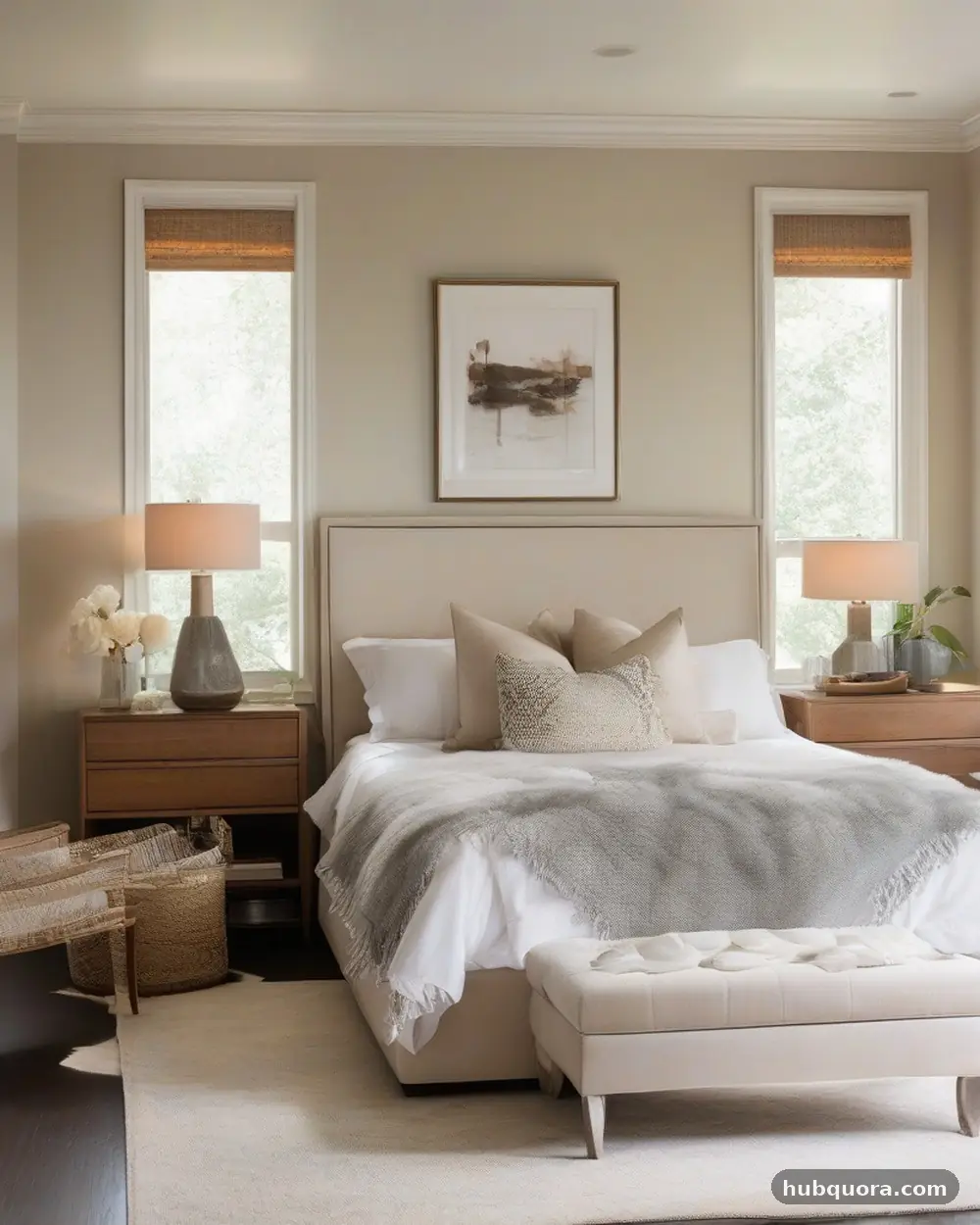
A well-designed room relies heavily on how light is distributed throughout the space. Instead of relying on a single overhead fixture, you should incorporate multiple light sources to create a warm, inviting glow. Start by adding bedside table lamps with warm-toned bulbs, which provide enough light for reading while maintaining a cozy feel.
You might also consider installing dimmable wall sconces directly above your nightstands; this saves surface area while adding a touch of sophistication to your bedroom design. If your room includes a corner dedicated to a home office or a vanity, place a dedicated desk lamp there to ensure the task area remains distinct from the sleeping zone.
To truly master this look, look for lamps that feature fabric shades or frosted glass, as these materials diffuse light softly rather than creating harsh glare. If your room feels a bit dark, adding a floor lamp with an adjustable neck can help you direct light toward corners or artwork, effectively brightening the entire floor plan.
Many modern interiors favor layered lighting because it allows you to adjust the intensity based on the time of day or your mood. When you are ready to wind down, switching off the overhead light and leaving only the warm bedside lamps on creates an immediate psychological shift, signaling to your brain that it is time to sleep.
2. Textural Wall Treatments
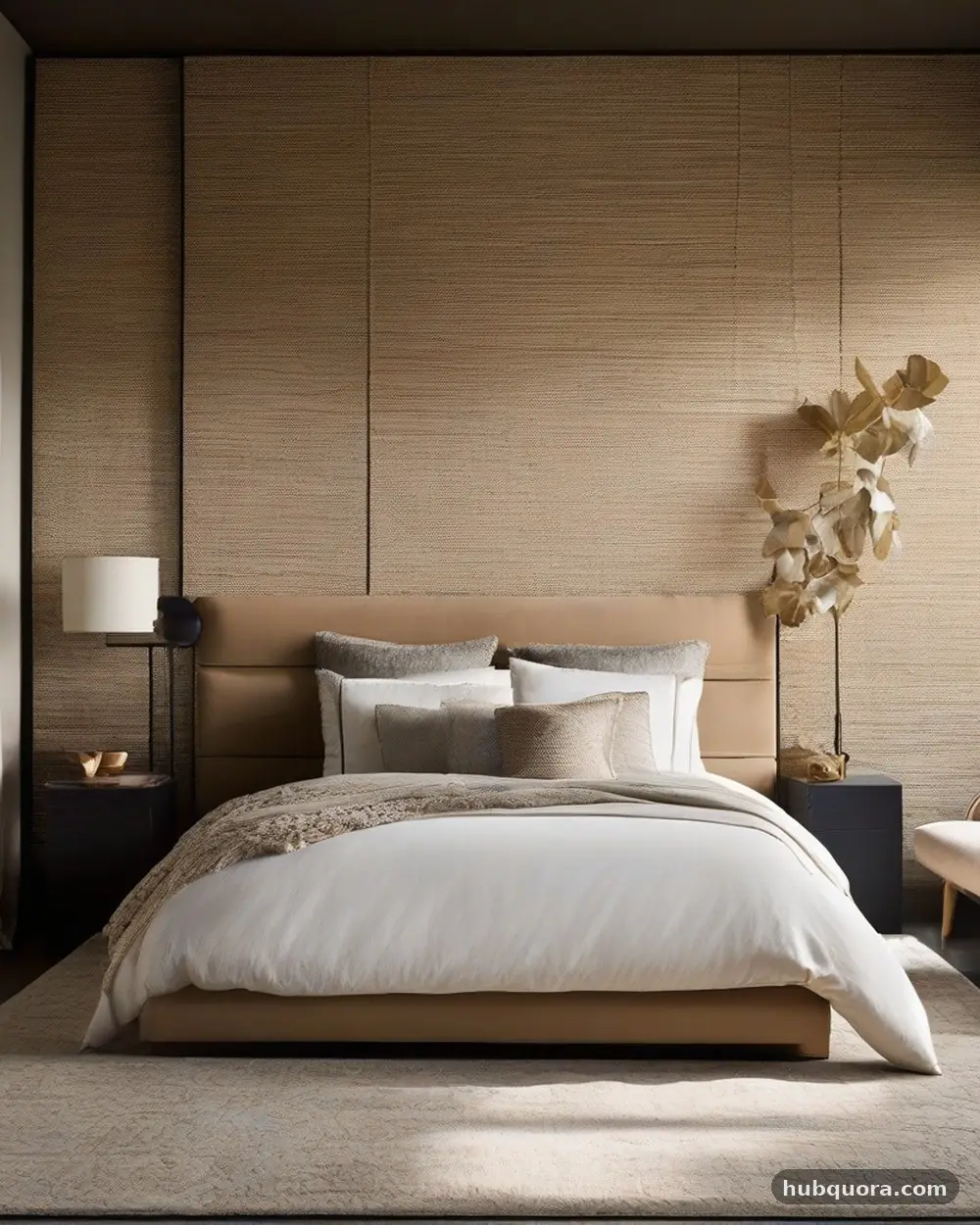
Blank walls often represent a missed opportunity in interior design. Instead of leaving them bare, you can introduce depth through tactile wall treatments like wood paneling, grasscloth wallpaper, or even a simple limewash paint finish. Wood slats are particularly popular for adding a modern, structured feel to a wall behind the bed, creating a natural focal point that draws the eye upward.
If you prefer something softer, grasscloth provides a subtle organic texture that feels sophisticated and timeless. For those on a tighter budget, a limewash or chalk-based paint can create a cloudy, matte finish that adds character without the need for expensive structural changes.
When applying these treatments, consider the scale of your room. A bold, dark-stained wood feature wall works beautifully in a large room, but in a smaller space, you might opt for a light-toned vertical paneling that makes the ceiling feel higher. Always ensure your wall treatments complement the other furniture pieces, such as your wardrobe or bed frame.
For example, if your bed is made of sleek, dark metal, a light-toned shiplap or neutral wallpaper can prevent the room from feeling too heavy or industrial. These treatments are surprisingly durable and, unlike art prints that might go out of style, they provide a permanent architectural foundation for your space.
3. Strategic Mirror Placement
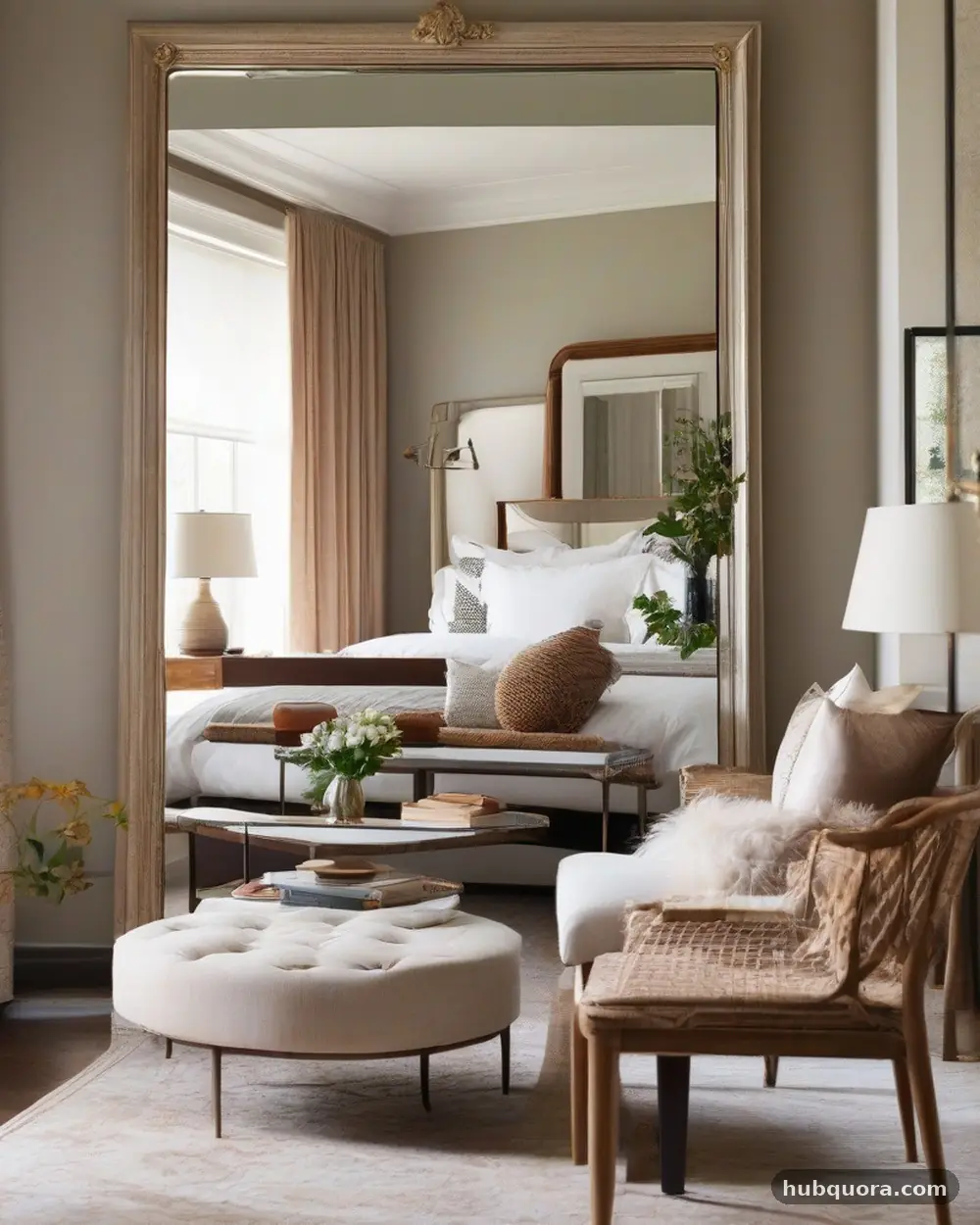
Mirrors are one of the most effective tools for making a room feel larger and more luminous. By reflecting natural light from your window treatments, a large floor mirror or a series of smaller decorative mirrors can help bounce light into the darker corners of your home.
If you have a small space, consider mounting a large, frameless mirror behind each nightstand; this creates an illusion of depth, making the bed feel like it is floating in a much more spacious room. In terms of style, an arched mirror can soften the sharp corners of modern bedroom furniture, while a clean, rectangular frame reinforces a minimalist or modern farmhouse aesthetic.
Beyond the aesthetic benefits, mirrors are highly practical for daily use. Placing a full-length mirror near your wardrobe or dressing area is essential for checking your outfit, but try to position it so it reflects something pleasant, like a piece of artwork or a window, rather than a cluttered closet. If you are worried about the room feeling too clinical, choose mirrors with antique-style brass or wood-finished frames to add warmth.
You can learn more about the technical aspects of spatial planning through the Architectural Digest design archives to see how professionals use reflection to manipulate perceived dimensions. Remember that the goal is to make the room feel open, not to create a dizzying effect with too many reflective surfaces.
4. Statement Window Treatments
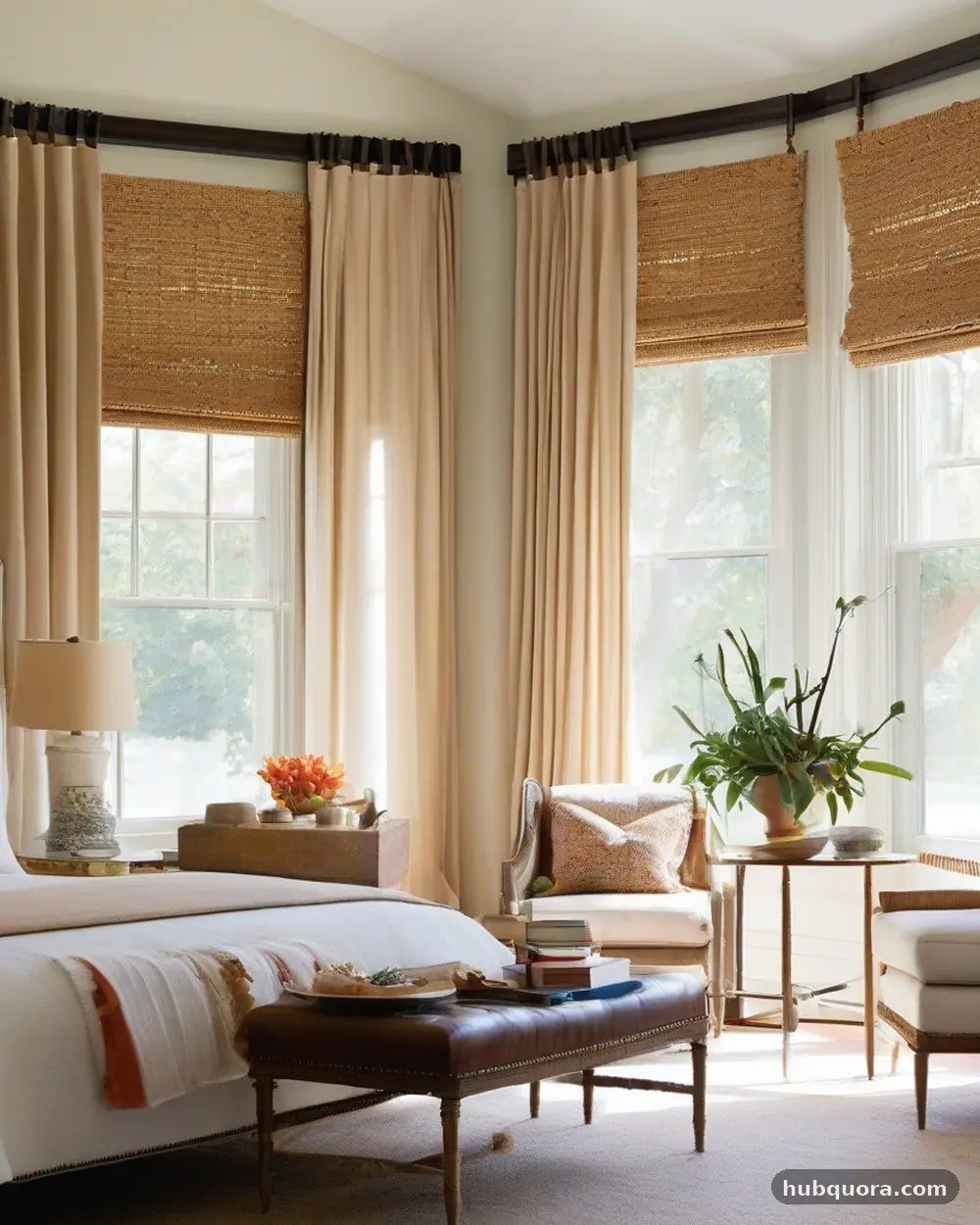
Windows serve as the frame for your view of the outside world, and the way you dress them significantly dictates the mood of the room. Floor-to-ceiling curtains in a heavy fabric like linen or velvet can add a sense of luxury and height to any bedroom.
When hanging curtains, mount the rod as close to the ceiling as possible rather than directly above the window frame; this simple trick makes your ceilings look taller and your windows look much wider. If you prefer a cleaner, more streamlined look, roman shades in a natural woven material offer a nice compromise between privacy and style, especially in a modern bedroom setup.
For the best results, consider a double-layer approach. A sheer curtain allows filtered daylight to enter while maintaining privacy, and a thicker, blackout-lined curtain provides total darkness for restful sleep. This combination is particularly useful in bedrooms that face the street or receive direct morning sun.
When choosing fabrics, stick to colors that coordinate with your bedding but introduce a new texture. If your bed covers are smooth cotton, a linen-blend drape adds the right amount of visual interest. Maintenance is straightforward—most high-quality window treatments only require a light vacuuming or a gentle steam cleaning once or twice a year to keep them looking fresh.
5. Curated Open Shelving
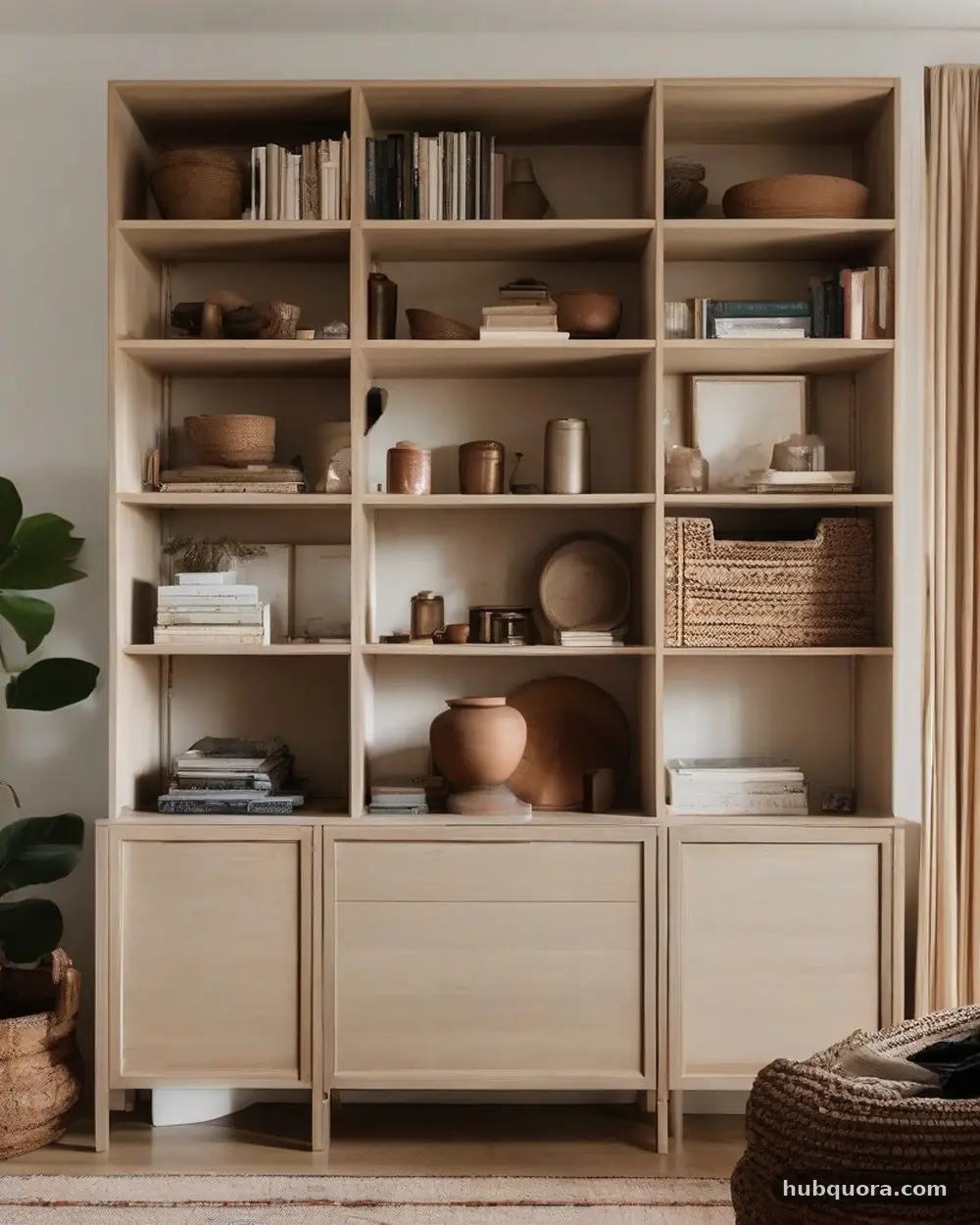
Open shelving offers a chance to display items that carry personal meaning, helping to ground the room in your specific personality. Instead of cramming bookshelves with clutter, treat your shelves like a curated gallery.
Mix functional items like a stack of books or a clock with decorative elements like a small sculpture, a trailing plant, or a framed photo. The key to a polished look is the “rule of three”—grouping objects of varying heights and textures together in small clusters creates a more professional, balanced appearance than lining them up in a single, rigid row.
When installing shelves, consider the material carefully. Floating wood shelves look excellent in a modern farmhouse setting, while metal or glass shelving might suit a more industrial or contemporary design. Ensure your shelving is installed securely, especially if you plan to place heavier items like coffee table books on them.
If you are worried about dust, keep the items on the shelves to a minimum, focusing on quality over quantity. This approach keeps the room feeling clean and breathable, which is essential for a space dedicated to relaxation. By regularly rotating the items on your shelves, you can keep your bedroom decor feeling fresh and updated without having to purchase new furniture.
Refining Your Personal Retreat
Creating a space that feels both functional and personal is the ultimate goal of any bedroom design project. By focusing on lighting, wall textures, mirrors, window treatments, and curated shelving, you build a foundation that supports your lifestyle. These bedroom decor ideas are meant to be adapted, so feel free to mix and match elements to suit the specific layout of your home.
Whether you are working with a large master suite or a compact guest room, the most important factor is creating a environment where you feel truly comfortable. Take your time to select pieces that resonate with you, and do not be afraid to experiment with bold accents. We would love to hear which of these design strategies you decide to implement in your own home.

James Wilson is the founder and lead editor of HubQuora.com, where he covers the latest celebrity news, entertainment trends, viral gossip, and net worth stories. With a passion for pop culture and digital media, James delivers engaging, accurate, and up-to-date content that keeps readers informed about the world of celebrities, influencers, and entertainment industry buzz.

