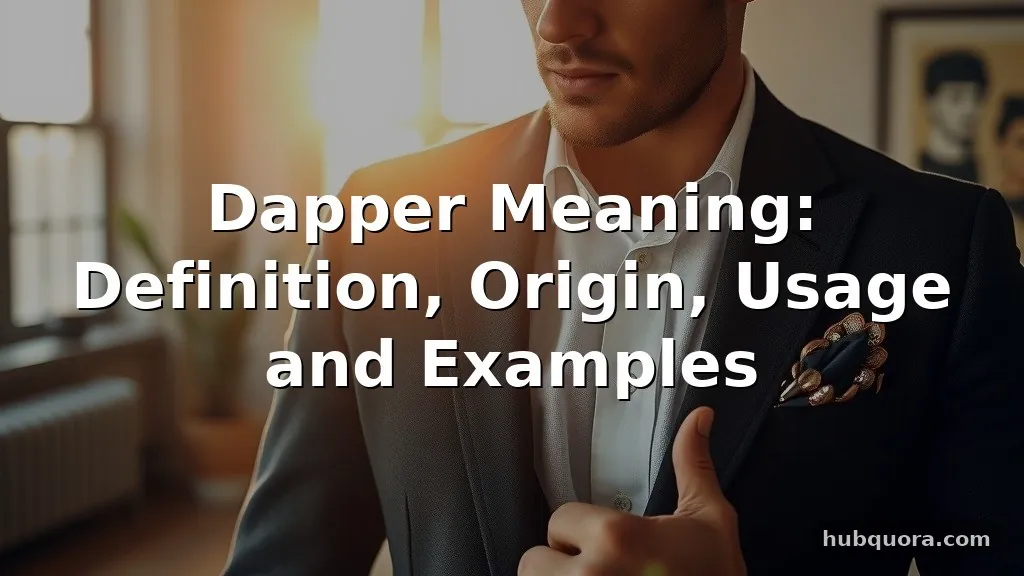
Dapper meaning is usually “neatly and stylishly dressed,” especially when someone’s clothing, grooming, and overall appearance look polished. A dapper man may wear a well-fitted suit, clean shoes, a carefully arranged hairstyle, and tasteful accessories. The word can also describe a smart, trim appearance more generally, and it often carries a warm, approving tone rather than sounding strictly formal.
People search for this word in many contexts: a dictionary definition, slang usage, translation, pronunciation, or the question of whether “dapper” can describe a woman. The short answer is yes. Although traditional examples often focus on a man, modern English can use dapper for anyone who looks stylish, neat, and put together.
What Does Dapper Mean?
Dapper means attractively neat, smart, and well dressed. It describes a person whose appearance shows care and style, often with a sense of polish that goes beyond simply wearing clean clothes. A dapper person may look elegant without appearing overly formal, flashy, or uncomfortable.
The word commonly refers to visual presentation. It can describe a man in a tailored jacket, a person wearing a crisp shirt and polished loafers, or someone whose clothing has a particularly sharp, coordinated appearance.
Grooming matters too. A neat haircut, tidy facial hair, and clean details can contribute to a dapper look.
Here are the central ideas associated with the word:
- Neatness: Clothing and grooming look clean, orderly, and carefully maintained.
- Smart style: The person appears fashionable or well dressed without necessarily wearing luxury clothing.
- Trim appearance: The overall look is tidy, refined, and often well proportioned.
- Positive judgment: Calling someone dapper is usually a compliment.
- Personal presentation: The word focuses on how someone presents themselves, not only on individual garments.
For example, “He looked dapper in a navy blazer and brown leather shoes” suggests more than the fact that he wore those items. It tells the reader that the complete outfit looked coordinated and polished. “She arrived looking dapper in a tailored suit” uses the same idea, applying the adjective to a woman.
Dapper is an adjective. It can appear before a noun, as in “a dapper gentleman,” or after a linking verb, as in “He looked dapper.” Related forms are less common, so speakers usually rely on the adjective itself rather than trying to create a noun or adverb from it.
Dapper Meaning in Modern English and Slang
In modern English, dapper remains a standard descriptive word, but its tone can shift depending on the situation. It may sound traditional, playful, stylish, or lightly humorous.
The word is not usually crude slang. Instead, “dapper” is often an informal compliment with a slightly old-fashioned charm.
Someone might say, “You look dapper tonight” before a wedding, a business event, or a dinner. In that sentence, the speaker praises the person’s appearance. A friend might also use the word jokingly if someone wears an unusually formal outfit for a casual occasion: “Look at you, all dapper for a trip to the coffee shop.” The compliment remains positive, but the context adds humor.
Online usage sometimes connects dapper with words such as “handsome,” “sharp,” “stylish,” or “fresh.” Those terms overlap, but they aren’t identical. Handsome can describe facial attractiveness or overall appearance. Stylish emphasizes fashion sense. Sharp often suggests a smart, impressive outfit. Dapper brings together neatness, grooming, and clothing with a distinctly polished effect.
The word may also appear in vocabulary lists, SAT words lists, language-learning exercises, and “new words” collections because it offers a useful example of a descriptive adjective. Learners often encounter it in reading passages, character descriptions, and style-related writing.
In a casual email, “You looked dapper at the event” sounds friendly and complimentary. In a formal business email, “You looked very polished” may be more neutral. Neither expression is incorrect; the best choice depends on the relationship between the speakers and the atmosphere of the message.
Is dapper a compliment?
Yes. Calling someone dapper is generally a compliment.
It says that the person looks attractive, tidy, stylish, and well presented. The exact impression depends on the outfit and setting, but the word almost always communicates approval.
It can describe a deliberately classic appearance, such as a suit with a pocket square, or a simpler smart-casual outfit with a clean jacket, pressed trousers, and well-maintained shoes. The clothes don’t have to be expensive. Fit, coordination, cleanliness, and attention to detail usually matter more.
Dapper Meaning for a Man, Woman, or Girl
Dapper has traditionally been associated with men, particularly in phrases such as “a dapper gentleman” or “a dapper young man.” That association comes from older usage patterns, not from a grammatical rule. Modern speakers can use the word for a woman, girl, or nonbinary person whose appearance is neat, stylish, and polished.
“Dapper for a girl” generally means that she looks smart, trim, or stylish in a way the speaker considers especially polished. A girl wearing a tailored vest, pressed trousers, a collared shirt, and polished boots could be described as dapper. So could a woman in a sharply cut suit or a carefully coordinated formal outfit.
Some people use the word for women when the style has traditionally masculine elements, such as tailoring, waistcoats, ties, brogues, or structured jackets. That isn’t a requirement, though. A woman in a neat dress, elegant coat, and carefully chosen accessories may also look dapper if the overall impression is smart and refined.
| Expression | Typical focus | Example |
|---|---|---|
| Dapper man | Polished clothing, grooming, and presentation | “He looked dapper in a charcoal suit.” |
| Dapper woman | Neat, stylish, and carefully coordinated appearance | “She looked dapper in a tailored jacket.” |
| Dapper child | Smart, tidy clothing with a charming formal effect | “The dapper child wore a bow tie.” |
| Dapper person | Gender-neutral description of a polished look | “They arrived looking dapper.” |
Language changes through use. If a speaker wants a gender-neutral word for a stylish, neat appearance, dapper can work naturally.
A reader shouldn’t assume that the term belongs only to male fashion. Context and intent matter more than old stereotypes.
Dapper Synonyms and Related Words
Dapper has several synonyms, but each one highlights a slightly different quality. Choosing the right alternative helps a writer express the intended tone rather than simply replacing one word with another.
Dapper, handsome, and attractive
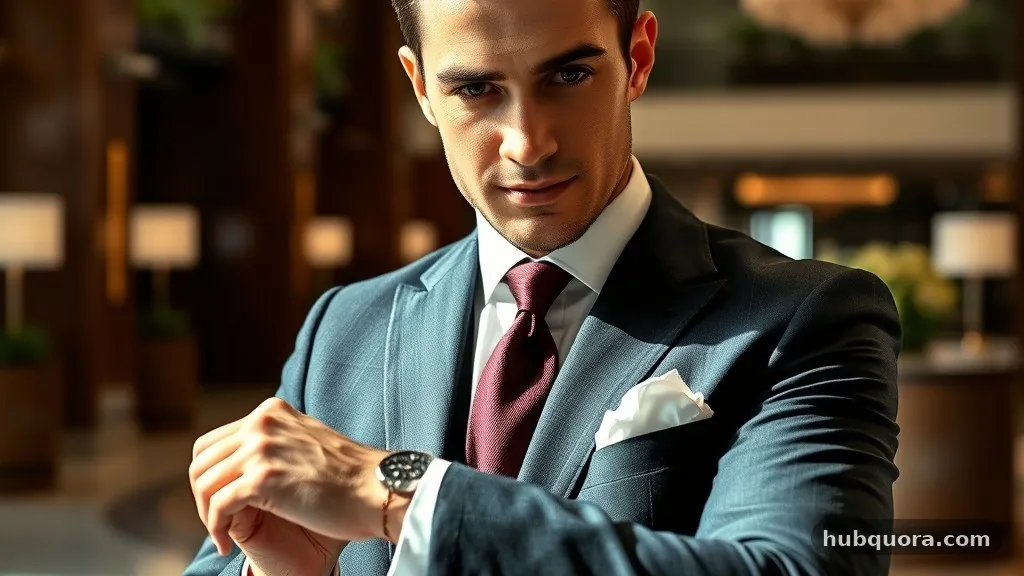
Handsome usually describes physical attractiveness, especially a person’s face or overall appearance. “He is handsome” focuses on appearance in a broad sense. “He is dapper” focuses more specifically on neat clothes, grooming, and presentation. A person can be handsome without looking dapper, and a dapper person may be praised mainly for style rather than facial features.
Dapper, stylish, and fashionable
Stylish is broad and can describe clothing, interiors, design, or behavior. Fashionable often suggests that something follows current trends. Dapper is narrower.
It usually suggests a smart, coordinated, somewhat refined appearance. A person can be stylish in jeans and sneakers, while dapper more often implies a polished outfit.
Dapper, smart, and well dressed
Smart can mean intelligent, but in clothing-related contexts it means neat or formal. “Smart clothes” may be appropriate for an office or event. Well dressed is direct and neutral. Dapper is more vivid and expressive, adding a sense of charm or distinction.
Dapper, dashing, and jaunty

Dashing describes someone attractive, energetic, or impressively confident. It can suggest movement and charisma as well as appearance. Jaunty means lively, cheerful, and confidently stylish, often with a playful edge.
Dapper is calmer. It points to a tidy, polished look rather than bold energy.
Other useful related terms include debonair, spruce, trim, smartly dressed, polished, and well groomed. “Spruce” can sound old-fashioned, while “debonair” often suggests sophisticated confidence. “Trim” emphasizes a neat, orderly appearance. These shades of meaning help explain why a dictionary may list several near-synonyms without treating them as exact equivalents.
The Origin and History of the Word Dapper
The history of dapper is less straightforward than its modern definition. English has used the word for centuries, and its meaning has developed over time.
Older forms are connected with ideas such as smallness, neatness, cleverness, or attractive appearance. As usage shifted, the word became increasingly associated with a smart and well-groomed person.
Some discussions of the term connect it with Middle Dutch forms, including dapper, a word associated with bravery or stoutness in older language. The history also sits alongside broader changes in Middle English vocabulary, where words could acquire new social and descriptive meanings as they moved between communities and varieties of speech. Etymology can show relationships, but it doesn’t always produce a single simple translation into modern English.
That history helps explain why dapper can carry more than one faint nuance. In contemporary use, the clothing-related sense dominates.
Still, the word can feel slightly old-fashioned because it appears frequently in classic fiction, historical descriptions, and formal character writing. A novelist might describe a hotel clerk as dapper to create an immediate image of careful grooming and old-school courtesy.
The term also appears in dictionaries and language references with definitions focused on neatness, smartness, and attractive presentation. For a concise reference definition and pronunciation information, readers can consult the Merriam-Webster dictionary entry for dapper.
Pronunciation is commonly represented as DAP-er, with the first syllable receiving the stronger emphasis. The vowel sound in the first syllable resembles the sound in “cat” for many English speakers. Regional accents can alter the exact sound, but the two-syllable pattern remains familiar.
How to Use Dapper in a Sentence
The most natural examples of dapper describe a person, outfit, or appearance. The adjective can be placed before a noun or used after verbs such as look, appear, and seem.
Examples with people
- He looked dapper in a navy suit and a pale blue shirt.
- The dapper guest greeted everyone at the reception.
- My grandfather still dresses in a dapper, old-fashioned style.
- She looked dapper in a tailored jacket and polished boots.
- They arrived at the ceremony looking remarkably dapper.
Examples with clothing and presentation
Writers can also use the word to describe a complete appearance rather than a person directly. “His dapper outfit included a wool coat, pressed trousers, and leather shoes” emphasizes the coordinated clothing. “The actor wore a dapper costume for the period drama” suggests a polished look shaped by the setting.
Use the word when the appearance has a clear sense of care. A person wearing casual clothes may still look dapper if the outfit is neat and intentional, but the word usually works best when there is some visible polish. A wrinkled shirt, untidy shoes, or mismatched pieces may weaken the description unless the sentence is humorous or ironic.
Common usage mistakes
One mistake is treating dapper as a direct synonym for handsome in every situation. The terms overlap, but dapper usually says more about dress and grooming. Another mistake is assuming that dapper must describe expensive clothing.
It doesn’t. A modest outfit can look dapper if it fits well and has been thoughtfully maintained.
Speakers should also consider tone. In a serious professional description, “well dressed” may sound more restrained. In a character sketch, personal message, or compliment, dapper adds color. “You look dapper” feels warmer and more distinctive than “Your clothes are acceptable.”
Dapper in Translation and Other Languages
Translating dapper requires attention to context because no single word always reproduces its full meaning. A translator may need to choose between terms meaning elegant, neat, handsome, smartly dressed, or stylish. The best translation depends on whether the original sentence emphasizes clothing, grooming, attractiveness, confidence, or a slightly vintage tone.
In Spanish, possible choices may include words related to elegance, smart dress, or a polished appearance. In French, a translator may choose a term meaning elegant, well dressed, or stylish.
In German, the closest expression may focus on looking smart, neat, or well turned out. These are contextual equivalents, not permanent one-to-one matches.
Searches for “dapper meaning in Farsi,” “dapper meaning in French,” or “dapper meaning in Dutch” often come from learners who want a practical translation. They should first identify the sentence’s intent.
For example, translating “a dapper gentleman” requires a phrase that sounds natural for a polished man. Translating “a dapper outfit” may require a phrase closer to “smart” or “elegant clothing.”
The Dutch connection is especially interesting because discussions of the word’s history sometimes mention Middle Dutch. Historical relationships do not automatically mean that modern Dutch uses dapper in precisely the same way as modern English. A current dictionary, bilingual reference, or native-speaker example is more useful than assuming that identical spelling guarantees identical meaning.
Translation tools can provide a starting point, but examples reveal tone. A formal translation may sound too grand, while a literal translation may lose the friendly compliment contained in the English word. In language study, compare several sentences rather than memorizing one isolated equivalent.
How Dapper Differs from Similar Style Descriptions
Dapper describes a particular balance: the person looks neat, stylish, and polished, but the word does not necessarily imply extravagance. It is useful because it captures the complete effect of an appearance. A single garment can be fashionable, yet the person may not look dapper if the rest of the outfit is careless or poorly coordinated.
Consider these contrasts:
- Neat: Clean and orderly, but not necessarily stylish or formal.
- Elegant: Refined and graceful, often with a more formal or sophisticated tone.
- Trendy: Closely connected to current fashion, even if the appearance is not classic.
- Handsome: Physically attractive, with less emphasis on clothing.
- Debonair: Stylish and confident, often suggesting charm and social ease.
- Jaunty: Cheerful, lively, and confident, sometimes with a playful fashion choice.
A person in a minimalist outfit may look neat but not dapper. Someone in a bold designer outfit may look fashionable but not dapper if the styling lacks restraint. A person in a classic suit, carefully chosen accessories, and polished shoes is more likely to fit the usual meaning.
The social setting affects interpretation too. At a wedding, the word sounds natural and complimentary. At a beach, it might be playful unless the person is wearing an unusually refined resort outfit.
In a historical novel, dapper can establish character quickly. In a text message, it may sound affectionate or teasing depending on the relationship.
This flexibility makes the word valuable in descriptive writing. It gives readers a compact visual impression without requiring a long inventory of garments.
Still, strong writing can support it with concrete details. Instead of writing only “He was dapper,” a writer might add that his jacket was sharply fitted, his shoes were polished, and his tie matched the subtle pattern of his pocket square.
Why People Use the Word Dapper
People choose dapper because it combines approval with personality. “Well dressed” is accurate but plain. “Stylish” is useful but broad. Dapper creates a more specific image of someone who has made an effort and achieved a smart, attractive result.
The word also works across different registers. In a fashion article, it can describe classic tailoring. In a family conversation, it can compliment someone before a special event.
In fiction, it can suggest a character who pays attention to detail. In a social media caption, it can sound playful: “Feeling dapper for date night.”
Its slightly traditional flavor is part of its appeal. A speaker may use dapper instead of fashionable because the intended impression is timeless rather than trend-driven.
The word can suggest a blazer, a bow tie, a waistcoat, a clean haircut, or simply a carefully assembled look. It doesn’t require one exact style.
Dapper can also communicate effort without sounding critical. Saying someone is dapper implies that their preparation succeeded.
It doesn’t usually suggest vanity or excessive concern with appearance. That balance makes the adjective appropriate for compliments involving formalwear, workwear, smart-casual clothes, and special-event outfits.
For learners building vocabulary, the word is useful because it demonstrates how English adjectives often carry emotional and cultural associations beyond a basic definition. Understanding the meaning includes understanding when the term sounds natural, what kind of image it creates, and how it differs from nearby words.
Conclusion: The Practical Meaning of Dapper
Dapper means neatly and stylishly dressed, with an overall appearance that looks polished, trim, and carefully considered. The word is usually complimentary and can describe a man, woman, girl, child, or anyone else whose clothing and grooming create a smart impression. It overlaps with handsome, elegant, sharp, and well dressed, but its strongest focus is polished personal presentation.
Use dapper when you want more character than “neat” and more clothing-related precision than “handsome.” Whether it appears in conversation, an email, a vocabulary exercise, or descriptive writing, it remains a useful word for expressing style with warmth and clarity.
Frequently Asked Questions About Dapper Meaning
What does dapper mean in slang?
In casual speech, dapper is usually a friendly compliment meaning stylish, sharp, handsome, or well dressed. It isn’t generally offensive or vulgar slang. Depending on context, someone may use it sincerely or playfully to praise an outfit that looks unusually polished for the occasion.
Can you call a girl or woman dapper?
Yes. Modern English can use dapper for a girl, woman, or any person who looks neat, stylish, and polished.
Although older examples often describe men, the word has no grammatical rule limiting it to males. Context determines whether the intended style feels classic, tailored, formal, or playful.
Is dapper the same as handsome?
Not exactly. Handsome usually emphasizes physical attractiveness, while dapper focuses on clothing, grooming, and overall presentation. A person can be handsome without looking dapper, and someone can be called dapper mainly because their outfit is exceptionally neat, coordinated, and stylish.
How do you pronounce dapper?
Dapper is commonly pronounced “DAP-er,” with emphasis on the first syllable. The word has two syllables, and the first vowel often sounds like the vowel in “cat,” although accents can vary. Most English speakers recognize the pronunciation easily in conversation.

James Wilson is the founder and lead editor of HubQuora.com, where he covers the latest celebrity news, entertainment trends, viral gossip, and net worth stories. With a passion for pop culture and digital media, James delivers engaging, accurate, and up-to-date content that keeps readers informed about the world of celebrities, influencers, and entertainment industry buzz.