
The meaning of RPM depends on the context, but the most common definition is revolutions per minute. It measures how many complete rotations an object makes in one minute. In a car, RPM shows how quickly the engine’s crankshaft is turning.
On YouTube, RPM describes estimated creator revenue per thousand views. In healthcare, RPM can mean remote patient monitoring. The same three letters can therefore describe rotational speed, advertising performance, medical technology, or even a psychological concept.
This article explains RPM meaning in plain English and separates the major uses so you can interpret the term correctly. You’ll see how RPM works in cars and engines, what it means in driving and fitness, how YouTube calculates it, and why medical and professional contexts use the abbreviation differently.
RPM meaning in its most common form
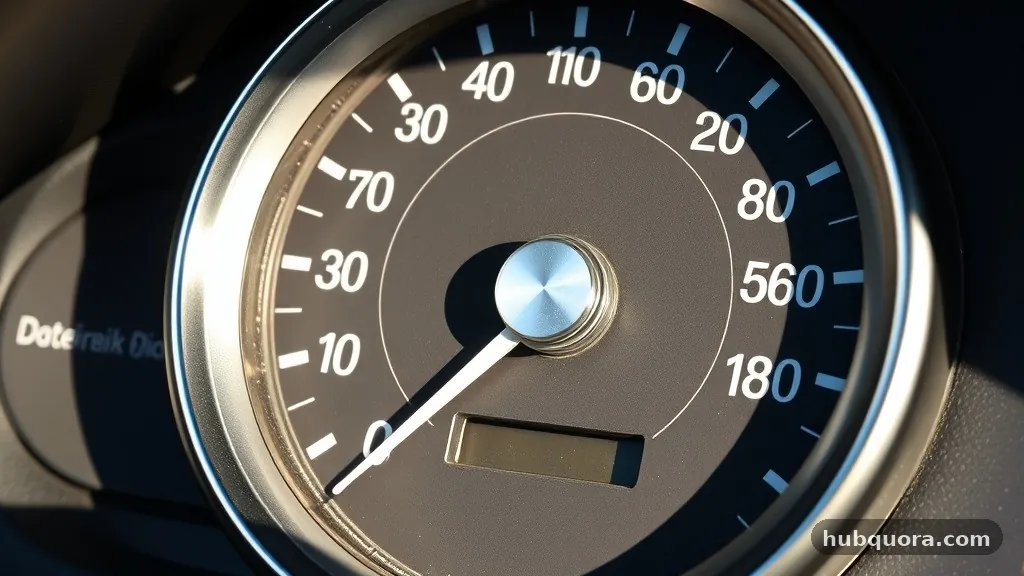
RPM means revolutions per minute. One revolution is one complete rotation, and the “per minute” part describes the time interval used for the measurement. If a rotating shaft has a reading of 3,000 RPM, it completes 3,000 full rotations in one minute.
RPM is a unit of rotational speed, not a direct measurement of distance or linear speed. A small fan and a large industrial wheel could both rotate at 1,000 RPM while their outer edges move at different speeds. The larger wheel covers more distance during each rotation, so its edge travels faster even though both objects have the same RPM.
The abbreviation is usually written as RPM or rpm. Both forms refer to the same concept. Technical writing often uses “rpm” alongside other units, while dashboards, instruments, and search results may display “RPM.” The meaning comes from the surrounding subject.
In mechanical systems, RPM helps people understand how quickly a component spins and how much work it may be performing. A crankshaft, motor shaft, turbine, drill bit, fan, or hard-drive platter can all have an RPM rating. That rating matters because rotational speed affects power delivery, heat, vibration, noise, efficiency, and mechanical stress.
- Revolutions: complete turns or rotations.
- Per minute: the period used to count those turns.
- Rotational speed: the rate at which an object spins.
- Context: the subject determines whether RPM refers to rotation, revenue, monitoring, or another concept.
RPM is not the same as torque. Torque describes twisting force, while RPM describes rotational speed.
An engine can produce substantial torque at relatively low RPM, while another engine may produce its strongest power at a higher RPM range. Power combines the effects of torque and rotational speed, which is why both measurements matter in engines and machines.
RPM meaning in a car and engine
In a car, RPM indicates how fast the engine’s crankshaft is rotating. The tachometer displays this information, often with numbers such as 1, 2, 3, and 4 representing 1,000, 2,000, 3,000, and 4,000 RPM. The exact scale varies by vehicle.
The engine converts fuel and air into mechanical movement. In a typical piston engine, combustion pushes pistons through their strokes.
Connecting rods transfer that movement to the crankshaft, which rotates and sends power through the transmission and drivetrain. The engine RPM therefore reflects the rotational speed of a central part of the power-producing system.
When a car is stationary with the engine running, it operates at idle. Idle RPM is usually much lower than the speed used during driving because the engine only needs to keep itself running and operate accessories. Pressing the accelerator increases airflow and fuel delivery, producing more combustion and a higher crankshaft speed.
During driving, the transmission affects the relationship between engine RPM and road speed. A lower gear generally keeps the engine at higher RPM for a given road speed, which can provide stronger acceleration.
A higher gear reduces engine speed and may improve cruising efficiency. Automatic transmissions change gears for the driver, while manual transmissions require the driver to choose when to shift.
High RPM isn’t automatically harmful. Engines are designed to operate across a specified range. However, running near or beyond the recommended limit can increase heat, friction, vibration, and stress on internal parts.
The redline on a tachometer marks a zone where continued operation may risk engine damage. Drivers should follow the vehicle manufacturer’s instructions rather than treating a particular RPM number as suitable for every car.
| RPM context in a car | What it generally indicates | Why it matters |
|---|---|---|
| Idle | Engine is running with little or no acceleration | Can reveal rough running or abnormal behavior |
| Low to moderate RPM | Normal cruising or light engine demand | Often supports smooth, efficient operation |
| Higher RPM | Greater engine speed and often stronger acceleration | May increase power, fuel use, heat, and noise |
| Redline | Upper limit shown by the tachometer | Exceeding it can place excessive stress on the engine |
A sudden change in RPM can
A sudden change in RPM can point to a mechanical or control issue. For example, an engine that repeatedly rises and falls at idle may have an air, fuel, ignition, or sensor problem.
RPM that climbs without a corresponding increase in vehicle speed can suggest clutch slip in a manual car or a transmission-related issue. These symptoms need proper diagnosis rather than guesswork.
How RPM affects power, speed and engine operation
RPM affects an engine because the crankshaft must complete more rotations as speed rises. Each rotation involves moving components, combustion events, airflow, and friction. At higher RPM, the engine can perform more operating cycles in the same period, but the components also have less time to complete each stroke.
The relationship between RPM and power is not simply “higher is always better.” Engine power depends on torque and rotational speed. An engine may produce strong torque in the lower or middle part of its usable range, then lose torque as airflow, combustion timing, friction, or mechanical limits become less favorable.
Power can still increase for a while because the crankshaft is rotating faster. Eventually, the combination of declining torque and rising friction limits useful output.
Engine designers select components and control systems for a particular RPM range. Camshaft timing, intake design, exhaust flow, fuel delivery, ignition timing, turbocharging, and piston speed all influence where an engine performs best. A vehicle built for relaxed road driving may emphasize low- and mid-range torque, while a performance engine may be designed to produce power at higher speeds.
RPM also influences fuel consumption. A higher engine speed often means more combustion events and greater internal friction, although the actual result depends on load, gear selection, vehicle design, terrain, and throttle position.
Driving at a low RPM in an unsuitable gear can also be inefficient or unpleasant because the engine may struggle under heavy load. Smooth operation matters more than chasing the lowest possible reading.
Engine RPM should be interpreted with road speed and gear position. For example, 3,000 RPM in a low gear may be normal during acceleration but unnecessarily high during steady cruising.
The same reading in a higher gear can represent a different mechanical situation. RPM tells you how fast the engine spins; it does not tell you by itself whether the engine is working safely or efficiently.
Why the tachometer is useful
The tachometer helps a driver make informed decisions. In a manual car, it supports timely gear changes and prevents lugging or over-revving.
In any vehicle, it can reveal an engine that idles unusually high, fluctuates repeatedly, or reaches an unexpectedly high reading. RPM can also help identify how the transmission responds under acceleration.
Modern vehicles may manage RPM automatically through electronic throttle control, variable valve timing, and computerized transmission systems. Even so, the tachometer remains a practical indicator of engine behavior. A persistent abnormal reading deserves attention, especially when it appears with warning lights, unusual sounds, loss of power, or vibration.
RPM meaning in driving, motorcycles and machines
In driving, people often use RPM to decide when to shift gears. A driver changes up when the engine reaches a suitable higher part of its operating range and changes down when more pulling power is needed. The correct shift point depends on the engine, transmission, road conditions, and purpose of the maneuver.
Motorcycles make RPM particularly visible because riders often use the tachometer to keep the engine within an effective power band. A motorcycle engine may respond sharply to changes in rotational speed, so selecting the right gear can affect acceleration and smoothness. Riders still need to observe the manufacturer’s redline and avoid treating maximum RPM as a target for ordinary use.
RPM also appears on tools and equipment. A drill may specify a maximum speed for a particular bit or material. A cutting wheel, grinder, fan, pump, or generator may have a rated RPM that should not be exceeded.
The rating protects both the equipment and the operator. A rotating attachment can fail if its construction cannot withstand the centrifugal forces created by excessive speed.
Manufacturers may state a no-load RPM and a loaded RPM. No-load speed describes how quickly a motor turns without performing significant work.
Once the tool contacts a material, resistance increases and the speed may fall. This distinction explains why a motor’s advertised RPM doesn’t always match the reading during real use.
For machines, RPM must be matched to the component’s design. Bearings, seals, belts, gears, lubrication systems, and shafts all have operating limits.
A higher rotational speed can increase output in some applications, but it can also raise temperature and wear. Engineers therefore consider RPM alongside torque, horsepower, vibration, material strength, and duty cycle.
The same principle applies to fans
The same principle applies to fans and pumps. RPM can change airflow or fluid movement, but the result depends on blade design, system resistance, and motor characteristics.
Simply increasing speed may produce more movement while also increasing noise, energy use, and mechanical load. Safe operation requires the equipment’s specifications, not just an assumption that faster is better.
RPM meaning on YouTube and in digital advertising
On YouTube, RPM usually means revenue per mille, where “mille” means one thousand. It estimates how much revenue a creator earns per 1,000 video views after YouTube’s share and across the creator’s overall monetized activity. This is different from the RPM used for engines because it measures money rather than rotation.
YouTube RPM can include more than advertising revenue. Depending on the channel and eligibility, the metric may reflect revenue associated with advertisements, YouTube Premium, memberships, Super Chat, Super Stickers, and other platform-based sources. The exact components shown can depend on the reporting system and the creator’s monetization arrangements.
A simplified calculation is:
RPM = estimated total revenue ÷ total views × 1,000
For example, if a channel earned a certain amount during a reporting period and received a certain number of views, the platform can express that result as an estimated amount per 1,000 views. This is an average, not a guaranteed payment for every thousand views. Some views generate no advertising revenue, and audience location, content category, ad availability, viewer behavior, video format, and seasonality can all affect results.
RPM differs from CPM
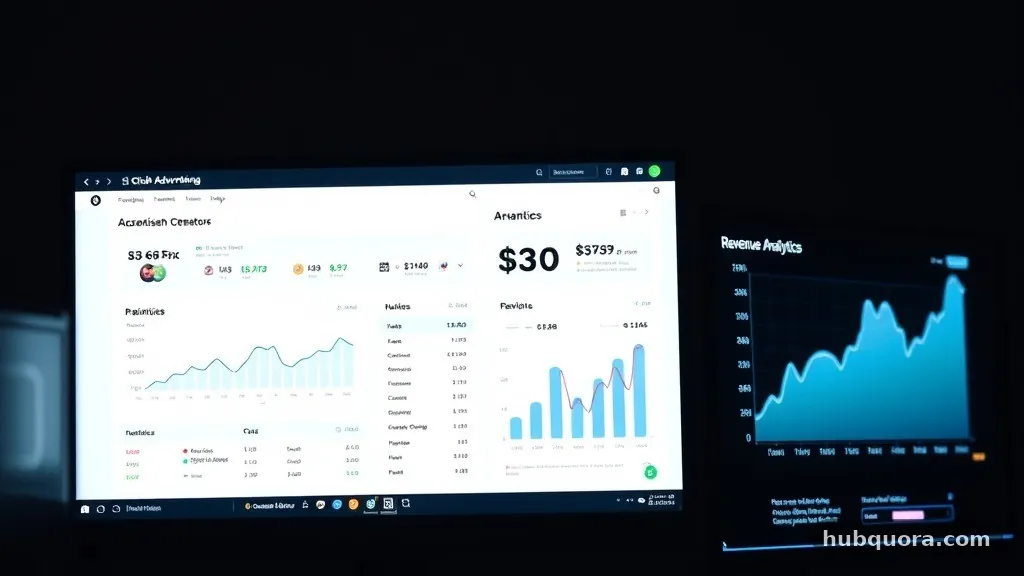
RPM differs from CPM. CPM generally refers to the advertiser’s cost per 1,000 ad impressions, while RPM is a creator-focused revenue metric based on views and applicable revenue.
CPM may describe what advertisers pay before revenue shares and other adjustments. Comparing the two figures directly can create confusion because they use different perspectives and may use different denominators.
Creators should use RPM as a planning signal rather than a promise. A channel with fewer views can sometimes earn more per view than a channel with a larger audience, but total income depends on both reach and revenue per thousand views. The metric becomes more useful when compared across similar videos, periods, formats, and audience patterns.
RPM meaning in medicine, healthcare and patient monitoring
In healthcare, RPM commonly means remote patient monitoring. It describes the collection and transmission of patient health data from outside a traditional clinical setting. A patient may use an approved device to record information such as blood pressure, blood glucose, weight, heart rate, oxygen saturation, or another relevant measurement.
Remote patient monitoring can support clinicians who need information between appointments. A device may send readings to a healthcare platform, where authorized professionals review the data according to the care plan. The system can help a care team observe trends, identify changes, and communicate with a patient when follow-up is appropriate.
RPM does not mean that a device independently diagnoses every condition. Medical interpretation requires clinical judgment, patient history, measurement quality, and the specific instructions provided by a healthcare professional.
A single unusual reading may result from incorrect positioning, device limitations, temporary circumstances, or a genuine health change. Patients should follow their care team’s instructions about what to do with a concerning result.
Remote patient monitoring is different from a video appointment, although both can be part of telehealth. A video visit focuses on communication between a patient and clinician.
RPM focuses on collecting health data over time and making that information available for review. Some care programs use both methods.
Healthcare organizations consider several practical issues before using RPM:
- Whether the device measures the needed health parameter accurately.
- How data reaches the clinical team and how often it is reviewed.
- Whether the patient can operate the equipment reliably.
- How privacy, security, consent, and access are managed.
- What action should follow a high, low, or missing reading.
Patients should ask who reviews their
Patients should ask who reviews their measurements, how quickly someone responds, and whether the program replaces or supplements in-person care. RPM can provide useful continuity, but it doesn’t eliminate the need for professional assessment when symptoms are severe or urgent.
RPM meaning in fitness, psychology, business and professional settings
In the gym, RPM usually retains its mechanical meaning: revolutions per minute. Exercise bikes, spin bikes, rowing machines, ellipticals, and some other cardio equipment use RPM to show how quickly a flywheel, crank, pedal mechanism, or related component is rotating. On a stationary bike, RPM is commonly used as a cadence measure, meaning how quickly the pedals turn.
Cadence is only one part of exercise intensity. Resistance, body position, duration, fitness level, and heart-rate response also matter.
A high RPM with light resistance can feel very different from a lower RPM with heavy resistance. Gym users should follow the machine’s instructions and coaching guidance instead of comparing a number across different equipment models as though it had one universal meaning.
In psychology, “RPM” may refer to different ideas depending on the source. One possible use is rapid prompting method, a controversial approach associated with communication support for some nonspeaking autistic people.
Claims about any communication method should be assessed carefully, especially when questions involve authorship, independent communication, evidence quality, consent, and the individual’s rights. The abbreviation should never be interpreted without checking the specific psychological or educational context.
In business, RPM can mean revenue per mille, particularly in advertising, publishing, websites, and digital media. It may describe estimated revenue generated for every 1,000 page views, sessions, impressions, or other defined units. The denominator must be checked. “RPM” is meaningful only when you know whether it uses views, impressions, users, visits, or another measure.
RPM can also appear as part of an organization’s name, a job title, or a professional abbreviation. “RPM profession” doesn’t have one universal definition. In one industry it may refer to revenue or performance management; in another it may be a company name or a specialized credential. Capitalization and nearby terms provide important clues.
Before interpreting RPM, identify the subject
Before interpreting RPM, identify the subject:
- Vehicle or machine: revolutions per minute.
- YouTube or advertising: revenue per thousand views or impressions, depending on the platform.
- Healthcare: remote patient monitoring.
- Fitness equipment: rotational speed or cycling cadence.
- Psychology or education: a context-specific method or abbreviation.
- Business or profession: a company, role, metric, or industry term.
How to determine the correct RPM definition
The fastest way to interpret RPM is to examine the words immediately around it. If the sentence mentions an engine, tachometer, crankshaft, gear, or redline, RPM almost certainly means revolutions per minute. If it mentions revenue, views, ads, impressions, or a channel, the intended meaning is probably revenue per thousand.
Healthcare terms such as patient, device, blood pressure, clinical team, and remote care point toward remote patient monitoring. Words such as cadence, cycling, resistance, and pedals usually indicate a fitness-related rotational measurement. A reference to therapy, communication, autism, or education may require a more careful search of the source’s terminology.
Check the unit or denominator whenever RPM represents performance. A dashboard metric might use page views, ad impressions, or sessions.
Two companies can both report RPM while measuring different things. Their figures are not directly comparable until the calculation is clear.
Capitalization can help, but it is not decisive. RPM, rpm, and Rpm may be written inconsistently.
The surrounding nouns and verbs carry more meaning than the letter case. A phrase such as “engine rpm” is different from “RPM billing” or “RPM program,” even though the abbreviation looks identical.
For mechanical equipment, consult the manual or specification label. Look for rated speed, maximum speed, operating range, idle speed, and redline.
For medical services, use documentation from the healthcare provider or program administrator. For digital platforms, read the platform’s analytics definitions because metrics can change according to the reporting period and included revenue sources.
Ask one direct question: “What is
When a term remains ambiguous, ask one direct question: “What is being counted?” If the answer is rotations, RPM means revolutions per minute. If the answer is money per thousand views or impressions, it means revenue per mille.
If the answer is health measurements collected away from a clinic, it means remote patient monitoring. That simple check resolves most confusion.
Common mistakes about RPM
One common mistake is treating RPM as a universal measure of performance. It is only useful within its context. A high engine RPM can indicate strong acceleration, but it can also signal an unsuitable gear or excessive stress.
A high YouTube RPM may reflect a particular audience or season and may not remain stable. A medical RPM reading is data for clinical review, not an automatic diagnosis.
Another mistake is confusing RPM with speed in miles per hour or kilometres per hour. RPM describes rotation; road speed describes how quickly the vehicle travels over ground. Gear ratios, tire size, and drivetrain design connect the two, but they are not interchangeable.
People also confuse RPM with torque in automotive discussions. Torque is twisting force at the crankshaft.
RPM is how quickly that force is being applied through rotation. An engine’s output depends on their relationship, so a single RPM reading cannot reveal total power.
In analytics, the main error is failing to check the denominator. Revenue per 1,000 views differs from revenue per 1,000 ad impressions.
A platform may calculate its own RPM using a broader revenue definition than an advertiser’s CPM. Always read the metric description before comparing accounts or channels.
Finally, readers sometimes assume that an abbreviation has one permanent meaning. Acronyms are efficient, but they are not self-explanatory. The topic, measurement, audience, and surrounding vocabulary determine the correct interpretation.
Conclusion: use the context to read RPM correctly
RPM most often means revolutions per minute, the standard measure of rotational speed used for engines, cars, tools, machines, and fitness equipment. In other settings, it can mean revenue per thousand, remote patient monitoring, or a specialized professional or psychological term. The reliable approach is to identify what the abbreviation measures, check the surrounding vocabulary, and confirm the definition in the relevant documentation.
RPM meaning FAQ
What does RPM mean in a car?
RPM in a car means revolutions per minute. It shows how fast the engine’s crankshaft is rotating.
The tachometer displays the reading, which changes with acceleration, gear selection, load, and engine condition. Idle RPM is low, while acceleration and lower gears typically produce higher readings.
What does RPM mean on YouTube?
On YouTube, RPM generally means revenue per mille, or estimated creator revenue per 1,000 views. It may include several eligible revenue sources and accounts for the creator’s share. RPM is an average, not a guaranteed payment, and can change with audience, content, season, and monetization factors.
What does RPM mean in healthcare?
In healthcare, RPM usually means remote patient monitoring. It involves collecting health information from a patient outside a traditional clinical setting and making it available to authorized healthcare professionals. Devices and care plans vary, and RPM data should be interpreted by the appropriate clinical team.
Is RPM the same as speed?
RPM is a type of speed: rotational speed. It measures how many complete rotations occur per minute.
It is not the same as road speed, such as miles per hour or kilometres per hour. Gear ratios, wheel size, and the rotating component determine how RPM relates to movement.

James Wilson is the founder and lead editor of HubQuora.com, where he covers the latest celebrity news, entertainment trends, viral gossip, and net worth stories. With a passion for pop culture and digital media, James delivers engaging, accurate, and up-to-date content that keeps readers informed about the world of celebrities, influencers, and entertainment industry buzz.