When you encounter the acronym DND, your immediate interpretation depends entirely on the environment you are currently in. Whether you are looking at your smartphone settings, discussing a tabletop hobby, or reviewing a professional document, the dnd meaning shifts to reflect the specific needs of that situation. This three-letter sequence acts as a chameleon in our language, serving as a shorthand for everything from deep-focus modes to legendary fantasy adventures.
Dungeons & Dragons: The Tabletop Phenomenon
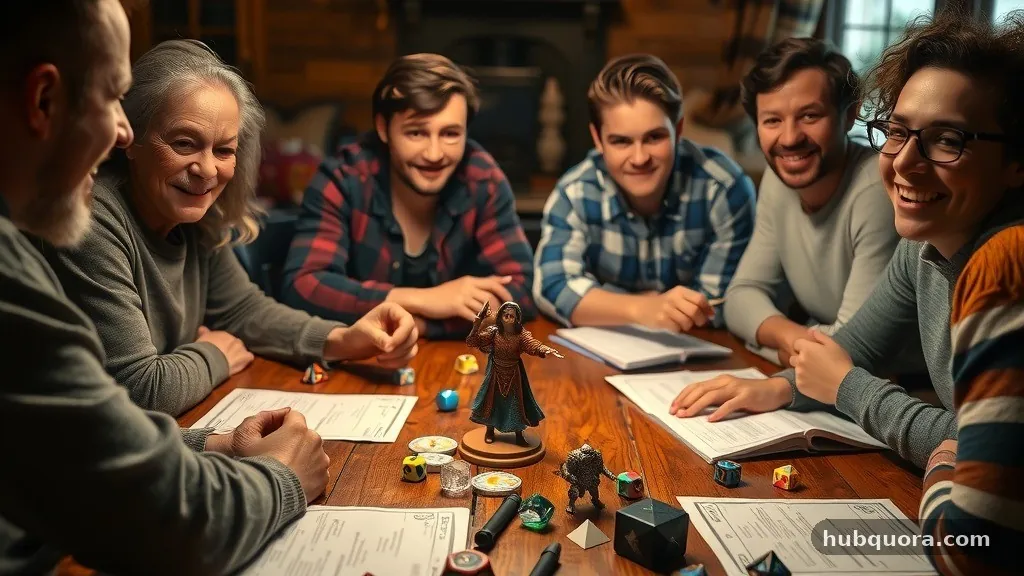
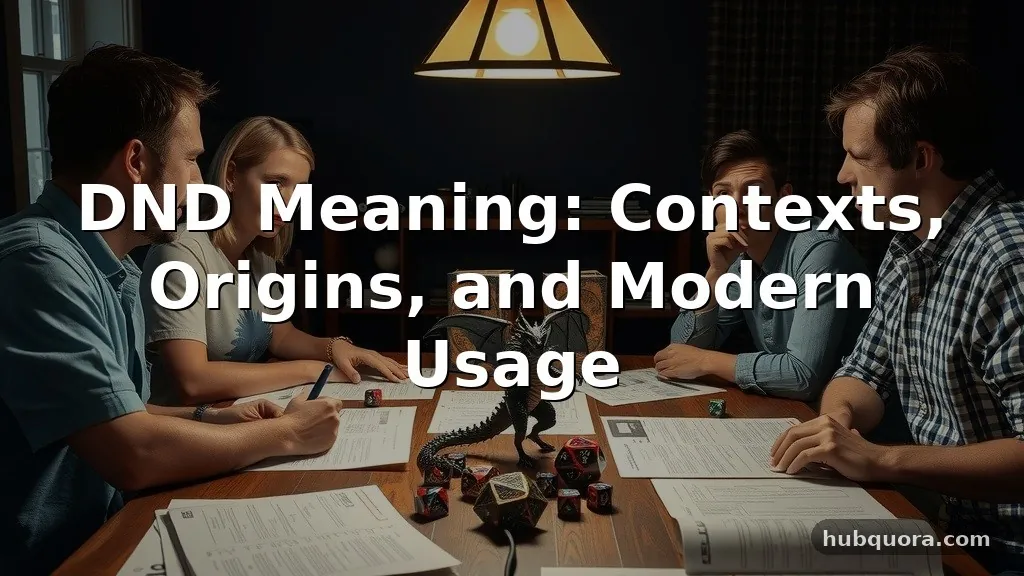
The most iconic association for this acronym is the tabletop role-playing game known as Dungeons & Dragons. Created in the early 1970s, this system revolutionized how people engage with interactive storytelling. At its core, the dnd meaning in this context refers to a collaborative experience where participants create a character and navigate complex, high-fantasy settings.
The rules of the system provide a framework for conflict resolution, typically utilizing random number generation via polyhedral dice. When you play a session, you aren’t just following a script; you are contributing to a living narrative within the Forgotten Realms or other established worlds.
The influence of this title has been so profound that it essentially birthed an entire industry of tabletop gaming. Modern iterations, such as the fifth edition, have streamlined mechanics to make the hobby more accessible to newcomers while maintaining the depth that veterans crave.
Do Not Disturb: The Digital Standard
In the realm of digital devices, the dnd meaning has become synonymous with the “Do Not Disturb” feature. This setting is a vital tool for maintaining privacy and focus in an era of constant communications. When enabled, it silences notifications, calls, and alerts, allowing the user to work or rest without being interrupted by the pinging of apps.
Most operating systems for mobile phones and computers now include this as a standard utility. You might use it during a meeting, while driving, or when you simply need to disconnect from the noise of the internet.
It acts as a digital boundary, signaling to others that you are unavailable. Understanding how to customize these settings—such as allowing calls from specific contacts to bypass the filter—is essential for balancing productivity with the need to stay reachable in emergencies.
Historical Roots and Evolution
The term originally emerged as a way to condense phrases for brevity, but its evolution has been fascinating. While the dragons dungeons game has held the trademark for decades, the “Do Not Disturb” usage became ubiquitous alongside the rise of telecommunications and mobile technology.
It is interesting to observe how these two primary meanings coexist without significant confusion. Context is almost always sufficient to distinguish between someone asking if you want to play a campaign and someone asking you to silence your phone.
This linguistic efficiency is a hallmark of modern English, where acronyms are frequently repurposed based on the platform or social setting. Even as new technologies emerge, these established meanings remain firmly rooted in our daily interactions.
DND in Professional and Government Communications

Beyond gaming and tech, the dnd meaning appears in formal, administrative, and government contexts. In many bureaucratic systems, DND stands for the Department of National Defence. This is a common designation in countries like Canada, where it serves as the official government body responsible for military operations and national security.
In these instances, the acronym is used in official correspondence, policy papers, and public notices. It is crucial to recognize this usage if you are interacting with government entities, as confusing a military department with a gaming hobby could lead to significant misunderstandings. Furthermore, in some professional office environments, DND might be written on a whiteboard or sign outside an office door to signify that an occupant is currently unavailable, mirroring the function of the digital setting.
The Role of Randomness and Mechanics
A fascinating aspect of the tabletop dnd now is how it manages the concept of chance. The dungeon master, the person who facilitates the game, uses dice to determine the outcome of various actions.
This introduces a layer of unpredictability that makes the experience feel authentic. Because the rules are published in manuals, players have a consistent expectation of how the game operates, even if the result of a specific roll is entirely unknown.
This reliance on mechanics differentiates tabletop gaming from simple improvisational storytelling. It provides a structured environment where players must account for their character‘s strengths and weaknesses.
The success of this model has influenced countless video games that attempt to capture the “feel” of a tabletop session through complex underlying algorithms and stat-based progression systems. You can learn more about the history of these mechanics through the Smithsonian Magazine archives on tabletop culture.
Comparing Common Interpretations
To better understand how these meanings differ, we can look at the specific domains where they are most frequently encountered. While the list is not exhaustive, it covers the primary ways you will see the acronym in your daily life.
- Gaming: A legendary fantasy tabletop role-playing system.
- Mobile Tech: A setting that silences incoming alerts and calls.
- Government: An abbreviation for the Department of National Defence.
- Workplace: A physical signal indicating that an individual is not to be interrupted.
- Medical: Occasionally used in shorthand notes, though less standard than other uses.
This table helps clarify the differences in usage across various industries and daily activities:
| Context | Primary Meaning | User Intent |
|---|---|---|
| Personal Tech | Do Not Disturb | Focus or Silence |
| Entertainment | Dungeons & Dragons | Social Play |
| Government | Dept. of National Defence | Official Policy |
| Office Life | Do Not Disturb | Privacy |
Addressing Topical Gaps

One common area of confusion is why the term is sometimes associated with “Rema” or specific musical artists in search trends. This is often due to algorithm-driven associations where fans search for “DND” alongside song titles or album names. It is important to clarify that in these cases, the acronym is usually just a stylized title chosen for aesthetic reasons, rather than a hidden technical definition.
Another gap involves the “medical” usage. While some clinicians might use DND as an informal note for “did not discuss” or “do not disturb” (in the context of a patient’s room), it is not a universally recognized medical term.
Always verify shorthand with standard clinical guidelines to avoid errors. Lastly, many people know the term only from pop culture references, such as its appearance in popular television shows or movies, which often conflate the hobby with specific, sometimes exaggerated, social stereotypes.
The Impact of Digital Devices on Social Gaming
The transition of the tabletop game into the digital age has been a notable shift. While many still prefer physical dice and paper character sheets, there are now platforms that facilitate online play. This allows many people to connect across continents, using video chat and virtual tabletops to simulate the experience of sitting around a table.
These digital tools have made it easier to organize sessions, especially when physical meeting spaces are unavailable. However, it also means that the “Do Not Disturb” feature often comes into play during these sessions. It is common for players to turn on their DND mode to ensure their gaming session remains uninterrupted by work emails or social media notifications, highlighting how the two primary meanings of the acronym often intersect in the lives of enthusiasts.
DND and Privacy Concerns
In the digital era, the privacy implications of “Do Not Disturb” settings are significant. When you enable DND, you are making a conscious choice to gatekeep your attention.
This has become a necessary form of digital hygiene. With the constant influx of data from various apps, the ability to toggle a state of unavailability is a powerful way to reclaim your time.
Some users worry that these settings might be bypassed by “emergency override” features. It is wise to check your device’s configuration to see which contacts or apps are permitted to disturb your focus. By taking control of these settings, you ensure that your boundaries are respected, whether you are trying to finish a project or simply enjoying some downtime.
The Future of the Terminology
As we look ahead, the dnd meaning will likely remain stable in its two most popular forms. The tabletop hobby continues to grow in popularity, reaching audiences that were previously untapped. Simultaneously, as our lives become more integrated with technology, the need for effective “Do Not Disturb” features will only increase.
We may see more nuanced versions of these features, such as “Smart DND” that automatically detects when you are in a meeting or driving. Similarly, the fantasy franchise will continue to evolve, incorporating new technologies to enhance the immersion of its players. Regardless of how the specific applications change, the core utility of the acronym—as a way to categorize focus, fantasy, or official status—will persist as a fundamental part of our shared vocabulary.
Frequently Asked Questions
Is DND a recognized medical term?
DND is not a standard, universally recognized medical term. While some healthcare workers might use it as shorthand for “Do Not Disturb” in a hospital room context or “Did Not Discuss” in notes, it should never be used as a formal clinical abbreviation.
Why is DND used in mobile phone settings?
The DND feature on mobile phones stands for “Do Not Disturb.” It is designed to silence incoming calls, messages, and app notifications, allowing users to maintain focus, sleep better, or avoid interruptions during important tasks or meetings without turning the device off completely.
What does DND stand for in a government context?
In many countries, particularly Canada, DND stands for the Department of National Defence. It is the government organization responsible for overseeing military operations, national security policy, and the administration of the armed forces within that nation’s legal and political framework.
Can DND mean anything else?
Yes, acronyms are context-dependent. Beyond the common “Do Not Disturb” and “Dungeons & Dragons” meanings, it can occasionally stand for “Did Not Deliver” in logistics or “Do Not Duplicate” on keys. Always look at the surrounding information to determine the correct interpretation.

James Wilson is the founder and lead editor of HubQuora.com, where he covers the latest celebrity news, entertainment trends, viral gossip, and net worth stories. With a passion for pop culture and digital media, James delivers engaging, accurate, and up-to-date content that keeps readers informed about the world of celebrities, influencers, and entertainment industry buzz.