When you hear someone shout “aye” or refer to the “ayes,” you might be thinking of a simple affirmative. While that is the core of the ayes meaning, the term carries a fascinating history that spans centuries of parliamentary procedure and maritime tradition.
Understanding how this single syllable evolved allows you to appreciate its role in modern governance and informal speech. Whether you are curious about the technicalities of a formal vote or just want to know why sailors repeat the phrase, this look at the linguistic roots and practical applications will clarify exactly what is happening when people use the term.
The Etymological Roots of Aye

The word “aye” has been part of the English language for a very long time, with roots stretching back to the Middle English period. Etymologists generally trace it to the Old Norse “ei,” which translates to “ever” or “always.” Over centuries, the shift in pronunciation and usage transformed it into a standard term for “yes.”
It isn’t just a variant of “yes,” however; it carries a weight of tradition that the modern, casual “yeah” lacks. When you look at the term in a dictionary, you’ll see it designated as an adverb or noun, depending on the context.
Its historical development shows how language adapts to formal needs. In early English, it was often used to signify “always” or “evermore,” but by the 16th century, it had firmly established itself as a vote of affirmation. This consistency is why it remains the preferred choice in legislative chambers.
You aren’t just saying you agree; you are invoking a linguistic legacy that has signaled consensus for hundreds of years. The stability of this word is what keeps it alive in official settings where brevity and clarity are paramount.
Parliamentary Procedure and the Ayes Have It
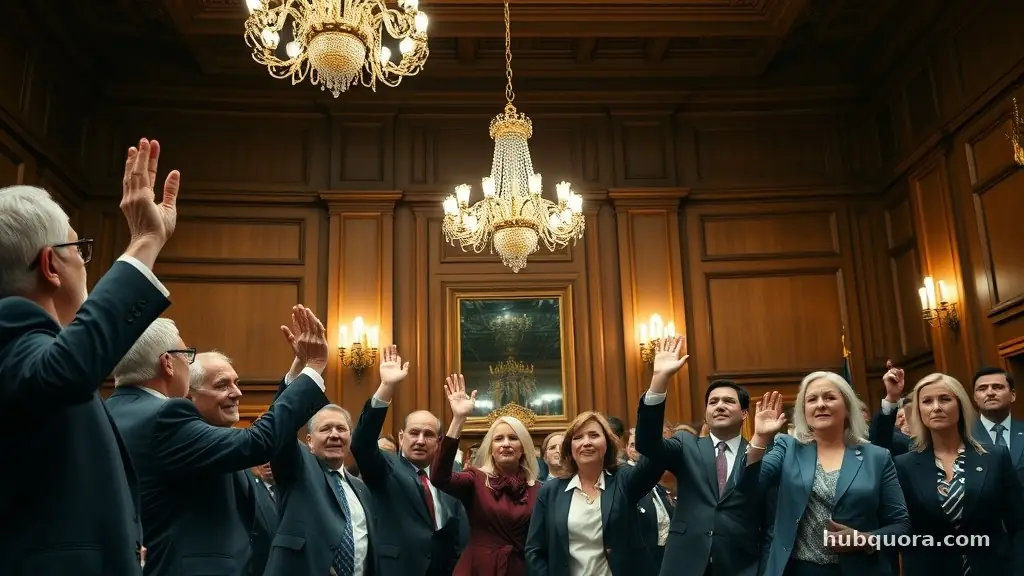
The most famous application of this term occurs in legislative bodies like the British House of Commons or various councils worldwide. During a The phrase “the ayes have it” is the official declaration that the motion has passed because the volume or number of affirmative voices was greater. This isn’t just tradition; it’s a functional method for quick, audible decision-making in a large room.
This mechanism relies on the clear distinction between the “ayes” and the “nays.” Because “aye” and “nay” sound distinct, even in a noisy chamber, the presiding officer can gauge the room with high accuracy. If the outcome is too close to call, the house may move to a “division,” where members physically separate to be counted.
The simplicity of the ayes meaning in this context provides a necessary efficiency for governing bodies. It’s a classic example of how a singular word can facilitate the complex process of democratic lawmaking without requiring complex technology.
Nautical Traditions and the Meaning of Aye Aye

If you have spent any time around sailors or watched classic naval films, you’ve likely heard the phrase “aye aye, sir.” This is distinct from the simple affirmative “aye.” In maritime culture, “aye” simply means “yes,” but “aye aye” is a specific acknowledgment of an order.
It translates roughly to “I understand the command and I will execute it.” This distinction is vital for safety and discipline on a vessel. When a captain issues a directive, they need to know that the message was received and that the crew member is committed to the task.
The repetition serves a functional purpose. A single “aye” might be mistaken for a casual comment or an acknowledgment of a statement, but “aye aye” leaves no room for ambiguity. It is a formal, professional response.
If you were to respond with a simple “yes,” it would be considered improper on a ship. This reinforces the hierarchy and the serious nature of maritime operations. It is a linguistic shortcut that keeps communication precise, ensuring that everyone on deck is aligned with the captain’s intent.
Commonly Confused Phrases and Proper Usage

Because these terms sound similar, people often stumble over the difference between “aye,” “eye,” and “I.” While “eye” refers to the organ of sight and “I” is a personal pronoun, “aye” is purely a marker of affirmation or a nautical signal. You’ll also find that people confuse “aye” with “ay,” which is a sigh or an exclamation of pain.
Keeping these straight is essential if you are writing formal documents or reporting on legislative events. Misusing these in a professional context can make your writing look sloppy.
Another area where people get tripped up is the plural usage. The “ayes” refers specifically to the group of people who voted in the affirmative. You wouldn’t say “the yeses have it” in a parliament; you would specifically use the noun form of the term.
This is a technical distinction that marks the difference between casual conversation and formal procedure. Understanding these nuances helps you navigate both historical literature and modern news reports without confusion. It’s all about context—the setting dictates whether you are dealing with a vote, a command, or just a bit of archaic flair.
The Evolution of Affirmative Language

Language is always changing, and the way we express agreement has evolved significantly. While “aye” remains fixed in its parliamentary and nautical niches, it has largely disappeared from everyday speech in favor of “yes,” “yep,” or “sure.”
This shift happened because “aye” carries a formal, almost performative weight that doesn’t fit a casual text message or a quick coffee shop order. However, its survival in specific institutions shows that we still value traditional markers of authority and consensus.
Interestingly, this word has seen a resurgence in popular media, particularly in fantasy and historical dramas. Writers use it to ground their stories in a specific time or place, giving characters a sense of historical gravitas. When a character in a period piece says “aye,” the audience immediately understands the setting and the social hierarchy.
It is a linguistic shorthand that does heavy lifting for world-building. Even though we don’t use it to order groceries, we still recognize the authority it conveys.
Addressing Topical Gaps in Linguistic Research

Many people searching for the ayes meaning are looking for clarity on why this specific word remains in use while other archaic terms have vanished. A major gap in the current discourse is the lack of focus on the psychological impact of using formal language in voting.
When a representative is forced to vocalize their support rather than just pressing a button, the act becomes more personal and accountable. The vocal affirmation of “aye” creates a public record of intent that is harder to ignore or walk back than a silent vote.
Another gap is the connection between the nautical “aye aye” and the psychological concept of “command compliance.” Modern communication theory suggests that repeating an instruction back to the sender reduces errors by nearly 30% in high-stress environments.
The maritime tradition of “aye aye” is essentially an early, practical application of this principle. By focusing on these functional aspects, we can see that the word isn’t just a relic of the past; it is a tool for precision that has survived because it effectively solves the problem of human error.
Comparison of Affirmative Terms

It is helpful to look at how “aye” compares to other ways of signaling agreement. The table below illustrates the context in which each term is most appropriate.
| Term | Primary Context | Tone |
|---|---|---|
| Aye | Parliamentary / Nautical | Formal / Traditional |
| Yes | General Conversation | Neutral |
| Affirmative | Military / Technical | Objective |
| Yeah | Informal | Casual |
As you can see, the choice of word changes the entire tone of the interaction. Using “aye” in a casual conversation might make you sound like a pirate or a historical reenactor, whereas using “yeah” in a parliamentary session would be seen as a breach of protocol. Understanding the social and professional weight of these words allows you to adjust your speech to fit the environment.
The Role of Affirmation in Modern Governance

The process of voting is the bedrock of democracy, and the use of “ayes” and “nays” provides a ritualized way to handle conflict. When a group of people disagrees, the ritual of calling for a vote and hearing the audible response helps to legitimize the outcome. Even in digital assemblies, the tradition persists.
You will often see “ayes” recorded in the minutes of a meeting, even if the actual vote was conducted via an electronic system. This serves as a reminder of the historical process that preceded modern technology.
This ritual also acts as a social stabilizer. By participating in a structured vocal vote, members of a group are physically and audibly committing themselves to a collective decision. It creates a sense of shared responsibility.
When the presiding officer declares that the ayes have it, the group moves forward as a single unit, regardless of individual dissent. This is the power of a simple, centuries-old affirmative. It turns a collection of individuals into a functioning body capable of making binding decisions.
Commonly Confused Terms and Phrases

It is worth looking at how “ayes” is often confused with other terms, such as “eyes.” While this might seem obvious to some, the phonetic similarity often leads to errors in transcription or subtitles. If you are writing about a legislative session, ensuring that you use “ayes” is crucial for maintaining the credibility of your content.
The same applies to the difference between “aye” and “I.” These are small details, but they separate high-quality writing from content that feels rushed or poorly researched.
Another common point of confusion involves the phrase “the ayes have it.” Some people mistakenly assume it refers to the physical eyes of the members, which is incorrect. The phrase is strictly about the count of affirmative votes.
When you are editing your own work, always check the context. If you are discussing a vote, it’s “ayes.”
If you are discussing sight, it’s “eyes.” It’s a simple rule, but one that is often missed in the heat of writing.
FAQ
What is the full meaning of ayes in a vote?
The term “ayes” refers to the group of people in a legislative or deliberative body who vote in favor of a motion. It is the plural form of the affirmative “aye,” used specifically to count the total number of supporters during a formal verbal vote.
What does the slang phrase aye aye mean?
In a nautical or military context, “aye aye” is a specific acknowledgment of an order. It signifies that the recipient has heard the command, understands it, and will carry it out immediately. It is a formal, disciplined response rather than a casual agreement.
Is the word aye still used in modern politics?
Yes, “aye” remains a standard term in many parliaments, including the British House of Commons. It is used during the voice vote process, where members shout “aye” for approval or “nay” for opposition. The presiding officer uses these calls to determine the result of the motion.
How do I use ayes in a sentence?
You use it as a noun when referring to the collective group of voters. For example, “The ayes have it, and the motion is carried.” You should avoid using it as a simple “yes” in casual conversation, as it carries a distinct formal or nautical connotation.
Conclusion
The ayes meaning is much more than a historical curiosity; it is a testament to the enduring power of ritualized language. From the halls of parliament where it determines the fate of laws, to the decks of ships where it ensures clear communication, this simple syllable has maintained its relevance because it provides clarity and authority. By understanding its origins and its specific uses, you gain a better grasp of how language serves to organize human action and decision-making.
As you encounter this term in your own life, whether in literature, historical archives, or news reports, you’ll recognize the weight it carries. It is a direct link to a past where every word had a specific, functional purpose.
If you want to explore the history of parliamentary procedure further, check out the resources at the UK Parliament official website to see how these traditions continue to influence modern governance. Hopefully, this breakdown has clarified the nuance behind this classic term and helped you see why it remains a staple of our vocabulary.

James Wilson is the founder and lead editor of HubQuora.com, where he covers the latest celebrity news, entertainment trends, viral gossip, and net worth stories. With a passion for pop culture and digital media, James delivers engaging, accurate, and up-to-date content that keeps readers informed about the world of celebrities, influencers, and entertainment industry buzz.