The phrase “flounders meaning” usually points to the different meanings of flounder: a verb describing someone who struggles or makes little progress, and a noun naming a type of flat fish. The word can refer to confusion, ineffective movement, or an animal that lives close to the seabed. Its exact sense depends on context, grammar, and sometimes pronunciation.
This article explains the verb and noun definitions, the difference between flounder and founder, common synonyms, slang usage, symbolism, and practical examples. It also clarifies the plural form flounders, a point that can confuse readers searching for the word’s meaning.
What does flounder mean?
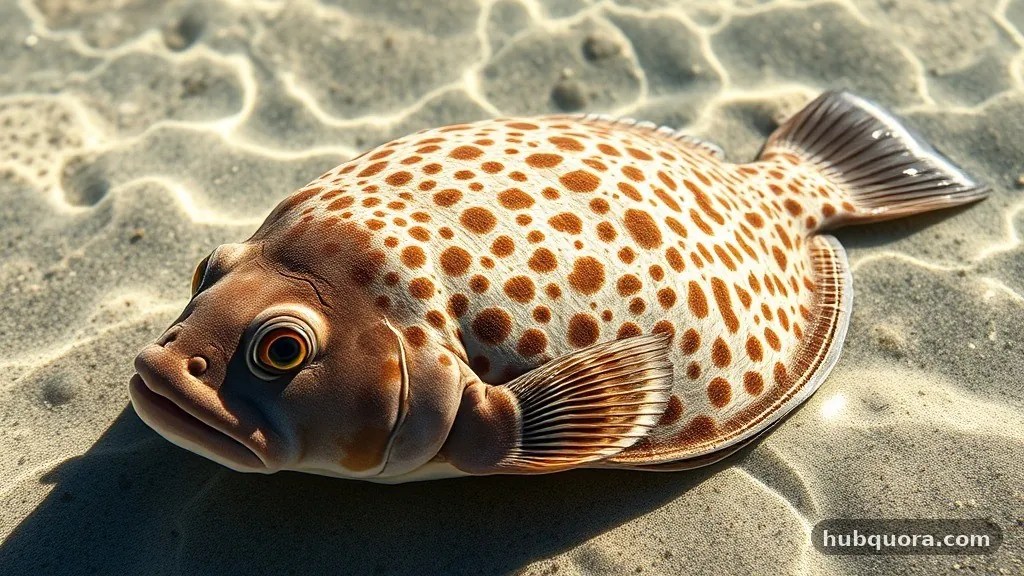
Flounder means to struggle, behave awkwardly, or fail to make steady progress; it also means a flat-bodied fish. As a verb, it describes a person, group, or project that cannot move forward confidently. As a noun, it identifies a fish with a flattened body that typically lives on or near the ocean floor.
Someone may flounder because they lack knowledge, confidence, preparation, or direction. A student can flounder during a difficult examination. A new manager might flounder while handling an unfamiliar team.
A business can flounder after losing customers. In each example, the central idea is difficulty combined with uncertain or ineffective action.
The word can describe physical movement as well. A person who falls into deep water and moves awkwardly may flounder.
The movement suggests frantic effort without controlled progress. That physical sense developed into the more common figurative meaning: struggling to cope with a situation.
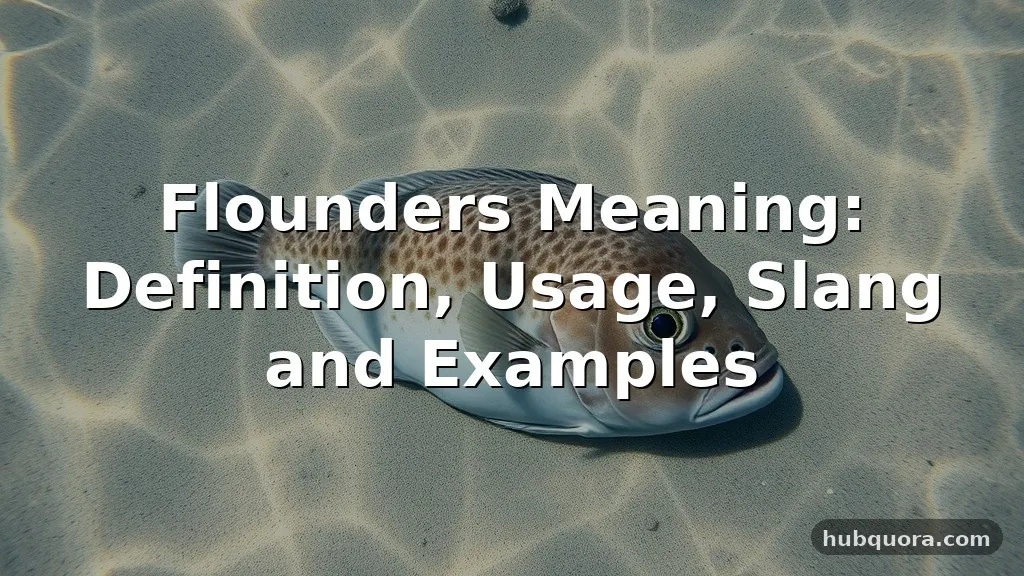
As a fish, a flounder is a type of flatfish. Its body shape helps it rest along the seabed, where it can blend into its surroundings. The fish meaning has no connection to academic or emotional confusion, even though the two senses share the same spelling.
| Form | Part of speech | Meaning | Example |
|---|---|---|---|
| flounder | Verb | To struggle or make little progress | The team began to flounder without a clear plan. |
| floundered | Past-tense verb | Struggled in the past | She floundered during the interview. |
| floundering | Present participle | Currently struggling | The project is floundering. |
| flounder | Noun | A flat-bodied fish | The restaurant served grilled flounder. |
| flounders | Plural noun or verb | More than one fish, or struggles in the present tense | The company flounders without investment. |
Flounder as a verb: struggle, confusion and lack of progress
As a verb, flounder describes a person or thing that struggles to act effectively. The word often suggests uncertainty rather than simple difficulty. Someone who flounders may try several actions, but those actions lack direction, control, or confidence.
For example, “He floundered for an answer” means he struggled to produce an answer. He may have known that a response was expected, yet he could not organise his thoughts quickly. “The committee floundered after its chair resigned” means the committee lost direction and found it difficult to operate effectively.
The verb can apply to practical tasks, emotional situations, intellectual problems, and institutions. A swimmer may flounder in rough water. A speaker may flounder after receiving an unexpected question.
A government department may flounder under administrative pressure. The surrounding nouns and verbs show which sense the writer intends.
Common grammatical patterns include flounder around, flounder for, and flounder in:
- Flounder around: to act without a clear plan, as in “The team floundered around for weeks.”
- Flounder for an answer: to struggle to find or express a response.
- Flounder in confusion: to remain unable to understand or decide what to do.
- Flounder under pressure: to perform poorly because demands become difficult to manage.
- Flounder without direction: to lose momentum because no clear objective exists.
The verb does not always mean total failure. A person can flounder briefly and then recover.
The word focuses on the process of struggling, not necessarily the final result. That distinction makes it useful in writing about learning, leadership, relationships, and problem-solving.
Flounder as a fish and the meaning of “flounders”
As a noun, flounder refers to a flatfish. The fish has a flattened body and spends much of its life near the bottom of the sea or another body of water. In general descriptions, flounders are associated with sandy or muddy seabeds, where their shape and coloring can help them remain less visible.
The word can refer to several kinds of flatfish rather than one single species. In ordinary conversation, people may use flounder as a broad food or animal term. Culinary writing may mention flounder as a mild fish that can be baked, grilled, fried, or otherwise prepared, depending on local traditions and the species available.
Flounders is the regular plural when the word is used as a noun. For example, “Several flounders moved across the shallow seabed” describes multiple fish. The same spelling can also be a third-person singular verb: “The organization flounders without strong leadership.” In that sentence, flounders means “struggles,” not “fish.”
Context resolves the ambiguity. Words such as catch, fishery, ocean, net, and seabed usually signal the animal meaning. Words such as confusion, plan, answer, crisis, and leadership usually signal the verb meaning.
The fish sense also appears in compounds and related vocabulary connected with flatfish. A European flatfish may be discussed alongside other species in a biological, culinary, or fishing context, but the exact species should not be assumed from the word alone. A dictionary entry gives the broad meaning; scientific identification may require a more precise name.
Flounder versus founder: commonly confused words
Flounder and founder are commonly confused words because both can describe failure or difficulty. Their meanings are related in some contexts, but they are not interchangeable in every sentence.
To flounder is to struggle without making effective progress. The person or organisation may still be active, but its actions appear uncertain or poorly controlled. To founder means to fail, collapse, or become unable to continue.
A ship can founder by sinking. A business can founder when it fails decisively or loses the ability to operate.
Compare these examples:
- “The apprentice floundered while learning the new software.” The apprentice struggled but may improve.
- “The company foundered after its main supplier closed.” The company suffered a serious failure or collapse.
- “The rescue boat began to flounder in the waves.” The boat moved awkwardly or was difficult to control.
- “The damaged vessel foundered offshore.” The vessel sank or failed to remain afloat.
In figurative writing, the distinction can become less sharp. A failing project may first flounder and later founder.
The first word describes a period of uncertain struggle; the second describes a more complete breakdown. Choosing the right verb helps readers understand whether the subject is still attempting to continue or has effectively failed.
Pronunciation can also contribute to confusion, especially for learners. Hearing the words in fast speech may make them seem similar.
Checking the dictionary definition, part of speech, and surrounding sentence usually resolves the issue. A useful memory aid is this: flounder suggests awkward movement, while founder suggests sinking or collapse.
Synonyms, antonyms and shades of meaning

The best synonym for flounder depends on the type of struggle involved. No single replacement matches every context. A sentence about confusion needs a different word from one about physical movement or institutional decline.
Useful synonyms for the verb
Struggle is the broadest synonym. It works in many situations, but it is less vivid than flounder. Waver highlights indecision. Falter suggests losing confidence, strength, or momentum. Stumble can describe a mistake in speech, action, or reasoning. Grope may suggest searching blindly for an answer or solution.
Other possible alternatives include muddle through, thrash, labour, stray, and founder. These words carry different levels of seriousness. “The speaker stumbled over her words” describes a brief verbal problem. “The department floundered for months” suggests a prolonged lack of direction. “The campaign foundered” suggests a more serious failure.
Antonyms and contrasting ideas
Antonyms include succeed, progress, advance, thrive, prosper, and manage. The right contrast depends on the sentence.
A person who does not flounder may respond confidently, work methodically, or make steady progress. An organisation that does not flounder may remain stable, effective, or successful.
These contrasts show why flounder is more specific than the simple word fail. Failure describes an outcome. Floundering describes an uncertain condition or process.
A student might flounder through the first half of a course and still pass. A business might flounder before finding a successful strategy.
For readers checking a formal definition, the Merriam-Webster dictionary entry for flounder separates the verb and fish senses and shows how a major reference dictionary presents the word.
Flounder in slang, informal speech and everyday writing
There is no single secret slang definition of flounder. In informal speech, people generally use the standard verb meaning to describe someone who is confused, unprepared, or unable to cope. The tone may be sympathetic, humorous, or critical depending on the speaker’s attitude.
If someone says, “I was floundering during that meeting,” they probably mean they did not know how to respond or contribute. “He’s floundering in his new job” suggests that he is having difficulty adapting. “The team is floundering around” sounds more critical because it implies wasted effort and a lack of clear direction.
The expression flounder around is especially common in everyday language. It can describe trial and error without a plan: “We floundered around for an hour before finding the right trail.” The phrase may also describe emotional uncertainty: “After the breakup, she floundered around for a while.”
In casual writing, floundering can be used for a temporary setback rather than a permanent condition. A learner may say, “I’m floundering with calculus,” while still expecting to improve through practice. The word communicates difficulty honestly without necessarily claiming that success is impossible.
Because the term is vivid, it can sound harsher than having trouble. Calling a person a flounderer may seem judgmental, and that noun is much less common than the verb.
In professional communication, phrases such as “the project lacks direction” or “the team is encountering implementation problems” may be more tactful. In personal conversation, however, flounder remains natural and widely understood.
How to use flounder in a sentence
Good examples make the difference between the verb and noun clear. The verb normally appears with a subject that struggles: a person, team, plan, institution, or animal. It can stand alone or take a phrase explaining the source of difficulty.
- “The candidate floundered when the interviewer asked about the missing figures.”
- “Without a timetable, the renovation project began to flounder.”
- “The child floundered in the shallow end before an instructor helped.”
- “After changing its leadership, the charity stopped floundering.”
- “The chef prepared flounder with herbs and lemon.”
- “The aquarium contains several species of flounders.”
Notice the difference between floundered and floundering. Floundered describes a completed period of struggle: “The speaker floundered during the debate.” Floundering describes an ongoing situation: “The speaker is floundering during the debate.” The base form appears after modal verbs and certain auxiliary verbs: “The team may flounder,” “the project will flounder,” or “the group did flounder.”
The word often works best with a cause or setting. “The company floundered” is grammatical but broad. “The company floundered after its expansion created operational problems” gives the reader a clearer picture. Precision makes the expression stronger.
Writers should also avoid using flounder merely as a dramatic substitute for every kind of difficulty. A person who carefully works through a challenging task is struggling, but may not be floundering.
The verb implies a lack of control, direction, or effectiveness. That shade of meaning is what gives it force.
What flounder can symbolize
In literature and everyday metaphor, flounder can symbolize uncertainty, vulnerability, disorientation, or the effort to survive under pressure. The image comes from awkward movement: something is trying to move forward but cannot find stable control.
A character who flounders may be entering an unfamiliar stage of life. They might have lost a job, moved to a new country, taken responsibility for a family, or faced a moral decision.
The word presents that person as active but unsettled. They are not necessarily passive; they are struggling to turn effort into progress.
In political or business writing, a floundering organisation often represents weak leadership, unclear priorities, or a failure to adapt. The metaphor can make an abstract problem easier to picture. Readers can imagine something shifting ineffectively rather than moving toward a firm destination.
The fish meaning offers a separate symbolic possibility. A flatfish living close to the seabed may suggest concealment, adaptation, patience, or survival in an environment where visibility is dangerous.
Those associations belong to creative interpretation rather than the ordinary dictionary definition. Context determines whether the word is being used literally, figuratively, or symbolically.
Symbolic use should remain understandable. A sentence such as “The nation floundered in uncertainty” clearly uses the verb metaphorically.
A sentence such as “The flounder disappeared beneath the sand” uses the animal meaning. If a writer wants both meanings to resonate, the surrounding imagery should provide enough clues for the reader to follow the shift.
Why people search for “flounders meaning”
The search phrase may refer to several different questions. Some readers want the definition of the verb.
Others have encountered flounders in a sentence and are unsure whether it describes fish or an action. Language learners may also be checking pronunciation, conjugation, synonyms, or the difference between flounder and founder.
Searches can also arise from a specific phrase such as flounder around meaning, flounder in a sentence, or flounder fish meaning. These queries share the same spelling but signal different intentions. A useful dictionary entry must therefore separate definitions instead of presenting one broad explanation.
For vocabulary learners, the most practical method is to identify three features:
- Part of speech: decide whether the word is functioning as a verb or noun.
- Nearby clues: look for words connected with struggle, leadership, water, cooking, or fish.
- Time and grammar: distinguish forms such as floundered, floundering, and flounders.
That method works better than memorising one translation or one synonym. Vocabulary gains meaning through relationships. A learner who understands the difference between flounder, falter, struggle, and founder can choose a more accurate word in speech and writing.
Readers may also encounter dictionary features such as “save word,” word-of-the-day content, browse-nearby-words tools, or a “cite this entry” option. Those features help with reference and study, but the essential information remains the same: identify the grammatical role and read the sentence context.
Conclusion: choosing the right meaning
Flounder has two principal meanings. As a verb, it describes struggling, moving awkwardly, or failing to make clear progress.
As a noun, it names a flat-bodied fish. The plural flounders can mean multiple fish or the present-tense verb form for a singular subject.
Context makes the meaning clear. Words about plans, answers, confusion, and leadership point to the verb, while words about water, cooking, fishing, and the seabed point to the animal. Remembering the distinction between flounder and founder also prevents a common vocabulary error.
Frequently asked questions about flounders meaning
What does flounder mean in slang?
In informal speech, flounder usually means to struggle, feel confused, or act without a clear plan. It isn’t a separate slang definition in most situations. “I’m floundering” often means “I’m having trouble coping or finding an answer,” sometimes with a humorous or self-critical tone.
When someone is floundering, what are they doing?
Someone who is floundering is trying to manage a situation but making little effective progress. They may be uncertain, unprepared, confused, or overwhelmed. The word can describe a student, speaker, employee, team, or organisation, and it suggests active effort without enough control or direction.
What is a synonym for flounder?
Possible synonyms include struggle, falter, stumble, waver, and muddle through. The best choice depends on context. Struggle is broad, falter suggests lost confidence, and stumble often describes a brief mistake in speech, movement, or reasoning.
What is the difference between flounder and founder?
Flounder means to struggle or make uncertain progress, while founder means to fail, collapse, or sink. A project may flounder before it fails completely. A ship can founder at sea, but it cannot normally “flounder” in that sinking sense.
What does a flounder symbolize?
Figuratively, a flounder can symbolize confusion, vulnerability, disorientation, or effort without direction. In creative writing, the fish itself may suggest concealment or adaptation because it lives near the seabed. These symbolic meanings depend on context and go beyond the ordinary dictionary definitions.

James Wilson is the founder and lead editor of HubQuora.com, where he covers the latest celebrity news, entertainment trends, viral gossip, and net worth stories. With a passion for pop culture and digital media, James delivers engaging, accurate, and up-to-date content that keeps readers informed about the world of celebrities, influencers, and entertainment industry buzz.