
The hercule meaning is rooted in the legendary figure of the classical hero, representing strength, endurance, and the triumph of the human spirit over impossible odds. While most people immediately associate the name with the Greek hero Heracles or his Roman mythology counterpart, Hercules, the specific spelling “Hercule” carries its own distinct cultural weight, particularly within the French language and literary tradition. Understanding this term requires looking beyond a simple dictionary definition to see how a single name has permeated global culture, linguistics, and even the night sky.
The Linguistic Roots and French Influence
When we discuss the hercule meaning, we must acknowledge its linguistic journey. The name is the standard French equivalent of the Latin Hercules. Because French is a Romance language, it frequently adapts classical names by dropping terminal consonants or softening vowels.
In French, “Hercule” functions as a direct noun, but it also carries connotations of physical prowess or monumental effort. If someone describes a task as “herculéen,” they are invoking the sheer scale of the hero’s labors.
The transition from the ancient Greek Herakles—which translates roughly to “the glory of Hera”—to the Roman Hercules, and finally to the French Hercule, shows how words evolve alongside the cultures that use them. In France, the name is not just a historical reference; it is an archetype.
You’ll find it used in literature, theater, and even common parlance to describe someone who possesses extraordinary physical strength or who is undertaking a project of immense difficulty. Unlike the English usage, which often leans heavily on the mythological character alone, the French usage remains deeply tied to the adjective form, bridging the gap between the person and the quality of their actions.
Mythology: The Source of the Archetype
The foundation of the hercule meaning lies in the ancient tales of the son of Zeus. In ancient narratives, this hero is defined by his labors, a series of twelve nearly impossible challenges imposed upon him as penance.
These stories serve as the primary source for the cultural weight the name carries today. The hero was not merely strong; he was a figure of suffering, redemption, and eventual deification.
In both Greek and Roman traditions, the hero’s journey is a task of self-mastery. He is often depicted as a man caught between his divine heritage and his mortal impulses. This duality is what makes the name so resonant.
When we use the name to describe someone, we are often referencing this struggle—the idea of an individual forced to overcome their own nature or external circumstances that seem designed to crush them. The mythology provides a template for human resilience that has lasted for thousands of years, making the name a shorthand for grit and persistence in the modern world.
The Constellation and Astronomical Context
The name is not confined to the earth; it is written in the stars. The constellation of Hercules is one of the most recognizable features of the northern night sky.
Astronomers and stargazers have long mapped the heavens using these classical figures, and the placement of the constellation is significant for those interested in celestial navigation. It is situated in a region of the sky between Lyra and the Corona Borealis (the Northern Crown).
Looking up at this cluster of stars, one can see the historical tendency to project human stories onto the cosmos. The constellation represents the hero kneeling, a position that reflects the humility he learned through his trials.
For those studying the history of science, the constellation serves as a citation of our ancestors’ need to organize the chaos of the night sky into a coherent narrative. The connection between the name and the constellation reinforces the idea that the hero is an eternal figure, one whose influence extends beyond the physical realm into the vast, rotating expanse of the universe.
Hercule as a Cultural Symbol in Literature
Literature has played a massive role in shaping the hercule meaning. From the tragedies of Euripides to the modern detective fiction of Agatha Christie, the name has been used to signify different traits. In the case of Christie’s famous detective, Hercule Poirot, the name is used ironically.
The character is not physically imposing; rather, his strength lies in his “little grey cells.” By naming him Hercule, the author subverts the reader’s expectations, suggesting that the most powerful form of strength is intellectual.
This literary usage highlights how a name can undergo a shift in meaning. While the classical hero embodies physical brute force, the modern literary hero uses the name to signal precision, order, and logic. This adaptability is the hallmark of a truly enduring cultural entity.
When you read the name in a book, you are instantly primed to expect a character who stands out—either through their physical presence or their sheer force of will—against a backdrop of ordinary people. It is a testament to the name’s power that it can represent both the brawn of a demi-god and the brain of a detective.
Comparative Analysis of Hercules and Hercule
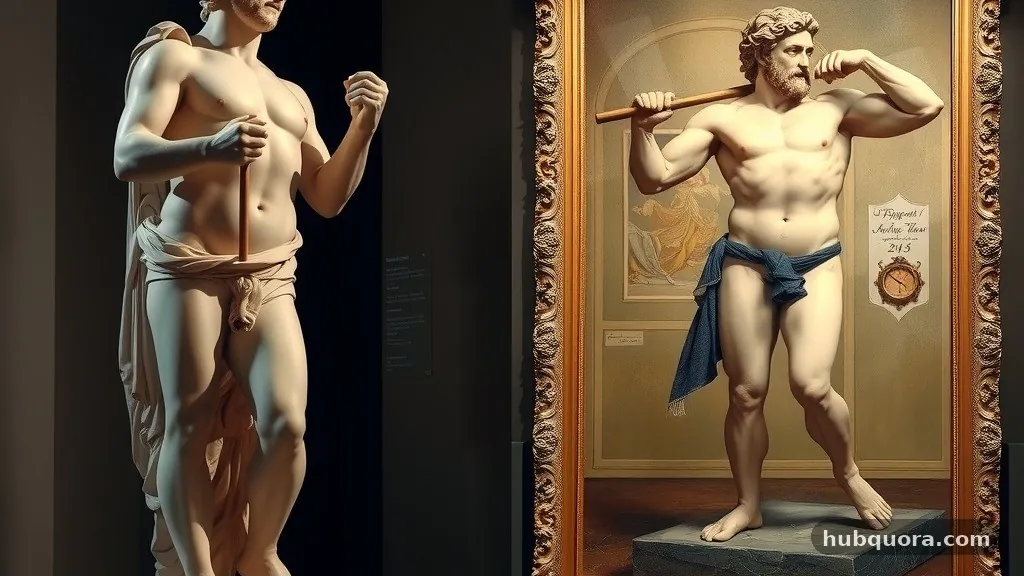
To fully grasp the nuance of the term, it is helpful to compare the variants side-by-side. While they share the same etymological root, their usage patterns differ depending on the language and the context of the conversation.
| Variant | Primary Language | Key Connotation |
|---|---|---|
| Hercules | English/Latin | Physical strength, mythology, celestial |
| Hercule | French | Literary, intellectual, classical hero |
| Heracles | Greek | Original mythological ancestor |
As shown in the table, while the core entity remains the same, the related connotations shift. In English, you might call a strong man “a Hercules,” whereas in a French context, the term might be used to describe someone who is “Herculean” in their efforts or a character who embodies wisdom. These distinctions are subtle but important for anyone looking to understand the full scope of how the name functions in various linguistic environments.
The Concept of the Labors and Modern Persistence
The labors of the hero remain the most frequently cited aspect of his life. These twelve tasks—ranging from slaying the Nemean Lion to cleaning the Augean stables—are more than just myths; they are metaphors for the challenges we face in our professional and personal lives. When someone says they have a “herculean task” ahead of them, they are invoking the hercule meaning of insurmountable difficulty.
* The Nemean Lion: Symbolizes the need to overcome invulnerability.
* The Lernaean Hydra: Represents the challenge of managing multiplying problems.
* The Augean Stables: Signifies the overwhelming nature of systemic corruption or neglect.
* The Hesperides: Illustrates the quest for knowledge and immortality.
These stories provide a framework for understanding how we categorize difficult work. By framing a project as a “labor,” we acknowledge that it requires not just effort, but a specific type of heroic endurance.
This is why the name continues to appear in modern business, sports, and even political rhetoric. It is a shorthand for the idea that with enough resolve, even the most impossible task can be completed.
Geographic and Linguistic Variations
While the name is primarily associated with the West, its influence has spread globally. In some regions, such as parts of the Indonesian archipelago, the name has been transliterated or adapted to fit local naming conventions, often retaining the meaning of strength.
This spread is a common phenomenon for names rooted in classical antiquity. As people move across the world, they bring their stories and their linguistic heroes with them.
It is interesting to note that while the name is universal, its pronunciation varies. In French, the final ‘e’ is often silent or very subtle, creating a sound that is distinct from the heavy, three-syllable pronunciation of the English “Hercules.”
For a deeper dive into the etymology of these classical names, you can visit the Online Etymology Dictionary to see how the roots connect across Indo-European languages. This global reach confirms that the hero is a shared human archetype, not limited by borders or specific cultural mythologies.
The Role of the Centaur and Divine Conflict
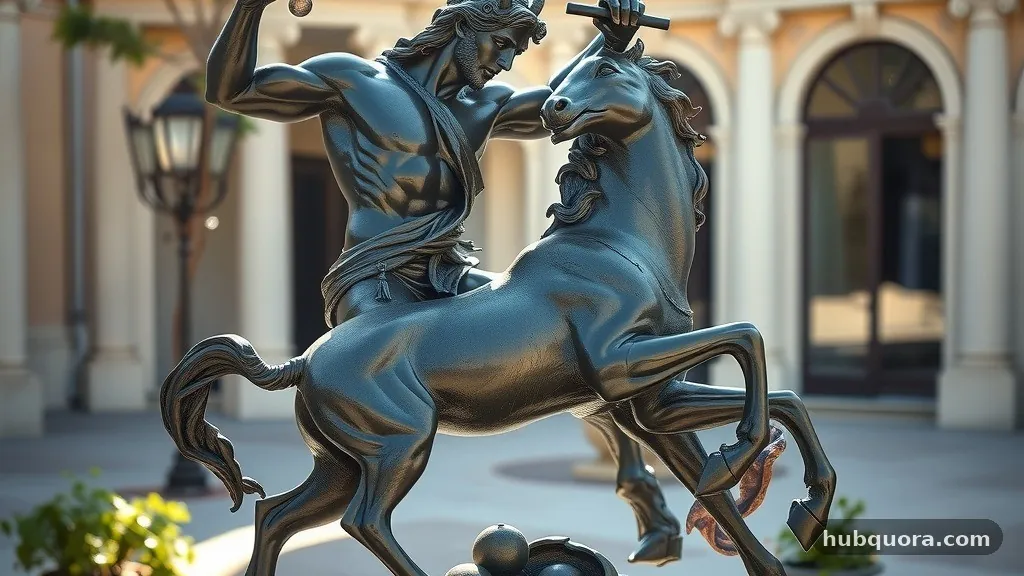
No discussion of the hero is complete without mentioning his interactions with the centaur and the broader pantheon of gods. In many myths, the hero is caught in a tug-of-war between his divine father and the various deities who oppose him.
These conflicts are essential to the hercule meaning because they represent the struggle between order and chaos. The centaur often acts as a teacher or a tragic foil, highlighting the hero’s humanity.
These relationships with other mythical beings serve as a reminder that the hero is not an isolated individual. He is a part of a larger, complex ecosystem of stories. The gods, the monsters, and the mentors all define who he is.
When we use his name today, we are unconsciously referencing this entire web of relationships. We are identifying with the idea that we are shaped by our conflicts and our interactions with the world around us. The hero’s journey is, in many ways, a mirror of our own social and personal development.
Topical Gaps: Is “Hercule” Just a Name?
A common gap in existing content is the failure to address whether “Hercule” is used as a common noun or exclusively as a proper name. Many sources treat it only as a name, but in reality, the term has slipped into the lexicon as a descriptor of character.
If you look at a list of adjectives derived from proper nouns, “Herculean” is a staple. However, the use of “Hercule” as a standalone noun—meaning a person of great strength—is a nuance often missed by automated log systems that only track proper entities.
Furthermore, the connection between the hero and the constellation is often treated as a trivia point rather than a reflection of human psychology. By mapping the hero to the sky, ancient cultures were effectively “fixing” the archetype in place, ensuring that the meaning of the hero would remain visible for all time. This is a crucial aspect of the term’s persistence; it is not just written in books, it is written in the stars, which provides a physical anchor for the abstract concepts of strength and endurance.
The Psychological Impact of the Archetype
Why does this name continue to resonate? The psychological impact of the hero is profound. He represents the “shadow” and the “light”—the capacity for both immense violence and profound sacrifice.
When we adopt the name or use it to describe an action, we are tapping into a deep-seated need to categorize human potential. We want to believe that there are people capable of performing the impossible.
This psychological need is why the name will likely never fade from use. As long as humans face challenges that seem beyond their grasp, they will look for symbols of strength to emulate. The hercule meaning is ultimately about human potential.
It is about the capacity to look at a monstrous problem and decide, despite the fear and the odds, to engage with it. Whether it is an athlete breaking a record or a student tackling a complex thesis, the spirit of the hero is present in every effort to push beyond current limits.
FAQ
What is the synonym of Hercules?
Synonyms for the figure of Hercules include words like “strongman,” “titan,” “giant,” or “powerhouse.” Depending on the context, you might also use terms like “demigod” or “hero,” though these lack the specific connotation of physical endurance associated with the original mythological character.
Is Hercule a French name?
Yes, Hercule is the traditional French form of the name Hercules. It is used both as a historical name and, in some literary and cultural contexts, as a reference to the archetype of the strong, enduring hero. It is a distinct cultural adaptation of the Latin original.
How do you pronounce “Hercule”?
In French, it is typically pronounced “air-kyul.” The final ‘e’ is generally silent or serves as a very slight glide. This differs significantly from the English pronunciation of “Hercules,” which emphasizes the three distinct syllables and the hard ‘s’ at the end of the word.
What does Hercules symbolize?
He symbolizes the triumph of human willpower over adversity, physical strength, and the struggle for redemption. He represents the bridge between the mortal and the divine, serving as a reminder that even those with great power must face, and learn from, their own profound suffering.
Final Thoughts
The exploration of the hercule meaning reveals a term that is far richer than its surface-level definition suggests. From its origins in the ancient world to its presence in modern literature and the night sky, it has remained a potent symbol of human resilience. Whether you are looking at the constellation or reading about the labors, you are engaging with a legacy of strength that transcends time.
The name is not just a label; it is a testament to our enduring fascination with the struggle to be more than we are. By understanding the layers of history, language, and mythology that surround it, you can better appreciate why this name continues to hold such a powerful place in our collective consciousness. It remains, in every sense, a truly monumental word.

James Wilson is the founder and lead editor of HubQuora.com, where he covers the latest celebrity news, entertainment trends, viral gossip, and net worth stories. With a passion for pop culture and digital media, James delivers engaging, accurate, and up-to-date content that keeps readers informed about the world of celebrities, influencers, and entertainment industry buzz.