
People searching for a Lata Mangeshkar husband usually want to know whether India’s most celebrated playback singer ever married, who Raj Singh Dungarpur was, and why her personal life remained so private. The direct answer is that Lata Mangeshkar never married and had no husband or children. Her name was closely associated with Raj Singh Dungarpur, a respected royal, cricket administrator, and family friend, but there is no reliable public record confirming that they married.
Lata’s story is unusual because her professional life was extraordinarily public while her private choices stayed guarded. For decades, she gave her voice to thousands of film songs, collected major awards, and became one of the defining figures in Indian music.
Yet she rarely discussed romance, marriage, or domestic life in detail. That contrast has created lasting curiosity, repeated rumours, and a great deal of speculation that needs to be separated from documented fact.
Did Lata Mangeshkar Have a Husband?
No, Lata Mangeshkar did not have a husband. She remained unmarried throughout her life and did not publicly identify a spouse. Claims that she secretly married, had a hidden husband, or raised a daughter are not supported by credible biographical evidence.
Lata Mangeshkar was born on 28 September 1929 in Indore, in the Central India Agency of British India, and died on 6 February 2022 in Mumbai. Her life centred on music, family responsibility, recording studios, rehearsals, and public service.
She began working professionally while still young, particularly after the death of her father, the classical singer and theatre artist Deenanath Mangeshkar. That early responsibility shaped many of her later decisions.
Marriage was not an overlooked detail in her biography. It was a subject journalists and admirers asked about repeatedly, especially as Lata became more famous. Her consistent position was that she had not married.
There is also no credible evidence that she had a daughter or son. Some online pages use phrases such as “Lata Mangeshkar’s daughter” because users search for them, but search popularity does not turn an unverified claim into a fact.
Her family did include several prominent musicians. Her sisters Asha Bhosle, Usha Mangeshkar, and Meena Khadikar built their own connections with music, while her brother Hridaynath Mangeshkar became a respected composer and singer.
This large creative family helped make the Mangeshkar name central to Indian popular music. It also meant that Lata had close companionship and a strong support network outside marriage.
For a concise overview of her career and cultural significance, the Encyclopaedia Britannica biography of Lata Mangeshkar offers a useful reference. It places her personal story in the wider context of her historic contribution as a playback singer.
Who Was Raj Singh Dungarpur in Lata’s Life?
Raj Singh Dungarpur was a close companion and long-standing friend of Lata Mangeshkar, not a publicly confirmed husband. He came from the royal family of Dungarpur and became widely known in Indian cricket administration.
Raj Singh, often called Raj Singh Dungarpur, belonged to the former royal house of Dungarpur in Rajasthan. He was educated, socially prominent, and deeply involved in cricket.
He later served in leadership roles within Indian cricket administration and became an influential figure in the Board of Control for Cricket in India. His public identity therefore combined royal heritage, sport, philanthropy, and elite social connections.
His relationship with Lata became a subject of interest because the two were seen together over many years and appeared to share genuine affection and respect. Reports have described him as someone who understood her temperament and admired her artistic discipline.
Lata, in turn, was associated with his family and social circle. Their closeness was real enough to attract attention, but the nature of that closeness was never officially defined as a marriage.
It is important to distinguish three separate claims:
- They knew each other well: this is widely accepted by biographies and public accounts.
- They may have shared a deep emotional bond: this has been suggested by people familiar with their lives, but private feelings cannot be proved with certainty.
- They became husband and wife: there is no reliable public record confirming this.
Raj Singh Dungarpur also reportedly chose not to marry. That fact has encouraged many theories about whether he and Lata made a mutual decision to remain unmarried while maintaining a close relationship.
Still, a plausible explanation is not the same as documented evidence. Responsible writing should acknowledge the bond without presenting rumour as a settled fact.
Was Raj Singh Dungarpur married?
Raj Singh Dungarpur is generally described in reputable accounts as unmarried. Some stories suggest that his relationship with Lata was the most important romantic connection in his life, but neither person publicly announced a marriage. He died in 2009, years before Lata’s death, and left behind a public legacy tied primarily to cricket, Rajasthan, and his social work.
What Was the Story Behind Their Reported Relationship?
The reported story is one of a long, private association rather than a confirmed marriage. Lata and Raj Singh belonged to different but overlapping worlds: she was a leading film and classical-influenced singer, while he was a royal figure and cricket administrator.
Their connection reportedly developed through social circles in Mumbai and through mutual acquaintances. Both were accustomed to public attention, but they handled personal matters with discretion.
Lata was known for protecting her private space, while Raj Singh’s background placed him within a formal and highly visible family tradition. The result was a relationship that observers could notice but could not easily define.
Several versions of the story circulate. One says that Raj Singh wanted to marry Lata but faced opposition or practical complications. Another suggests that Lata’s demanding career and family duties made conventional domestic life difficult.
A third presents their bond as deep friendship rather than a conventional romance. Because neither person provided a detailed public account, these versions should be treated as interpretations, not established biography.
Lata’s early years offer useful context. After her father’s death in 1942, the family faced financial pressure, and she assumed responsibilities while still a teenager. She worked in Marathi and Hindi films before establishing herself as the leading female playback voice in Hindi cinema.
Her rise required long hours, travel, vocal training, recording sessions, and professional discipline. A singer’s schedule could involve recording several songs in one day and working late into the night.
Her devotion to family also mattered. The Mangeshkar siblings remained closely connected, and Lata supported the household while her career developed.
This does not prove that she rejected marriage because of duty, but it shows why her priorities differed from those of many people around her. Her life was not empty or isolated; it was crowded with relatives, musicians, composers, producers, colleagues, and admirers.
The most balanced conclusion is simple: Lata and Raj Singh Dungarpur shared a significant personal connection, possibly a romantic one, but the public record does not establish that they married or that he was her husband.
Why Did Lata Mangeshkar Never Marry?
Lata Mangeshkar never gave one universally accepted public explanation for remaining unmarried. Her choices appear to have been shaped by family responsibilities, an intense musical career, personal privacy, and circumstances that she preferred not to discuss in detail.
It is tempting to reduce her decision to a single romantic story, but that approach misses the complexity of her life. Lata entered the workforce very young.
Her father had trained her in music, and after his death she became an important source of support for her mother and siblings. Her family’s survival and progress were closely linked to her income during a period when women in the film industry faced considerable social judgment.
Her professional obligations expanded rapidly. Lata recorded for Hindi, Marathi, Bengali, and other Indian-language films. She worked with composers such as Anil Biswas, Naushad, C.
Ramchandra, S. D. Burman, Madan Mohan, Shankar–Jaikishan, Salil Chowdhury, and later A.
R. Rahman.
Each collaboration involved different musical demands. She had to learn lyrics, interpret emotional situations, adapt to orchestral arrangements, and deliver technically precise performances.
A private person may also value independence. Lata’s public image was disciplined and carefully managed, but that did not mean she lacked emotional relationships.
Remaining unmarried allowed her to control her time, protect her family structure, and avoid placing her career under the expectations of a traditional household. Her choice was personal, not evidence of a problem that needed solving.
There is another important point: historical accounts often judge famous women through marriage. A male artist’s unmarried status may be treated as ordinary, while a female artist’s personal life becomes a mystery requiring explanation. Lata’s case shows why biographical analysis should not assume that every successful woman secretly wanted a husband or regretted not having one.
Her own legacy suggests that she defined fulfilment broadly. Music, family, faith, friendships, and national recognition all occupied important places in her life. Marriage was not the only possible measure of happiness, adulthood, or social contribution.
Lata Mangeshkar’s Family, Children, and Private World
Lata Mangeshkar had no publicly acknowledged children, and she did not have a daughter or son. Her family consisted primarily of her mother, siblings, extended relatives, and a wide artistic community that remained important throughout her life.
The Mangeshkar family came from a strong performing-arts tradition. Her father, Deenanath Mangeshkar, was a respected vocalist and theatre personality who influenced all of his children.
Lata absorbed classical training from him and from other teachers. That foundation helped her develop the pitch control, pronunciation, breath management, and emotional restraint that later defined her playback singing.
Her siblings followed different paths. Asha Bhosle became one of India’s most versatile playback singers, known for moving comfortably between film music, ghazals, cabaret-style numbers, classical compositions, and international collaborations. Usha Mangeshkar worked as a singer and participated in regional and Hindi music.
Meena Khadikar contributed to music and family projects. Hridaynath Mangeshkar earned recognition as a composer with a distinctive, often serious musical style.
| Person | Relationship to Lata | Publicly known role |
|---|---|---|
| Deenanath Mangeshkar | Father | Classical singer and theatre artist |
| Asha Bhosle | Sister | Playback singer and recording artist |
| Usha Mangeshkar | Sister | Singer in Hindi and regional music |
| Hridaynath Mangeshkar | Brother | Composer, singer, and music director |
| Raj Singh Dungarpur | Close friend and reported romantic connection | Royal figure and cricket administrator |
Because Lata never had children, younger members of the Mangeshkar family and the next generation of performers often appeared in discussions about her family legacy. However, relatives, protégés, and collaborators should not be mislabeled as her children. Clear family relationships matter, particularly when online biographies repeat errors from one page to another.
Her private world also included devotion to music collections, poetry, household routines, and friendships beyond the film industry. She enjoyed cricket and maintained links with people in public life, including Raj Singh. A life without a spouse or children can still contain affection, responsibility, companionship, and a strong sense of belonging.
How Her Career Shaped Public Curiosity About Marriage
Lata’s extraordinary career made people unusually curious about her personal life. The more central she became to Indian cinema, the more the public wanted an explanation for her unmarried status.
She was not simply a successful singer. She became the voice associated with heroines across generations. Her songs appeared in romantic dramas, historical films, devotional projects, patriotic stories, comedies, and tragic narratives.
Audiences heard her sing about love every week, yet they knew very little about her own romantic experience. That contrast naturally encouraged speculation.
Her voice also created an illusion of intimacy. A playback singer performs inside a character’s emotional world, but the singer may have no personal connection to the story on screen. When Lata sang of longing, separation, marriage, or devotion, listeners sometimes assumed the feelings belonged to her.
They did not necessarily. The performance represented a character, a lyricist’s words, and a composer’s musical design.
Her public stature added another layer. Lata received the Bharat Ratna, India’s highest civilian award, as well as the Padma Bhushan, Padma Vibhushan, Dadasaheb Phalke Award, and multiple Filmfare Awards.
She was also associated with major national honours and international recognition. Such status made her personal decisions seem more significant to the public than those of an ordinary citizen.
At the same time, the film industry of her era often linked women’s respectability to marriage. A leading actress might be asked about her husband, while a leading singer could be questioned about why she remained single.
Lata’s professional authority challenged those assumptions. She built a long-term career on vocal excellence and business discipline without fitting neatly into a conventional domestic narrative.
Her story also intersects with the careers of other playback singers. Asha Bhosle’s different personal and professional path frequently appeared in comparisons with Lata’s.
Such comparisons can be useful when discussing two influential sisters, but they should not turn their lives into a competition. Each woman made different decisions about music, family, marriage, and public identity.
Common Myths About Lata Mangeshkar’s Husband and Children
The most common myths claim that Lata had a secret husband, a daughter, or a hidden family; credible biographies do not support these claims. The confusion largely comes from repeated online speculation about Raj Singh Dungarpur.
Myth: Raj Singh Dungarpur was definitely her husband
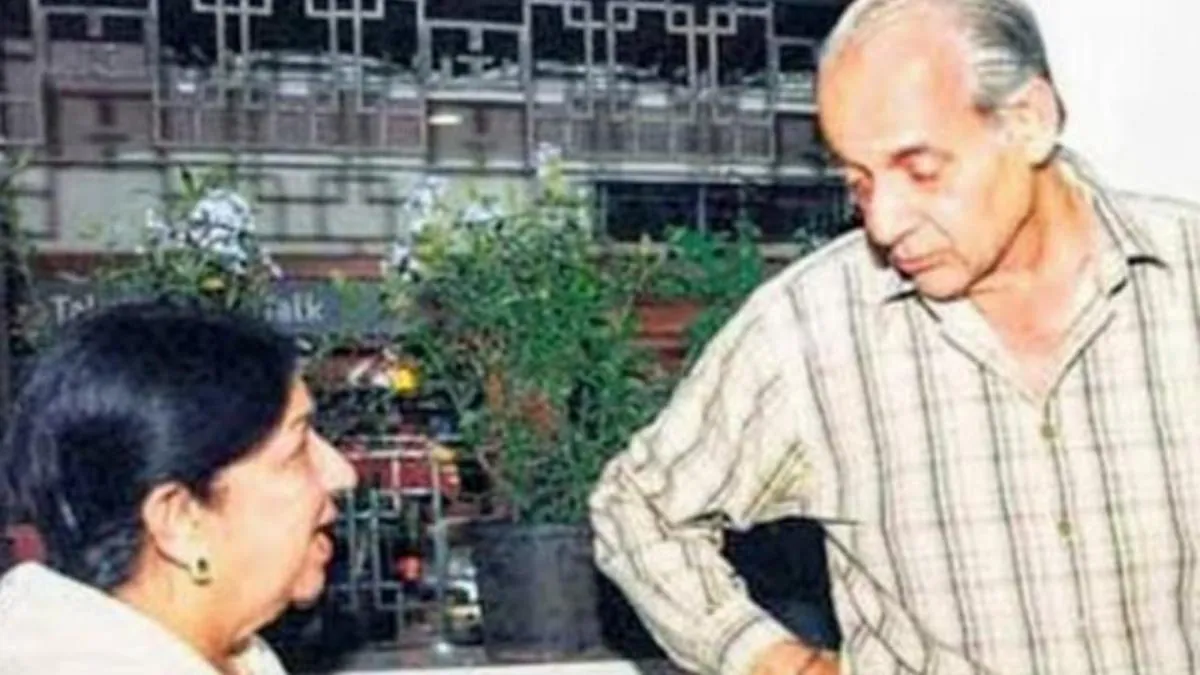
There is no reliable public documentation showing that Lata and Raj Singh married. They may have shared a close or romantic bond, but “close companion” and “husband” are not interchangeable terms. A careful article should preserve that distinction rather than present uncertain gossip as fact.
Myth: Lata had a daughter
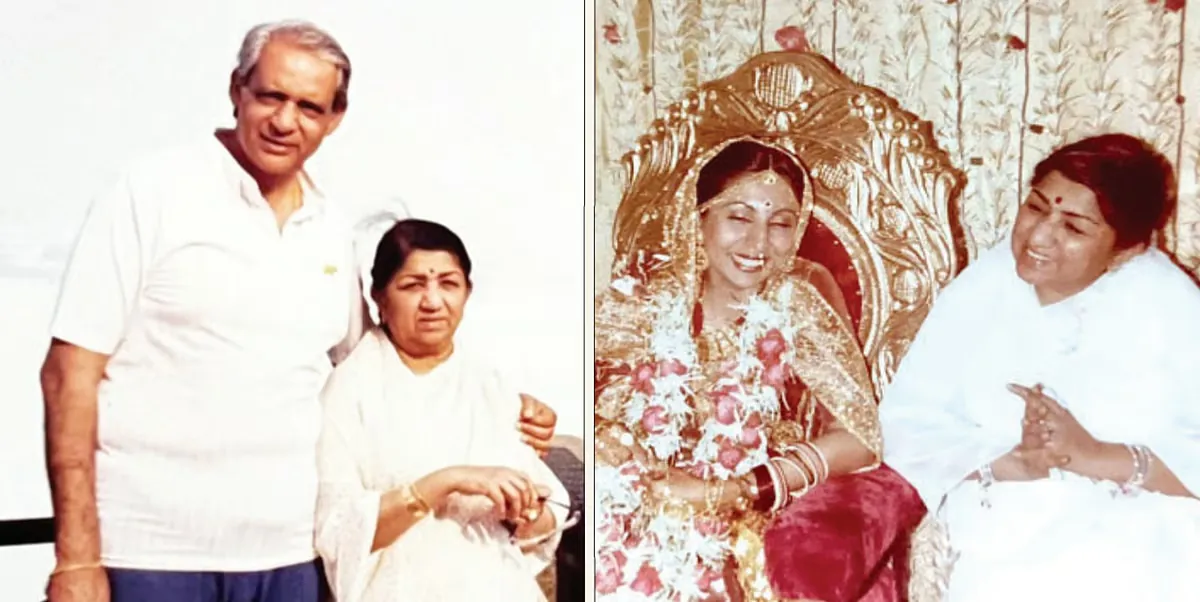
Lata had no publicly acknowledged daughter. Search results may produce pages using this phrase because it is a popular query, but the existence of a search term is not evidence. Her nieces, nephews, and younger relatives are sometimes incorrectly described as her children.
Myth: She abandoned romance entirely
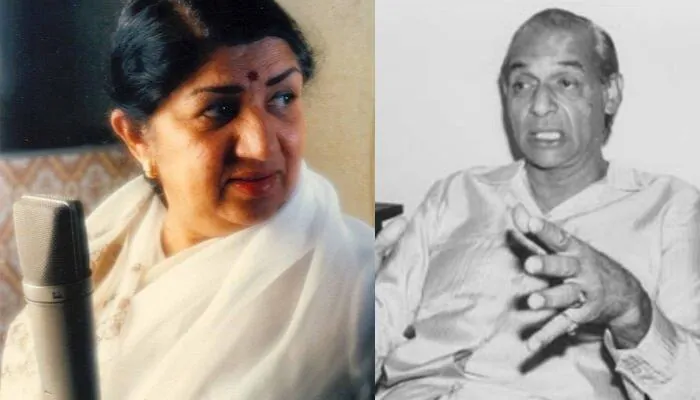
Remaining unmarried does not prove that someone never loved, formed attachments, or experienced emotional closeness. Lata may have had private feelings and relationships that she chose not to explain. Public silence should not be converted into either a dramatic secret or a claim that she lacked emotional depth.
Myth: Her career made marriage impossible
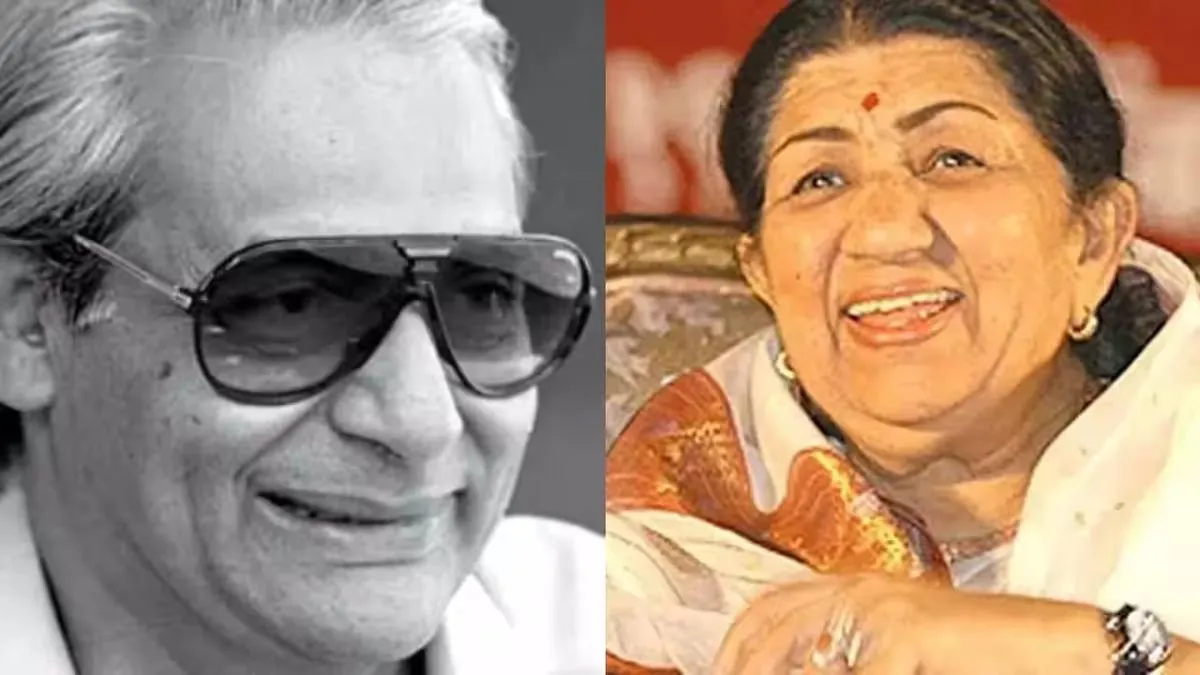
Her career was demanding, but many artists balance professional achievement with marriage. It is more accurate to say that Lata’s priorities, family circumstances, personality, and personal choices led her to remain unmarried. No single explanation can be confirmed as the definitive reason.
When evaluating claims about famous people, readers can use a few practical checks:
- Look for a named biography, interview, family statement, or archival source.
- Separate confirmed facts from phrases such as “reportedly,” “believed to be,” and “some say.”
- Check whether several pages merely copy the same unsourced claim.
- Be cautious when a headline presents a rumour as a question and the article treats it as fact.
Lata Mangeshkar’s Legacy Beyond Her Relationship Status
Lata Mangeshkar’s historical importance rests on her music, not on whether she married. Her voice transformed playback singing and became one of the most recognisable sounds in Indian cinema.
She helped establish a new standard for female playback performance after the 1940s. Her clear high register, precise diction, controlled vibrato, and ability to sustain delicate emotion made her especially suited to the changing sound of Hindi film music. Composers wrote demanding melodies for her because they trusted her range and interpretive intelligence.
Her songs crossed regional, linguistic, and social boundaries. A listener might encounter her voice in a devotional song, a patriotic number, a classical-based composition, or an intimate film ballad. She recorded for many generations of actors, from the young stars of the 1950s to performers working in the late twentieth and early twenty-first centuries.
Her awards reflect institutional recognition, but awards alone cannot explain her reach. Families played her songs at home. Radio stations made her a daily presence.
Weddings, festivals, memorials, and national ceremonies used her recordings. For many Indian listeners, her voice became connected with childhood, family memory, and important moments in life.
She also influenced how playback singers understood professional conduct. Lata paid close attention to pronunciation, recording quality, rehearsal, and the dignity of singers’ work.
Her disagreements with producers or music companies were often connected to questions of credit, royalties, and respect. In that sense, her career involved not just singing but helping shape the status of the playback profession.
Her family’s musical continuation further strengthened the Mangeshkar legacy. Asha, Usha, and Hridaynath each developed separate identities, while younger relatives worked in performance and production. Yet Lata remained the central figure because her career connected classical training, film culture, national identity, and mass popularity in an unusually powerful way.
Whether audiences first discover her through a romantic song, a patriotic recording, or a classic film soundtrack, the lasting fact is the same: Lata created a body of work that outlived the speculation surrounding her personal life.
How to State the Facts Accurately
The most accurate short description is: Lata Mangeshkar never married, had no children, and was closely associated with Raj Singh Dungarpur, whose exact personal relationship with her was never publicly confirmed.
This wording works because it distinguishes evidence from interpretation. It acknowledges Raj Singh without erasing the uncertainty around their bond. It also answers the main question directly, without implying that unmarried people have incomplete lives.
For researchers, writers, and readers comparing biographies, the following framework helps:
- Start with the documented fact: Lata did not have a publicly recorded husband.
- Add the relevant context: Raj Singh Dungarpur was a close friend and prominent public figure in her circle.
- Label uncertainty clearly: accounts have described possible romantic feelings, but there was no confirmed marriage.
- Correct related misinformation: Lata did not have a publicly acknowledged daughter or son.
- Return to the broader biography: her family, songs, awards, and influence are more firmly documented than rumours about romance.
This approach is especially valuable because celebrity information is often recycled without verification. A statement can appear on dozens of websites and still trace back to one unsupported sentence.
The number of repetitions does not strengthen the evidence. In Lata’s case, the safest language is both simple and respectful.
It is also worth remembering that privacy has meaning. Lata lived through enormous changes in Indian cinema, technology, and society, but she did not owe the public a full account of her emotional life. Her decision not to discuss marriage in detail should be accepted as part of her autonomy rather than treated as an invitation to invent hidden facts.
Conclusion
Lata Mangeshkar had no husband, never married, and had no publicly acknowledged children. Raj Singh Dungarpur was an important person in her life and may have shared a deeply personal bond with her, but the available evidence does not confirm that he became her husband. The clearest understanding comes from separating documented facts from attractive but unsupported stories.
Lata’s enduring importance lies in her music, family, discipline, and influence on Indian playback singing. If you encounter claims about her marriage or daughter, check the source and look for evidence before accepting them. Her life remains compelling not because of a hidden domestic story, but because she created a remarkable artistic legacy on her own terms.
Frequently Asked Questions
Who was Lata Mangeshkar’s husband?
Lata Mangeshkar did not have a husband. She remained unmarried throughout her life.
Raj Singh Dungarpur was a close friend and widely discussed personal companion, but no credible public record confirms that he and Lata married. Describing him as her husband is therefore inaccurate.
Was Lata Mangeshkar in love with Raj Singh Dungarpur?
Many accounts suggest that Lata and Raj Singh Dungarpur shared a deep emotional connection, and some describe it as romantic. However, neither publicly confirmed a marriage or fully explained the relationship. The safest conclusion is that they were extremely close, while the precise nature of their feelings remains private.
Did Lata Mangeshkar have a daughter or son?
No. Lata Mangeshkar had no publicly acknowledged daughter or son.
Claims about a secret child are unsupported by reliable biographical evidence. Her well-known family included her sisters Asha, Usha, and Meena, her brother Hridaynath, and several nieces and nephews.
Why did Lata Mangeshkar remain unmarried?
Lata did not offer one definitive public reason. Her early family responsibilities, demanding music career, personal independence, and preference for privacy may all have influenced her decision. It is not accurate to assume that one rumour or relationship explains her entire life choice.

James Wilson is the founder and lead editor of HubQuora.com, where he covers the latest celebrity news, entertainment trends, viral gossip, and net worth stories. With a passion for pop culture and digital media, James delivers engaging, accurate, and up-to-date content that keeps readers informed about the world of celebrities, influencers, and entertainment industry buzz.