
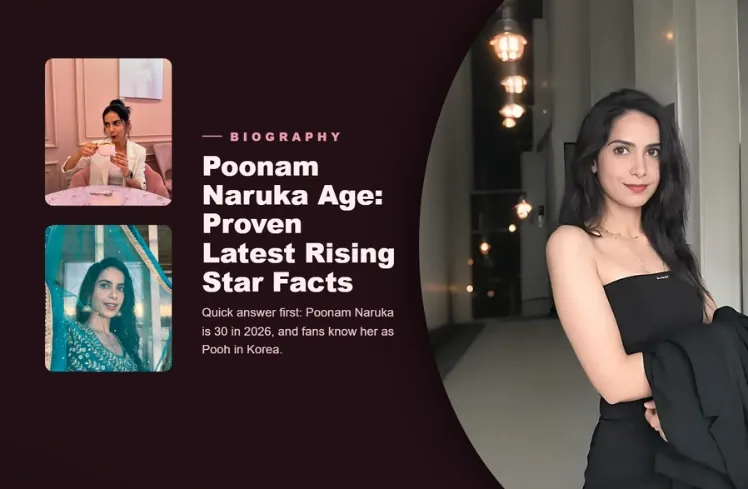
Searching for Pooh in Korea age usually leads to questions about the creator’s birthday, nationality, relationship status, education, and life in South Korea. The name is associated with an Indian-Italian YouTuber and lifestyle personality who shares videos about daily life, food culture, travel, relationships, and experiences alongside Korean society. However, several details repeated online are not supported by a clear official biography.
That distinction matters. A social-media profile may mention a birthday, while a fan page may convert that information into an estimated age.
Those claims can then appear across search results as if they were confirmed facts. This article separates publicly visible information from speculation, explains why the age question is difficult to answer precisely, and puts Pooh in Korea’s content into the wider context of South Korea’s international creator community.
What is Pooh in Korea known for?
Pooh in Korea is known as a lifestyle and culture-focused creator who documents experiences connected to living in South Korea. Her content generally combines personal storytelling with observations about food, social customs, travel, language, relationships, and ordinary routines.
The phrase “Pooh in Korea” refers less to a formal company or public institution and more to an online identity built across platforms. Her main audience encounters her through a YouTube channel, short-form video, social updates, and occasional photographs on Instagram. The content is personal, which is one reason viewers often want to know more about her background than is available in a standard celebrity biography.
Her videos fit into a popular category sometimes described as “living abroad” or “expat lifestyle” content. These videos can show what it feels like to navigate daily life in another country, including practical moments that travel advertisements rarely cover. A restaurant visit, a supermarket trip, a family conversation, or a discussion about cultural differences may become the central subject of a vlog.
Several themes appear repeatedly in how viewers discuss the creator:
- South Korea: The country provides the setting for her lifestyle, travel, and cultural observations.
- Food culture: Korean meals, restaurants, ingredients, and food customs often make international content accessible and engaging.
- Daily life: Routine activities give viewers a more personal picture than a conventional tourist video.
- Cross-cultural identity: Her Indian-Italian background adds another layer to conversations about belonging and adaptation.
- Personal storytelling: Fans follow the creator as much for her reactions and experiences as for the locations shown.
The appeal is straightforward: audiences can see South Korea through the perspective of someone who is not presented as a conventional local news reporter or travel host. At the same time, viewers should remember that a vlog is edited media. It reflects one person’s experience, not a complete description of every Korean city, family, workplace, or social group.
Pooh in Korea age in 2026: what can be verified?

There is no consistently verified public record that establishes Pooh in Korea’s exact age in 2026. An exact number should not be treated as confirmed unless the creator publishes a clear birth year or an official profile provides it.
This is the central answer for people searching “Pooh in Korea age in 2026.” Online pages may show an estimated age or repeat a date associated with a birthday in August, but repetition does not establish accuracy. A birthday is also not the same as a birth year. If someone says that a creator celebrates a birthday in August, that information only identifies a month unless the year is supplied and authenticated.
The calculation is simple when a birth year is known:
Age in 2026 = 2026 − birth year, adjusted depending on whether the person’s birthday has occurred during that year.
For example, a person born in 1995 would turn 31 in 2026 after their birthday and remain 30 before it. Without the year, readers cannot calculate a dependable age. Guessing from appearance, career length, voice, relationship status, or old photographs is not reliable and can easily produce a false result.
It is also useful to distinguish three levels of information:
| Information type | What it can establish | What it cannot establish |
|---|---|---|
| Official birthday post | That a birthday was publicly acknowledged on a particular date | A birth year, unless the year is stated |
| Creator biography | Background details the creator chooses to publish | That every third-party biography is accurate |
| Fan estimate | What viewers believe based on available clues | A verified legal age or date of birth |
| Search-result snippet | What a webpage claims or displays | Proof that the claim has been checked |
A responsible answer therefore avoids presenting an unsupported age as fact. If a reliable first-party source later confirms her birth year, the calculation can be updated. Until then, “not publicly verified” is more accurate than a confident but invented number.
Birthday, nationality and family background

Public discussions commonly associate Pooh in Korea with an August birthday and an Indian-Italian family background, but individual biographical details require careful sourcing. Not every fact repeated by fan accounts has been confirmed directly by the creator.
The Indian-Italian description is significant because it helps explain why many viewers are interested in her cultural perspective. A person with family connections to India and Italy may encounter questions about language, food, identity, family expectations, and belonging in ways that differ from both a Korean local and a short-term tourist. Her content can therefore sit at the intersection of several identities rather than fitting neatly into one nationality label.
Some online searches also refer to her mother and father. However, family details should not be expanded beyond what has been deliberately made public.
Parents may appear in a creator’s stories without wanting the same level of online attention. A responsible profile can acknowledge the family context while avoiding private names, occupations, addresses, or unverified personal histories.
The same caution applies to education. Search interest around a degree in pharmacy suggests that viewers are curious about whether Pooh studied pharmacy or has a related academic background. A degree claim should be treated as confirmed only when it appears in a direct interview, an official profile, or a clearly attributable statement.
Studying pharmacy and working as a pharmacist are not identical facts. Academic training can involve a degree, while professional practice may require separate licensing rules depending on the country.
These distinctions are important because creators often have several versions of their biography online. A short profile may simplify education, while a video may describe it conversationally.
Translation can create another complication: a qualification that is easy to understand in one education system may not have a precise equivalent in another. Readers should avoid turning an informal reference into a definitive professional credential.
Why biography details vary across platforms
Social platforms encourage brief descriptions. A creator may use one name on YouTube, another display name on Instagram, and a shortened version on a video-sharing app. A fan may then combine fragments from different profiles and publish a biography that looks complete but contains assumptions.
Before accepting a claim about age, birthday, parents, education, or nationality, check whether:
- The information comes directly from the creator.
- The source gives a specific date rather than a vague statement.
- Independent reputable reporting confirms the same fact.
- The wording separates confirmed details from estimates.
- The claim concerns public biography rather than private personal information.
Her YouTube channel, videos and audience
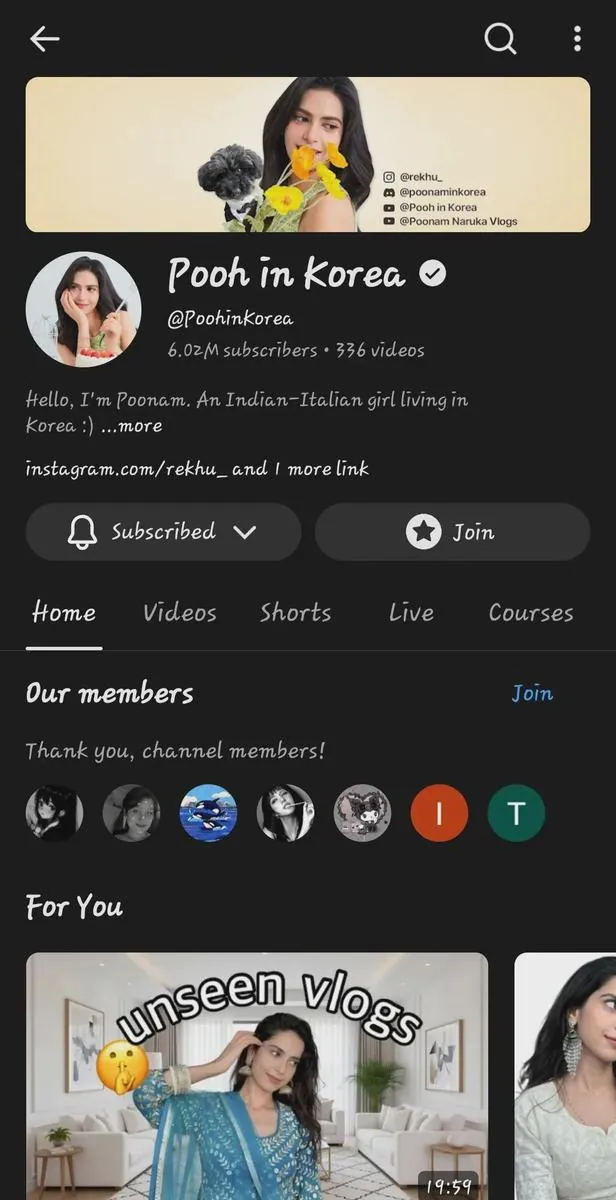
Pooh in Korea’s YouTube presence attracts viewers through a mix of vlogs, cultural commentary, personal experiences, and visually engaging everyday scenes. The format encourages a stronger relationship between creator and audience than a one-off travel article usually provides.
A typical lifestyle channel succeeds because it turns ordinary events into stories. A meal can introduce Korean dining etiquette. A trip can reveal transport habits, regional differences, or language challenges.
A conversation about relationships can open a discussion about cultural expectations. The subject may seem small, but the creator’s interpretation gives it meaning.
Vlogs also create a sense of continuity. Fans return not just for one video but to follow a sequence of experiences over time.
They may watch a creator settle into a new neighbourhood, learn new expressions, meet friends, visit family, or compare life in South Korea with life elsewhere. That continuity helps explain why searches about age, boyfriend, salary, and net worth appear alongside searches for videos and travel destinations.
Audience interest is not limited to factual biography. Viewers may be drawn to:
- How an international creator navigates Korean customs.
- What meals look like outside highly promoted tourist districts.
- How language affects friendships and everyday errands.
- Whether life in South Korea matches expectations formed through dramas or music.
- How multicultural families discuss identity and tradition.
Creators in this space also face an unusual balancing act. The audience wants authenticity, but constant access can create pressure to disclose more than is healthy.
A creator may choose to show a restaurant while keeping a home address private, or discuss a relationship without naming the other person. That boundary is not evidence that information is being hidden; it is a normal part of managing a public career.
The best way to evaluate a video is to treat it as a personal account rather than a universal survey. One person’s experience with housing, work, healthcare, dating, or family life cannot represent every resident. Still, personal videos can offer useful starting points, especially when paired with official information and multiple perspectives.
Pooh in Korea boyfriend and relationship questions
Questions about Pooh in Korea’s boyfriend or relationship status are common, but public curiosity does not make private information automatically verifiable. A relationship should be described only when the creator has openly identified it or clearly discussed it in a public interview or post.
Relationship content attracts attention because it intersects with the channel’s central themes. Cross-cultural couples may discuss language, family approval, long-distance communication, marriage expectations, and differences in dating customs.
When a creator shares those conversations, viewers often feel emotionally invested. That investment can quickly turn into speculation about a boyfriend’s name, nationality, job, age, or appearance.
There are several reasons a cautious answer is preferable:
- A video may be old, while the search result makes it appear current.
- A friend, collaborator, or family member may be mistaken for a romantic partner.
- Creators sometimes use humour or deliberately vague language.
- Private relationships can change after a post is published.
- Fan pages may copy one another without adding evidence.
Readers should also be alert to edited clips. A short video can remove context and make a casual interaction look romantic or controversial. The safest approach is to rely on a complete, first-party statement rather than thumbnails, comments, or speculation.
Public relationship information should be handled with the same standard used for age. If the creator has not clearly confirmed a current boyfriend, the correct description is that her relationship status is not reliably established in public sources. That answer may feel less satisfying than a name, but it avoids inventing a personal fact.
Salary, net worth and the economics of a creator channel
Pooh in Korea’s salary and net worth cannot be calculated accurately from public views alone. Online estimates are usually speculative because creator income comes from multiple sources and expenses are not visible.
A YouTube channel may generate advertising revenue, but the amount depends on geography, audience retention, video length, advertiser demand, seasonality, content category, and whether viewers see or skip advertisements. A video with one million views does not guarantee a fixed payment. Two videos with the same view count can earn very different amounts.
Possible income streams include:
- Platform advertising revenue.
- Brand partnerships and sponsored integrations.
- Affiliate commissions from products or travel services.
- Memberships, tips, or live-stream contributions.
- Licensing, appearances, consulting, or other creative work.
Gross revenue is not the same as personal income. A creator may pay editors, camera operators, translators, managers, accountants, taxes, travel costs, equipment expenses, accommodation costs, and platform fees.
International work may also involve currency conversion and different tax obligations. Net worth requires even more information, including assets, savings, business interests, liabilities, and ownership arrangements.
| Metric | Why it is limited | What would improve accuracy |
|---|---|---|
| Subscriber count | Shows audience size but not actual earnings | Recent views, audience location, and engagement data |
| One video’s views | Performance varies by topic and advertiser demand | Channel-wide revenue across several months |
| Estimated salary | May ignore sponsorships and operating costs | Verified financial disclosure |
| Estimated net worth | Usually relies on guesses about assets and income | Documented assets, liabilities, and business records |
The practical conclusion is simple: searches for “Pooh in Korea salary” or “Pooh in Korea net worth” may produce numbers, but those figures should not be presented as official. A credible article should label them as estimates or decline to quote them when the methodology is unclear.
Living in South Korea: what her content can and cannot show
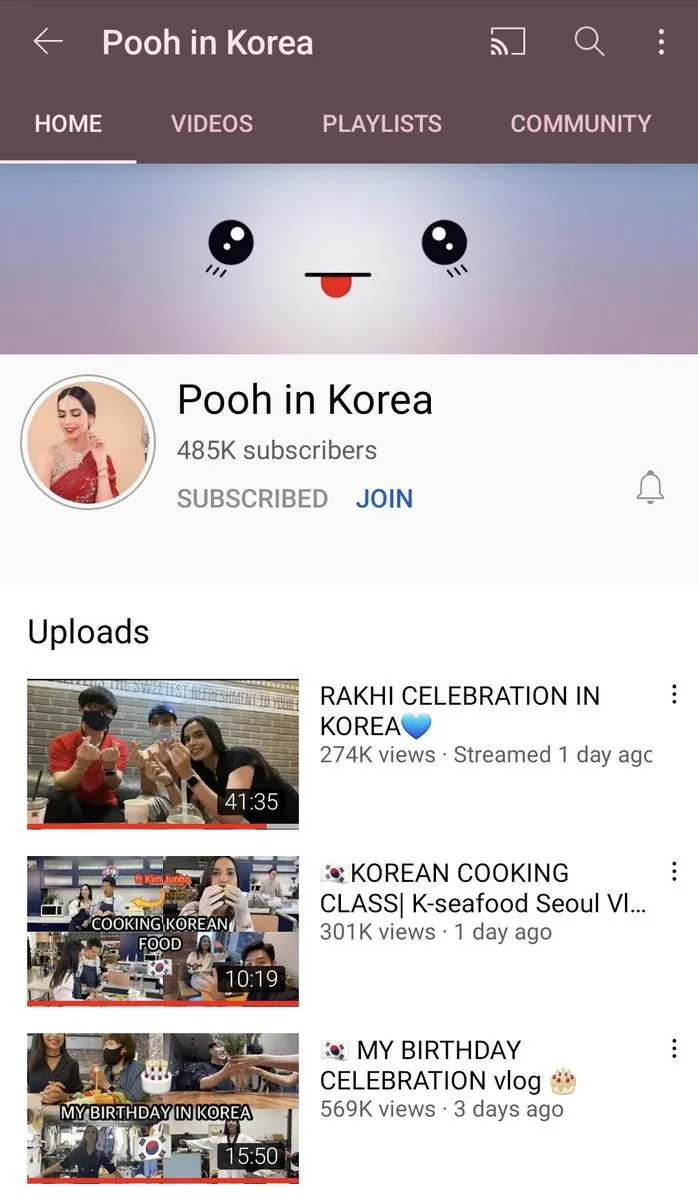
Pooh in Korea’s content can provide a personal view of living in South Korea, but it should not be treated as a complete account of Korean society. A creator’s location, social circle, finances, language ability, and work situation all shape what appears on camera.
Daily life differs substantially between Seoul, Busan, smaller cities, and rural areas. Housing costs, transport options, work culture, weather, local food, and access to international communities vary by region. Even within one city, experiences can change according to neighbourhood, income, age, and family circumstances.
Food culture is one of the most useful subjects for international viewers because it connects routine with history. A video about a market can reveal seasonal produce, shopping habits, price differences, and social etiquette.
A restaurant vlog can show ordering systems, side dishes, payment customs, and the difference between a tourist-focused venue and a local establishment. Yet food videos also simplify reality: a visually interesting meal may not reflect what most people eat every day.
Language is another important factor. Basic Korean phrases may help with shopping and transport, while professional, medical, legal, or administrative situations can require much stronger fluency. Subtitles can make a video accessible to a global audience, but they may also smooth over uncertainty, humour, or cultural nuance.
People using these videos to plan a move should verify practical details through official sources. Immigration rules, employment requirements, healthcare access, university admissions, and professional licensing can change. For general country information, the Ministry of Foreign Affairs of the Republic of Korea is a more appropriate reference than a creator vlog alone.
How to use lifestyle videos responsibly
Use the videos for context, questions, and personal perspective. Then confirm decisions through government departments, universities, employers, licensed professionals, and current local documentation. This approach preserves the human value of the content without asking one creator to function as a legal or relocation adviser.
Topical gaps: what online profiles often leave unanswered
The biggest gap in information about Pooh in Korea is the lack of a consistently sourced timeline connecting age, education, career, nationality, and current location. Filling that gap requires separating identity clues from confirmed biography.
Readers often want a single profile containing her birth date, age in 2026, height, boyfriend, salary, net worth, education, parents, and career history. That format looks convenient, but it can conceal uncertainty. A profile may state one detail confidently even when the evidence for it is weaker than the evidence for another.
A better research method creates a fact-status framework:
- Confirmed: Directly stated by the creator or documented by a highly reliable source.
- Strongly supported: Repeated in attributable interviews or consistent first-party material.
- Unverified: Appears on fan pages, search snippets, or copied biographies without evidence.
- Private: Not appropriate to investigate or publish merely because audiences are curious.
This framework answers several related searches more responsibly. Pooh in Korea’s age may be unverified. Her height may be estimated from images but not officially published.
Her boyfriend may be discussed in content without a confirmed current status. Her salary and net worth may be guessed by online calculators but cannot be treated as financial facts. A reference to pharmacy may indicate education, but it does not automatically prove professional registration.
Another gap concerns identity labels. Calling someone Indian, Italian, Indian-Italian, or an international resident can mean different things depending on citizenship, heritage, family background, and self-identification.
The creator’s own wording should take priority. Outsiders should not reduce a complex background to a single convenient label.
Finally, the term “known” should be used carefully. A creator may be well known within a particular YouTube audience without being a mainstream television celebrity in South Korea. Audience size, cultural influence, and general public recognition are different measurements.
How to check new information about Pooh in Korea
The most reliable way to check updates is to compare recent first-party posts with attributable interviews and avoid treating copied biography pages as evidence. This process is especially important for age, relationship, income, and education claims.
Start with the creator’s verified or clearly official channel. Look for direct statements rather than comments from viewers.
A birthday video may confirm that a celebration occurred, but it may not confirm a birth year. An “about” page may provide a professional introduction, but it may also be simplified for branding.
Next, check dates. A claim published years ago may no longer describe the creator’s current relationship, location, channel strategy, or work. Search engines often preserve older pages, and social posts may be reshared without their original context.
Finally, assess whether the claim is plausible and appropriately worded. Reliable information usually identifies its source and avoids dramatic certainty. Suspicious profiles often combine an exact age, exact net worth, height, degree, and relationship status without explaining how any of those details were obtained.
Readers can use this short checklist:
- Find the earliest identifiable source.
- Determine whether it is first-party or copied from elsewhere.
- Check the publication date and whether the information is still current.
- Separate a birthday month from a confirmed birth year.
- Avoid publishing private details that the creator has not chosen to disclose.
Conclusion
The clearest answer to the Pooh in Korea age question is that an exact age in 2026 should not be stated as confirmed without a reliable birth year. Public discussions may mention an August birthday, an Indian-Italian background, pharmacy-related education, and life in South Korea, but each detail deserves its own source check.
Her YouTube videos remain valuable as personal windows into food culture, relationships, travel, and daily life. For the most accurate profile, follow first-party updates, distinguish estimates from facts, and treat salary, net worth, height, and relationship claims cautiously.
Frequently asked questions
How old is Pooh in Korea in 2026?
Her exact age in 2026 is not reliably confirmed by a consistently documented public birth year. Some online pages may provide an estimate, but an estimated number should not be presented as fact. A verified age requires a clear date of birth or birth year from the creator or a highly reliable source.
When is Pooh in Korea’s birthday?
Online discussions commonly associate Pooh in Korea with a birthday in August, but a birthday month does not establish a birth year. Readers should check the creator’s own social posts or videos for current confirmation. Third-party pages frequently repeat one another, so repetition alone does not make the date authoritative.
Does Pooh in Korea have a boyfriend?
Relationship details should be treated as private unless the creator has openly confirmed them. Videos may include friends, collaborators, or family members who are mistakenly described as romantic partners. Unless a current relationship is clearly identified through a first-party statement, it is more accurate to describe her status as unverified.
What is Pooh in Korea’s net worth?
No dependable public record establishes her net worth. YouTube views, subscriber numbers, and online calculators cannot reveal sponsorship income, taxes, business expenses, savings, or liabilities. Any figure published without a transparent methodology is an estimate, not an official financial disclosure.

James Wilson is the founder and lead editor of HubQuora.com, where he covers the latest celebrity news, entertainment trends, viral gossip, and net worth stories. With a passion for pop culture and digital media, James delivers engaging, accurate, and up-to-date content that keeps readers informed about the world of celebrities, influencers, and entertainment industry buzz.