
When you encounter the term “skat,” the context often dictates whether you are looking at a classic German card game or a misunderstood slang term. Understanding the skat meaning requires peeling back layers of linguistic evolution, as the word has traveled through various European languages before landing in modern digital vernacular.
Whether you are curious about the rules of a century-old pastime or trying to decipher an ambiguous comment on social media, clarifying these distinctions is essential. By exploring both the historical roots and the contemporary usage, you can navigate these different interpretations with confidence and avoid common linguistic pitfalls.
The German Origins of Skat
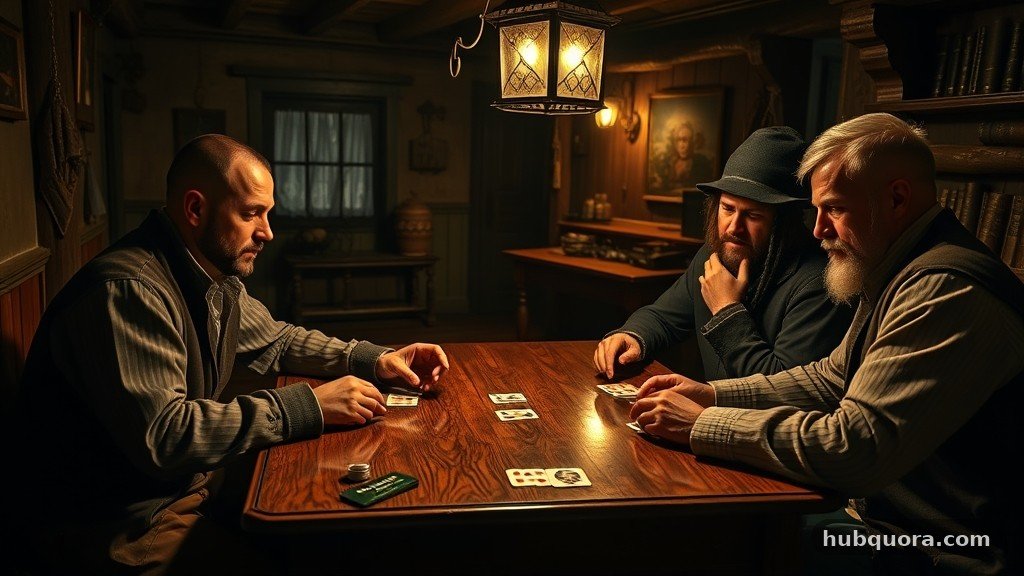
At its core, the most legitimate definition of the term refers to a highly strategic German card game. Originating in the early 19th century in Altenburg, it remains a pillar of German cultural heritage.
The word itself is widely believed to be derived from the Italian scarto, which refers to a discard. This linguistic link is crucial because the game mechanics involve players discarding or setting aside cards to form a “skat”—a small pile of face-down cards that can be picked up by the declarer.
The game is played with a deck of 32 cards and involves three players. It requires a significant amount of mental acuity, as players must bid to determine who gets to play against the other two.
Because the skat meaning in this context is tied to the concept of “discarding” or “leaving out,” it perfectly encapsulates the game’s primary strategy. You aren’t just playing the cards in your hand; you are managing the hidden potential of the cards you set aside at the start of the round.
Linguistic Evolution and Etymology
Tracing the history of the word reveals how it moved from the Italian scartare discard into the German lexicon. The evolution from the verb “scartare” to the noun “skat” shows how nouns are often formed from the actions they represent.
In 18th-century card games, the act of putting cards aside was a fundamental shift from simple trick-taking games. By formalizing this action into a specific term, players created a shorthand for a complex tactical maneuver.
It is helpful to view this transition through the lens of European language exchange. As card games spread across borders, the terminology often adapted to fit the phonetics of the local tongue.
While the German version is the most famous, you can find cognates in other languages that also deal with the concept of a carta card or a discarded element. This shared etymology demonstrates that even simple words carry a long history of cross-cultural interaction.
Skat as a Misspelling of Scat
One of the most frequent reasons people search for the skat meaning is confusion with the word “scat.” In common English, “scat” has multiple meanings, ranging from a jazz vocal style to the biological term for animal droppings.
Because of the phonetic similarity, many users mistakenly type “skat” when they actually intend to reference the jazz technique or the waste product. This is a classic case of a homophone creating search intent confusion.
If you are looking at urban dictionary entries or social media comments, pay close attention to the context. If the conversation is about music, the author likely meant “scat singing,” a form of vocal improvisation popularized by legends like Ella Fitzgerald.
If the context is derogatory or gross, they are almost certainly using the word as a variant of the biological term. Distinguishing between these helps you understand the intended tone of the message, as the spelling difference is often just a result of rapid, informal typing.
Cultural Usage in Scandinavia and Beyond
While the card game is the primary definition in Central Europe, the word appears in other regions with entirely different connotations. For example, in some Scandinavian contexts, the skat meaning can be a term of endearment, similar to “treasure” or “darling.”
This is a stark departure from the card-playing or slang-heavy definitions found elsewhere. It highlights how a word can evolve in isolation, taking on a warm, domestic tone in one culture while remaining a technical term in another.
Understanding these regional variations is key to avoiding misunderstandings. If a Danish friend refers to someone as their “skat,” they are expressing affection, not discussing card strategy or biology.
This usage is common in casual conversation and text messaging. It serves as a reminder that language is fluid and location-dependent; a word that feels familiar in one context can be completely unrecognizable in another.
Comparative Analysis of Terminology
To better visualize how these definitions differ, consider the following table which breaks down the primary interpretations of the word.
| Context | Primary Meaning | Origin/Association |
|---|---|---|
| Card Games | A specific pile of discarded cards | German/Italian (Scarto) |
| Music/Jazz | Vocal improvisation (often misspelled) | English (Scat) |
| Relationships | Term of endearment (“Treasure”) | Danish/Scandinavian |
| General Slang | Often a misspelling of biological waste | Colloquial English |
Why Context is the Ultimate Arbiter
In linguistics, the phrase “context is king” is rarely more applicable than when dealing with short, ambiguous words. Because “skat” is a short, punchy word, it is prone to being co-opted by different subcultures. If you see it on a social media platform, look for clues in the surrounding text.
Is the user talking about a game, a person, or something else entirely? The surrounding words will almost always reveal the intended definition.
When you are unsure, searching for the term on a reputable dictionary site is the safest path. However, even dictionaries can struggle with modern slang.
If you cannot find a definition in a traditional source, it is likely because the usage is extremely niche or merely a typo. Never assume that a single definition applies across the board, especially when dealing with words that have deep roots in multiple European languages.
Addressing Topical Gaps
Many readers often ask, “Why is there so much confusion surrounding this word?” The gap in understanding usually stems from the internet’s tendency to flatten language.
Because search engines treat “skat” and “scat” as distinct entities, they often provide results that mix both. Users looking for the German card game often find themselves wading through irrelevant slang, while those looking for slang struggle to find the proper historical context.
To bridge this gap, it is important to recognize the ex- (or former) meanings of words. Language changes, and terms that were once strictly technical can become popular slang.
The term “skat” has been subjected to this exact process. By acknowledging that the word has a “professional” definition (the card game) and a “casual” definition (the Scandinavian term of endearment), you can better filter out the noise and focus on what is relevant to your specific query.
The Influence of Digital Communication
The rise of the internet has significantly impacted how we use and interpret words like “skat.” On platforms like TikTok or Twitter, spelling is often secondary to speed.
This is where the popular usage of a word can override its dictionary definition. When a word is typed quickly on a mobile keyboard, the autocorrect settings or the user’s lack of attention can lead to the “skat” vs “scat” confusion mentioned earlier.
Furthermore, digital communication allows for the rapid spread of regional slang. A term used in a specific European country can suddenly appear in a global comment section.
This creates a “linguistic soup” where users from different backgrounds use the same string of letters to mean completely different things. Being aware of this globalized, rapid-fire communication style is essential for anyone trying to decipher modern internet discourse.
Common Misconceptions and Clarifications
There are several persistent myths about the term that deserve debunking. For instance, some people believe the word has a dark, ancient history, but most historical evidence points to a much more mundane origin in card games and simple descriptive nouns. It is not a secret code or a complex acronym; it is a word that has simply worn many hats over the last two centuries.
Another common misconception is that the “skat” in the card game is a bad thing. In reality, the skat is the most important part of the game. It represents opportunity and risk.
If you are playing the game, you want to master the cards that go into that pile. Treating it as a negative term is a misunderstanding of the game’s mechanics. You can learn more about the formal rules and history through the Encyclopedia Britannica entry on the Skat card game to see how it is played at a professional level.
Practical Tips for Accurate Interpretation
If you find yourself confused by the usage of this term, follow these steps to clarify the meaning:
- Identify the language: Is the text in English, German, or a Scandinavian language?
- Check the subject matter: Does the conversation relate to music, gaming, or personal interaction?
- Assess the tone: Is the speaker being formal, affectionate, or derogatory?
- Consider the source: Is the text from a gaming forum, a music blog, or a casual social media feed?
By applying these filters, you can almost always determine the intended meaning. If the text is in a German-language forum, it is 99% likely to be about the card game.
If it is in a Danish text, it is likely an endearment. If it is on a general English-speaking social media site, it is likely a misspelling of “scat” or a very specific, local slang usage.
Future Trends in Linguistic Usage
As we look toward the future, it is likely that the primary skat meaning will continue to be bifurcated. The card game will maintain its niche, traditional following, while the slang usage will continue to evolve alongside internet culture. It is possible that as language becomes more digitized, the distinction between “skat” and “scat” will blur even further, potentially leading to a new, unified definition in the future.
However, for now, the best approach is to remain an observant user of language. Don’t be afraid to ask for clarification if you see the word used in a confusing way.
Most people are happy to explain what they meant, and you might learn about a new regionalism or a niche hobby in the process. Language is a living, breathing entity, and our understanding of it grows every time we engage with these small, complex labels.
FAQ Section
Is skat the same as scat?
No, they are different words. “Skat” is a traditional German card game or a Scandinavian term of endearment.
“Scat” refers to a style of jazz vocal improvisation or, in other contexts, biological waste. They are frequently confused due to their similar pronunciation and common misspellings online.
What is the meaning of skat in a relationship?
In Danish and other Scandinavian languages, “skat” is a very common term of endearment. It translates literally to “treasure” and is used to address a partner, child, or close friend, much like the English words “honey” or “darling.” It is a positive, affectionate term.
How do I play the game known as skat?
Skat is a complex, three-player trick-taking game played with a 32-card deck. It involves bidding, a “skat” (a pile of two cards set aside), and strategic card play. It is highly regarded for its depth and is considered a national pastime in Germany.
Why do people use the word skat on social media?
Most of the time, when you see “skat” on social media in an English-speaking context, it is a typo for “scat.” However, in European-centric threads, it may be used correctly to refer to the card game or as a term of endearment, depending on the user’s cultural background.
Conclusion
Navigating the various interpretations of this term shows just how much context shapes our understanding of communication. From the strategic depths of the German card game to the warmth of a Scandinavian term of endearment, the skat meaning is far from singular. By recognizing these differences, you can better interpret the intent behind the words you encounter, whether in a game, a song, or a message from a friend.
Next time you see the word, take a moment to look at the surrounding clues before jumping to a conclusion. Embracing these linguistic nuances allows you to communicate more effectively and appreciate the rich, multifaceted nature of language in our modern, interconnected world.

James Wilson is the founder and lead editor of HubQuora.com, where he covers the latest celebrity news, entertainment trends, viral gossip, and net worth stories. With a passion for pop culture and digital media, James delivers engaging, accurate, and up-to-date content that keeps readers informed about the world of celebrities, influencers, and entertainment industry buzz.