
When you search for the skink meaning, you are likely looking for either a biological classification or a curious linguistic outlier. These small creatures, recognized by their smooth, shiny scales, hold a place in both natural history and the annals of regional vocabulary.
While many people associate the term with the diverse group of lizards found in backyards and forests, others encounter the word in the context of traditional food or archaic slang. Understanding the nuance of this term requires looking at how language evolves from ancient roots into the specific ways we use these words today.
The Biological Classification of Skinks
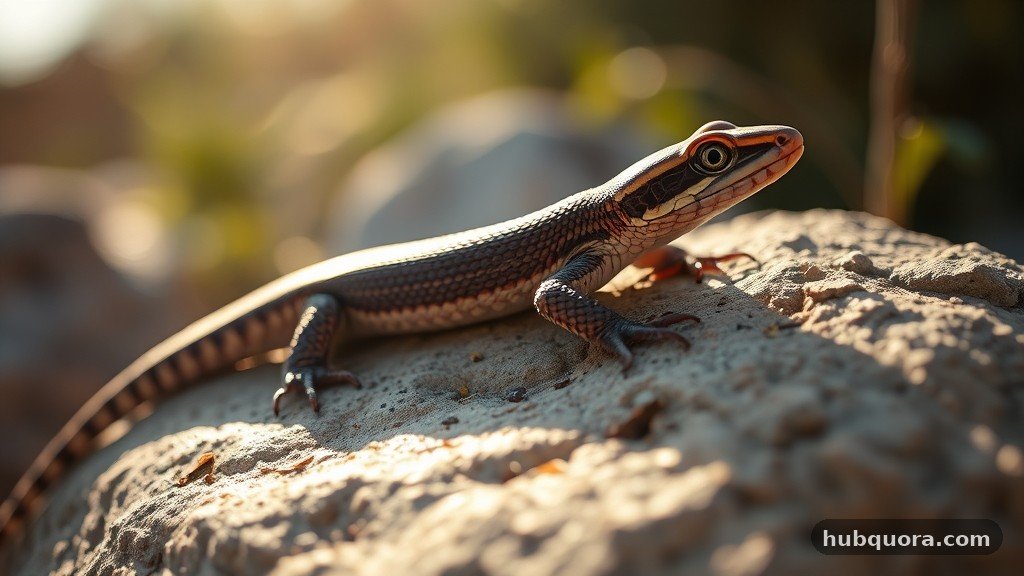
The primary definition of a skink involves a vast and diverse family of lizards. These animals belong to the family Scincidae, which is one of the largest families within the order Squamata.
If you see a small, quick-moving creature darting through your garden, there is a high probability it is a member of this group. They are defined by their distinct physical features, most notably their sleek, overlapping scales that often give them a glossy, polished appearance.
Beyond their appearance, these reptiles are highly adaptable. They inhabit almost every continent except Antarctica, thriving in environments ranging from sandy deserts to lush tropical rainforests.
Many species have evolved to live in underground burrows, which has led to physical adaptations like reduced limbs or even a complete lack of legs in certain fossorial species. This evolutionary pathway highlights how the term encompasses a wide variety of body shapes, from the classic four-legged lizard to those that resemble small snakes.
Tracing the Etymology of the Word
The history of the word itself is a fascinating journey through linguistic time. The term originates from the Latin scincus, which in turn was derived from the Greek skinkos, a word used by ancient naturalists to describe various types of lizards. These ancient roots provide the foundation for our modern scientific classification, proving that humans have been observing these animals for thousands of years.
As the word moved through different languages, it underwent several shifts. In the Middle Ages, the term became more localized, eventually entering English through various routes.
By consulting an online etymological dictionary, you can see how the transition from Greek and Latin into later European languages helped standardize the spelling we recognize today. This historical perspective is essential for anyone interested in why we call these animals by this specific name rather than a more generic descriptive term.
Skink Meaning in Regional Culinary Traditions
One of the most common points of confusion for those searching for the term is its presence in Scottish cuisine. Cullen skink is a famous, hearty soup originating from the town of Cullen in Scotland.
In this specific context, the word has nothing to do with lizards. Instead, it likely traces back to the Old English scencan, which means to pour or dispense, or potentially a variation of a word relating to a shin or knuckle of beef used as a base for stocks.
This culinary usage serves as a perfect example of how the same sequence of letters can represent entirely different concepts based on geography and history. While a naturalist might describe a lizard, a chef in a coastal Scottish village is talking about a thick, warming soup made with smoked haddock, potatoes, and onions. Distinguishing between these two meanings is vital for anyone trying to navigate regional dialects or historical food writing.
Physical Characteristics and Evolution
The physical traits of these lizards are what set them apart from other common reptilian groups. Their body covered in thick, often shiny scales serves as a protective layer that keeps them hydrated and shields them from abrasions while they move through soil or dense leaf litter. Unlike the rough, pebbly skin of many other lizards, the scales of this family are often supported by osteoderms, which are small, bony plates embedded directly into the skin.
Adaptations for Burrowing
Many species exhibit limbs elongated or, conversely, significantly reduced limbs depending on their primary habitat. For those that spend most of their time beneath the surface, short legs and a streamlined head are major advantages.
This allows them to “swim” through loose sand or soil with remarkable efficiency. This specialization is a key identifier for biologists, as it indicates a life cycle dedicated to subterranean hunting and hiding.
The Role of Skinks in Ecosystems
These reptiles play a critical, often overlooked role in the ecosystems they inhabit. As insectivores, they serve as a natural form of pest control, consuming vast quantities of crickets, beetles, and other small invertebrates. Because they are often found in high densities, they act as an important link in the food chain, serving as a primary prey source for larger birds, snakes, and small mammals.
When we consider the ecological meaning of these creatures, we see them as indicators of environmental health. A garden or forest floor that supports a healthy population of these lizards is typically one that features a diverse array of insects and a lack of excessive chemical pollutants. Their presence tells us about the richness of the local habitat.
Linguistic Variations and Slang
In some pockets of the English-speaking world, the word has taken on colloquial meanings that deviate from both the animal and the soup. In certain regional dialects, slang usage might apply the term to a person, often in a derogatory or dismissive way. These meanings are rarely found in a standard dictionary, as they are fluid and change rapidly based on the social environment in which they emerge.
It is important to recognize that these slang definitions are highly localized. If you hear the word used in a conversation that has nothing to do with biology or food, it is likely a transient, informal expression unique to a specific community. Tracking these shifts in vocabulary is a common hobby for linguists, but it is wise to treat such definitions as fleeting rather than permanent additions to the language.
Comparing Reptilian Families
To better understand the place of these animals in the natural world, it is helpful to compare them to other common lizard groups. The following table highlights some of the key differences in physical structure and habitat preference.
| Lizard Group | Scale Texture | Typical Habitat |
|---|---|---|
| Skincidae | Smooth, shiny | Burrows, leaf litter |
| Iguanidae | Rough, spiny | Arboreal, rocky |
| Gekkonidae | Granular, soft | Walls, trees |
This comparison illustrates why the word refers to such a specific set of biological traits. While an iguana might be known for its spikes and a gecko for its climbing ability, the defining characteristic of this group remains the sleek, armor-like quality of their exterior.
Addressing Topical Gaps
Many readers often ask about the intersection of these terms, specifically why the word sounds so distinct from other lizard names. One common gap in existing explanations is the lack of connection between the Greek root and the visual appearance. Many people do not realize that the original Greek word was meant to describe a specific type of lizard that shimmered in the sun.
Another missing piece is the confusion between the American Heritage definition and the Scottish regional definition. While most dictionaries provide both, they rarely explain the phonetic evolution that allows one word to represent two such disparate things. By understanding that “skink” is a collision of two separate etymological paths—one from the Greek for a lizard and one from Germanic/Scottish roots for pouring or broth—the confusion naturally resolves.
Symbolism and Cultural Representation
Beyond biology and food, these creatures have appeared in various cultural contexts. In some indigenous folklore, they are seen as symbols of adaptability and secret knowledge, largely because of their ability to move unseen through the earth. Because they are often shy and elusive, they represent a quiet power that does not require aggression or noise to survive.
Presence in Modern Media
In modern literature and media, the lizard is often used as a shorthand for a character who is observant but detached. Their habit of losing their tails to escape predators also serves as a metaphor for sacrifice or renewal. While these are not scientific definitions, they contribute to the broader cultural meaning of the word.
Practical Tips for Identification
If you want to identify these animals in the wild, look for their movement patterns. They do not typically scramble or jump like other lizards; instead, they move with a fluid, serpentine motion. Their bodies are usually quite stiff, and they often stop to “tongue-flick” the air to gather sensory information.
- Look for a shiny, reflective sheen on their scales when they are in direct sunlight.
- Check for the presence of ear openings, which are often small or hidden in some species.
- Observe the tail-to-body ratio, as many species have very long, thick tails that they can shed if threatened.
- Search in damp, sheltered areas like woodpiles, rock crevices, or beneath dense garden mulch.
By following these simple observation techniques, you can easily distinguish between members of this family and other common lizards you might encounter in your local area.
Conclusion
The meaning of this word is defined by its duality. Whether you are discussing the biological family Scincidae and their remarkable evolutionary adaptations, or you are preparing a traditional bowl of Scottish soup, the term carries a deep history. We have explored how the Greek and Latin roots have shaped our scientific understanding, while regional dialects have expanded the vocabulary to include culinary and slang applications.
By understanding the context in which the word is used, you can easily navigate between these different meanings. The next time you encounter the term, consider whether you are looking at a creature with smooth, shiny scales or a recipe passed down through generations.
Exploring these linguistic and biological connections provides a richer perspective on the words we use every day. If you have any further questions about these fascinating animals or the history of the language, feel free to reach out and continue the conversation.
Frequently Asked Questions
What does the term mean in slang?
In specific regional slang, the word is sometimes used to describe an untrustworthy or sneaky person. However, these uses are highly localized and do not have a formal definition in standard dictionaries, functioning more as informal labels within certain communities rather than widely recognized language.
Is the term related to pouring liquids?
Yes, in the context of Scottish cuisine, the word is linked to the Old English or Middle Dutch roots for pouring or serving. This is the origin of the name for the soup known as Cullen skink, which is essentially a hearty, thickened fish broth.
What do these lizards symbolize?
In various cultures, these animals symbolize adaptability, patience, and the ability to navigate hidden paths. Because they frequently burrow underground and possess the ability to shed their tails as a survival mechanism, they are often associated with themes of renewal, transformation, and quiet, persistent resilience.
How do I identify a member of this family?
You can identify them by their smooth, polished scales and their fluid, often snake-like movement. They typically have a streamlined body shape and are frequently found in moist, protected areas like leaf litter or under logs, rather than climbing on walls or trees like other lizards.

James Wilson is the founder and lead editor of HubQuora.com, where he covers the latest celebrity news, entertainment trends, viral gossip, and net worth stories. With a passion for pop culture and digital media, James delivers engaging, accurate, and up-to-date content that keeps readers informed about the world of celebrities, influencers, and entertainment industry buzz.